

Persian Gulf crisis impacting food security, FAO warns

The Food and Agriculture Organisation says intensifying conflict in the Persian Gulf “has triggered one of the most rapid and severe disruptions to global commodity flows in recent times”.
The FAO chief economist, Máximo Torero, told journalists at UN Headquarters in New York on Thursday.
Mr Torero said the crisis was affecting agricultural production and food security worldwide, impacting farmers and migrant workers.
“Temporality matters a lot right now, and the clock is ticking very hard, and I think we need to find a solution as soon as possible,” he said.
Since the war erupted, tanker traffic in the Strait of Hormuz has declined by more than 90 per cent.
Normally, 35 per cent of global crude oil flows (about 20 million barrels) passes through the Strait daily.
This is alongside 30 per cent of the fertiliser trade and a fifth of liquefied natural gas that passes through the critical maritime corridor each day.
As a result, farmers are facing a “double shock” from rising prices for fertiliser and fuel, both key to agricultural production.
African nations that depend on fertiliser imports are also vulnerable, he said, although “big exporters” like Argentina, Brazil and the United States will also be affected.
If a solution is found soon, markets could stabilise within roughly three months, but the picture changes if disruptions continue.
“The medium-term scenario of a three-month blockade will affect all farmers globally, and then we will have different elements that could impact mostly in the next season,” he said.
This could lead to reduced crop yields and substitutions, the FAO official warned.
The situation, he said, could also spark competition from the biofuel sector, particularly if oil prices rise above $100 a barrel.
While the situation would benefit farmers, “it will be bad for consumers because prices will increase”.
To mitigate the crisis, Mr Torero stressed the need to find alternative maritime routes in the short term.
“We need to provide emergency balance of payment support to import-dependent nations before planting windows,” he added.
In the medium term, countries must diversify fertiliser import sources, strengthen regional reserve sharing and avoid export restrictions, while increasing resilience will be critical in the long term.
“We need to treat food systems with the same strategic importance as energy and transport sectors, investing accordingly to minimise those shocks,” he stated.
(NAN)

We have recently deactivated our website's comment provider in favour of other channels of distribution and commentary. We encourage you to join the conversation on our stories via our Facebook, Twitter and other social media pages.

More from Peoples Gazette

States
Independence: NBA urges Nigerians to expect better future
The NBA said that ordinary Nigerians should be deriving benefit from the subsidy removal rather than hardship.

Agriculture
FG tasks ECOWAS on leveraging financing strategies for agroecology
The federal government has urged stakeholders in the agriculture and finance sectors in the West Africa region to leverage financing strategies to enhance agroecology practices

Politics
Katsina youths pledge to deliver over 2 million votes to Atiku
“Katsina State is Atiku’s political base because it is his second home.”

Health
Extreme heat threatens pregnancy, birth safety, warns UN
UN Climate Change chief warns that extreme heat is emerging as a potentially fatal threat to pregnant women, newborns and maternal healthcare systems.

Education
Okpebholo’s SHINE Agenda transforming Edo education, says deputy governor
Deputy Governor Dennis Idahosa says the Governor Monday Okpebholo-led administration is prioritising education and taking steps to improve teaching and learning.

States
Benue: SEMA deploys divers in search of Buruku boat passengers
The Benue State Emergency Management Agency deployed local divers to search for the remaining missing persons after a boat capsized.

Politics
Gov Yusuf condoles KAROTA deputy MD over mother’s death
Ms Alhassan died Sunday after a brief illness. She was 75. She had seven children. Mr Aranposu was her second child.
World
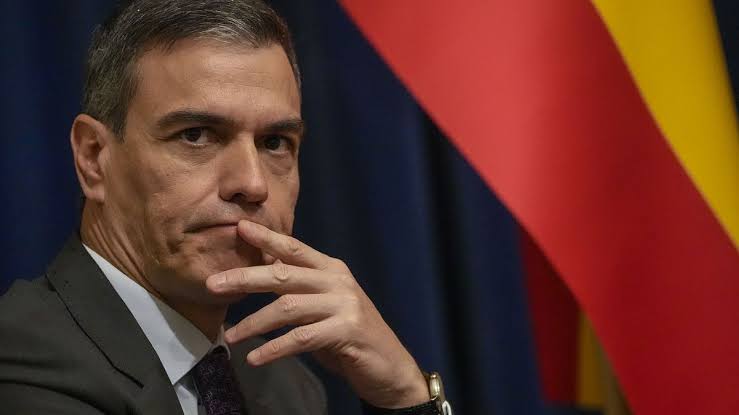
Spanish PM Sánchez calls early election for November 29
Spanish Prime Minister Pedro Sánchez has said he would call an early election on November 29, bringing forward a vote scheduled for April 2027.

Hot news Home top
OPEC decries rising attacks on global energy infrastructure
The OPEC Joint Ministerial Monitoring Committee expressed concern about rising attacks on energy infrastructure, saying restoring capacity would take time and resources.


