

Religious leaders seek inclusion in Nigeria’s AI policy, demand ethical safeguards
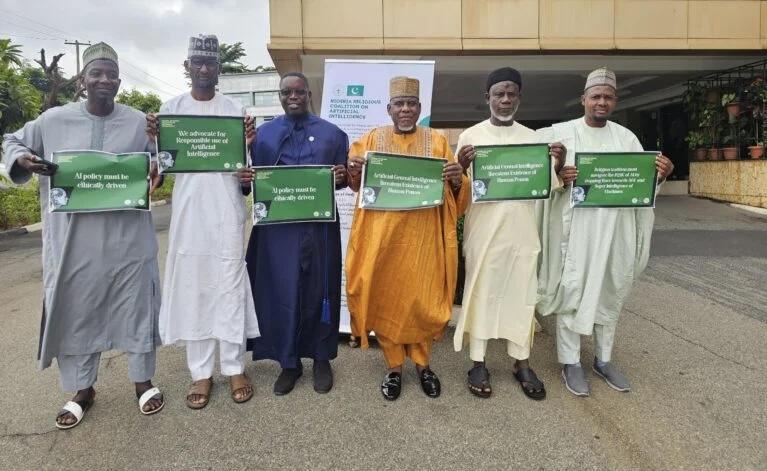
Religious leaders in Nigeria have called for the inclusion of faith-based perspectives in the development of national policies on artificial intelligence, warning that unchecked adoption of the technology could undermine cultural, moral and spiritual values.
The call was made on Tuesday in Abuja at a meeting organised by the Christian Council of Nigeria and Jama’atu Nasril Islam.
The meeting was facilitated by the CCN-Institute of Church and Society in Ibadan, with support from the Future of Life Institute in the United States.
Speaking at the event, the director of CCN-ICS, Kolade Fadahunsi, said that although AI offers immense benefits, it should remain a “derivative intelligence” and must not be allowed to override human reasoning and divine principles.
Mr Fadahunsi said the misuse of AI could erode ethical standards, weaken spiritual consciousness and distort cultural identity.
According to him, religious values, cultural heritage and human empathy must be deliberately incorporated into AI governance frameworks to ensure that technology serves humanity rather than replaces it.
He called for stronger ethical oversight within Nigeria’s Artificial Intelligence Strategy, urging policymakers to ensure the participation of religious institutions in the development of national AI frameworks.
The cleric stressed the need to examine the strategy, particularly its fourth pillar, being developed in collaboration with the National Information Technology Development Agency, from an ethical standpoint.
He said the AI policy should reflect Nigeria’s religious diversity and moral foundations, adding that excluding faith-based voices would leave the framework incomplete. Mr Fadahunsi said that the country’s major religions, Islam and Christianity, should be adequately represented in translating the strategy into policy.
He said such representation would enable religious leaders to provide moral guidance and help address potential challenges arising from the deployment of AI technologies.
The secretary-general of JNI and imam of the National Mosque, Abuja, Khalid Aliyu-Abubakar, said AI, despite its benefits, posed risks to humanity, empathy, and religious ethics if not properly regulated.
Mr Aliyu-Abubakar said religious institutions remained custodians of cultural values, morality and ethical standards and should therefore be involved in shaping AI policies. He urged government and policymakers to integrate religious and cultural considerations into AI governance frameworks to prevent the erosion of inherited values.
(NAN)

We have recently deactivated our website's comment provider in favour of other channels of distribution and commentary. We encourage you to join the conversation on our stories via our Facebook, Twitter and other social media pages.

More from Peoples Gazette

States
Independence: NBA urges Nigerians to expect better future
The NBA said that ordinary Nigerians should be deriving benefit from the subsidy removal rather than hardship.

Agriculture
FG tasks ECOWAS on leveraging financing strategies for agroecology
The federal government has urged stakeholders in the agriculture and finance sectors in the West Africa region to leverage financing strategies to enhance agroecology practices

Politics
Katsina youths pledge to deliver over 2 million votes to Atiku
“Katsina State is Atiku’s political base because it is his second home.”

States
NDPHC begins project to end 15-year blackout in Kaduna community
Mr Agim said the Rigasa project underscored NDPHC’s commitment to extending critical electricity infrastructure beyond generation.

Politics
Nigerians are happy with Tinubu’s leadership; he has earned their support: APC Chairman
Mr Yilwatda said the APC was proud to present what he described as the most competent and credible presidential candidate.

States
Gunmen kill woman, injure two farmers in Plateau
The victims were attacked while harvesting groundnuts at their farms in the village.

Politics
2027: Shettima, Uba Sani rally support for Tinubu’s re-election
Mr Shettima urged Kaduna residents to renew the mandates of Messrs Tinubu and Sani, saying the APC is committed to continuity and development.

World
Trump posts meme tagging Ilhan Omar ‘scam from Somalia’
Mr Trump posted a screenshot of an incoming phone call with a portrait of Ms Omar without her hijab and inscription that reads: “Scam likely from Mugadishu, Somalia.”
Heading 5
Seven killed, 34 injured as gunmen open fire at church funeral
CCTV footage showed three gunmen making their way from a road toward the church.


