

Rudolf Okonkwo: How the world will look in 3025

From 1025 to 2025, the world has undergone a transformation exceeding 1,000 per cent in scale and impact. Given our era’s rapid expansion of knowledge, the changes over the next 1000 years could be 100,000 per cent greater.
One thousand years ago, the people who lived in this world then could not have imagined the world we live in today. Things we take for granted about life today were beyond the scope of their imagination. Then, those who claimed to have brought civilisation to Africa believed women had one extra rib than men because God used one of biblical Adam’s ribs to make Eve. They never checked.
Without empirical proof, they believed the sun revolved around the earth. The existence of the new hemisphere, now known as North and South America, was a wild conjuncture for them. The possibility of hundreds of people flying in a large vessel called aeroplanes for thousands of miles was far-fetched. Then, only witches with brooms could fly. If not that they still fly in Edo State, Nigeria, most of us would not even believe it today.
Life without electricity, air conditioning, vehicles, modern medicine, high technology, and everything else that makes modern life comfortable must be a world in which very few of us alive today would thrive. We hardly look back at where we come from; otherwise, we would appreciate the people who came before us more. We constantly grumble about our past and dream about the future.
We refer to one thousand years ago as the Medieval Times. Some call it the Dark Ages. At that time, the Holy Roman Empire dominated much of Europe with a feudal system of government where “might is right and woe to the weak.” Like the chessboard, the poor were the pawns building castles and cathedrals for the Bishops, the Queens, and the Kings. In China, the Song Dynasty was in charge.
They invented gunpowder, printing, and compass, while Europeans still copied books by hand. In Africa, the Great Zimbabwe Kingdom rose in the South while the old Ghana Kingdom dominated in the West. In North America, a region unknown to Europe and most of the world, the Mayan civilisation was on the decline.
The Golden Age of Islam was emerging in the Middle East, with cities like Baghdad and Cairo as centres of science, arts, and philosophy. The Pope had great power in Europe, while the caliphates and sultans controlled the Middle East, North Africa, and all the way to Spain and India. People were still primarily farmers, using primitive tools in agriculture. Empires were rising and falling by wars and rebellions.
That was the past 1000 years. We are conversant with the present. Luckily, the future is coming faster than we can absolve and adjust to it. The rate by which knowledge doubles is so fast that the transformation that used to take a century to happen now takes place in a decade. Therefore, we struggle to imagine the world 1000 years from now. But that does not mean that we should not try. By attempting to imagine the world to come, we may have a better perspective about our lives today.
One thousand years from now, there will be limitless energy from fusion, antimatter reactors, black hole energy mining, Dyson Spheres, or other advances in energy-harnessing technologies currently under study. Using 3D printing, or even 20D printing technology, humans, or our successors, could instantly print food onto a plate with the push of a button, just like dispensing coffee from a machine. The kitchen will be a laboratory where we mimic photosynthesis and generate fresh meat to the exact nutritional specifications–that means your choice of the percentage of fats, protein, and vitamins—no more grocery shopping.
Hyper-intelligent AI will probably be in charge of the government of the day. With the cracking of extra dimensions currently unknown to us, including a matrix to the parallel universes out there, humans can create man-made universes of their own. And like video games, each of us will manage the affairs of our own universe.
In 1000 years from now, human must have mastered the science of uploading their minds into artificial bodies that can live forever. If in doubt, think of solar-powered AI-operated sex dolls. Transhumanist advancement must have allowed humans to evolve into new species. Most likely, humans would have contacted aliens, and a post-human era would have taken shape with an alien-human hybrid new life form in charge of the universe. Whatever new being could live forever in robotic or synthetic bodies or choose when to die.
With generative medicine, advanced gene editing of the next 500 years, and advancements in nanotechnology, we can replace body parts and diseased organs without surgery. Goodbye, doctors. We can adjust the earth’s temperature by altering the sun’s intensity with a remote control. Using reverse engineering, Mars and Venus can be restored into earth-like worlds. With the availability of faster-than-light travel, humans or their new life forms can live on Mars, the moon, Jupiter, and other planets.
Already, the prospect of leisure life, the end of work and drudgery, universal wage, and an era when man watches machine work, the way horses now watch machines transport man, are upon us. How would humans manage themselves without work? Are we still humans if we have downloaded our minds and live in computer-operated robotic bodies?
When the abundance mentality finally overtakes the scarcity mentality of today, what mental shift will occur in the people who will be on this earth some 500 years from now? If we can reach self-actualisation, how will that change our relationships with each other? There is no template or premise to imagine this. We lack the tools. Will the end of competition turn our society into the utopian communism we dread today? Will Lenin have the last laugh?
We are five years away from developing a cancer vaccine and 200 years away from travelling to other planets as we now travel to different continents. We are designing new proteins, ready to manipulate dreams remotely and about to reverse sickle cells and find a cure for the disease. Human singularity is less than 50 years away. Will another animal in the wild develop higher intelligence and emerge from the trees, like we humans did thousands of years ago? Will it be the panda or the dolphin? Will the panda take over the zoo, or will the dolphin evolve legs and walk out of the sea to take control of the animal kingdom?
Since humans harnessed fire, we have left our fellow animals in the wild. Those animals that behaved themselves, like the dog and the pussycat, have come home with us. As we domesticate more animals, we invariably domesticate ourselves into extinction if we are unlucky. But if we are lucky, we will be like apes and monkeys, watching the new life forms that evolved from us, doing things we never imagined were possible.
One thousand years from now, our hustles and squabbles of today will look like the adventures of little children playing with sand on the beach.
The future is coming. Are we ready? Or are we busy praying to God to stop the future from coming?
Rudolf Ogoo Okonkwo teaches Post-Colonial African History, Afrodiasporic Literature, and African Folktales at the School of Visual Arts in New York City. He is also the host of Dr. Damages Show. His books include “This American Life Sef” and “Children of a Retired God.” among others. His upcoming book is called “Why I’m Disappointed in Jesus.”

We have recently deactivated our website's comment provider in favour of other channels of distribution and commentary. We encourage you to join the conversation on our stories via our Facebook, Twitter and other social media pages.

More from Peoples Gazette

States
Independence: NBA urges Nigerians to expect better future
The NBA said that ordinary Nigerians should be deriving benefit from the subsidy removal rather than hardship.

Agriculture
FG tasks ECOWAS on leveraging financing strategies for agroecology
The federal government has urged stakeholders in the agriculture and finance sectors in the West Africa region to leverage financing strategies to enhance agroecology practices

Politics
Katsina youths pledge to deliver over 2 million votes to Atiku
“Katsina State is Atiku’s political base because it is his second home.”
Heading 5
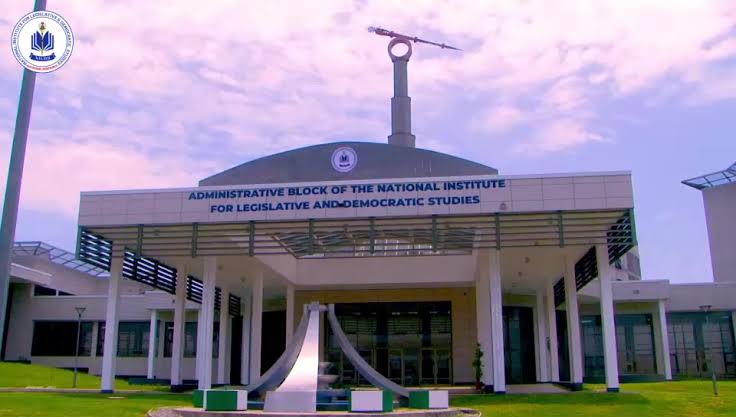
NILDS seeks stronger role for women in governance
According to the DG, democracy in Nigeria has come to stay and requires collective commitment.

Lagos
Lagos recruits 45 personnel to boost enforcement on Lekki-Epe corridor
Mr Osiyemi noted that the corridor had staffing challenges that slowed down operations.
Heading 2
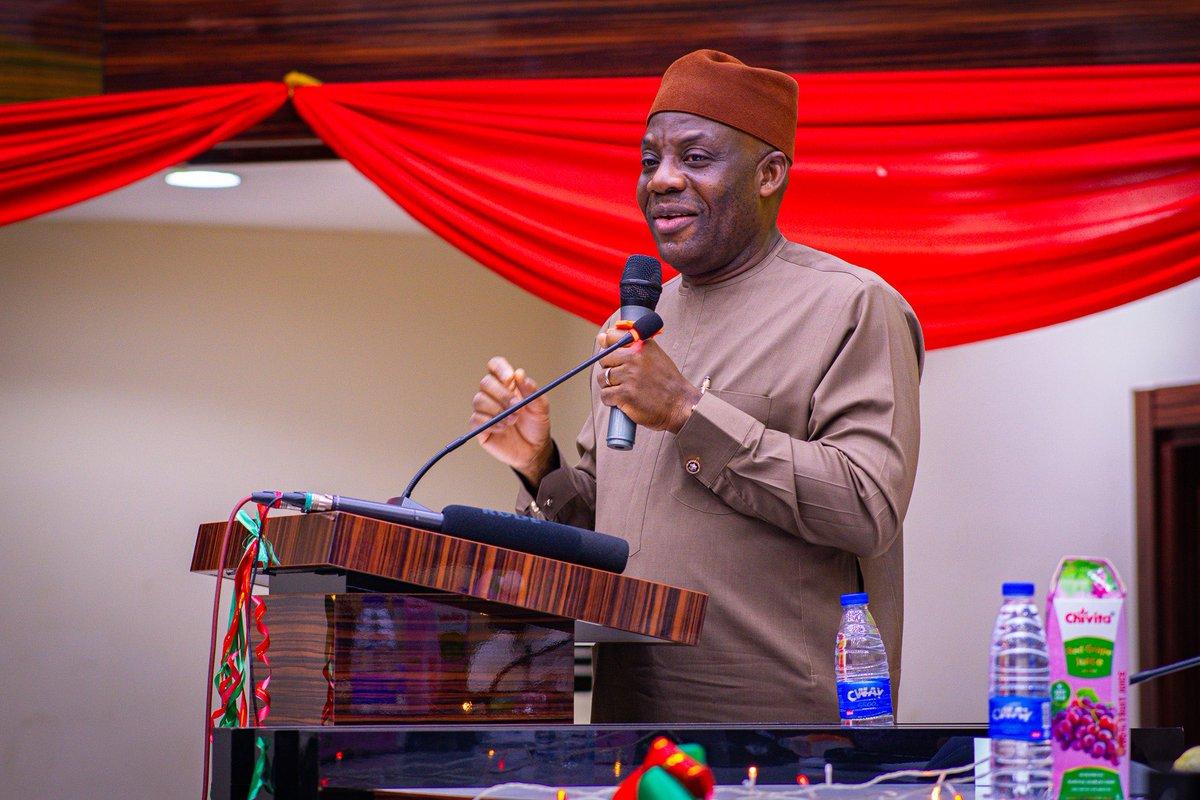
Education minister inaugurates Nigeria’s first robotic surgery academy
Mr Alausa said the initiative would expand advanced medical training.
Health
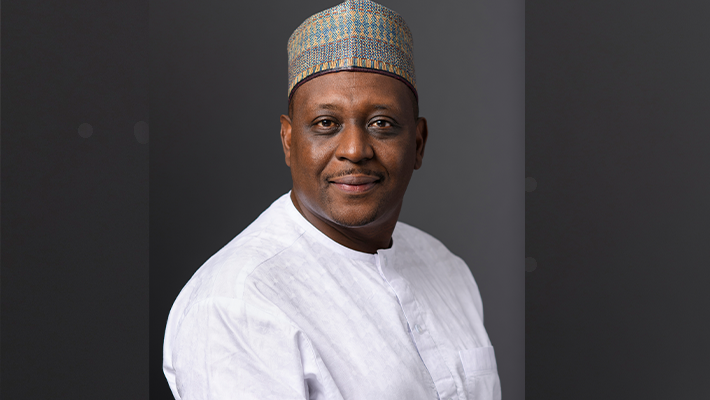
Pate warns politicians against politicising Ebola case
Mr Pate said health is a unifying issue that transcends political, ethnic and religious affiliations.
Economy
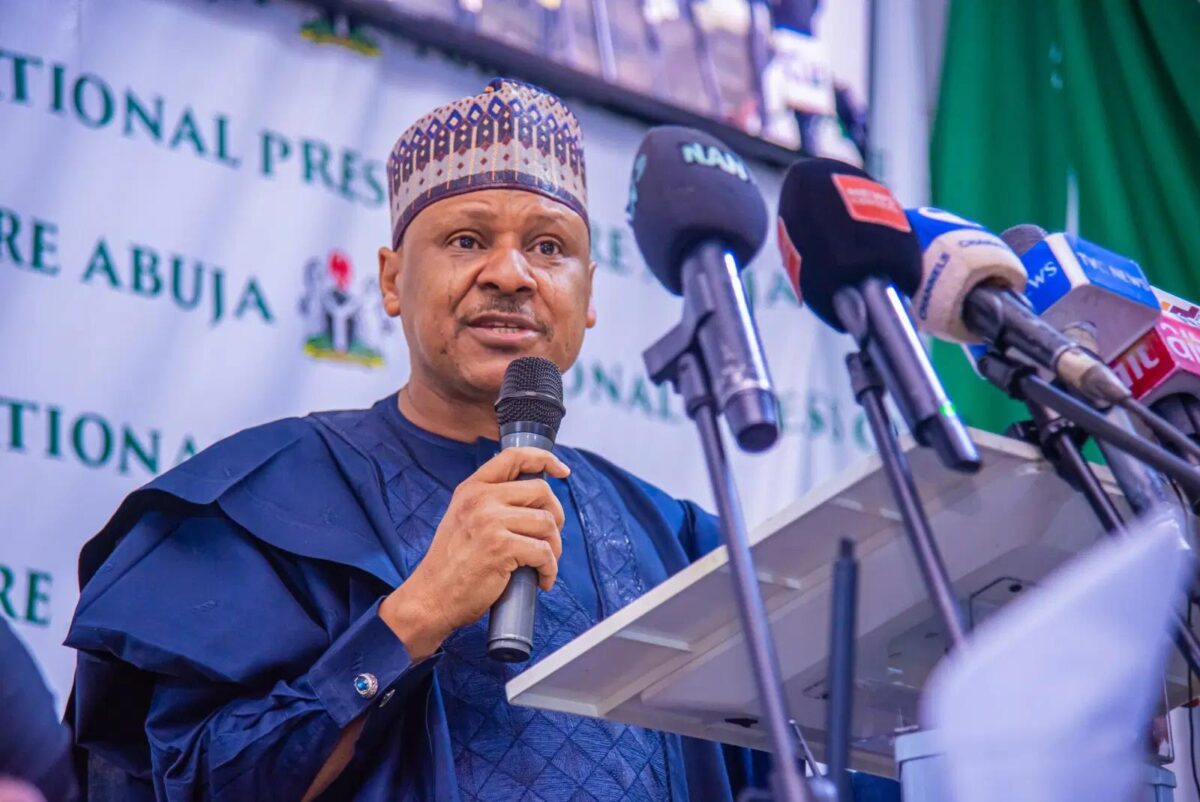
Tinubu’s economic reforms paving way for prosperity: Minister
The minister explained that the reforms were deliberate and courageous, aimed at addressing longstanding structural weaknesses.

Health
Kaduna expands last-mile health supply project to 1,000 facilities
Ms Isyaku said four zonal warehouses in Ikara, Sabon Gari, Zaria and Kafanchan, established under the project, were operational.


