

Rudolf Okonkwo: How you can be the next Pope if you’re a Catholic male
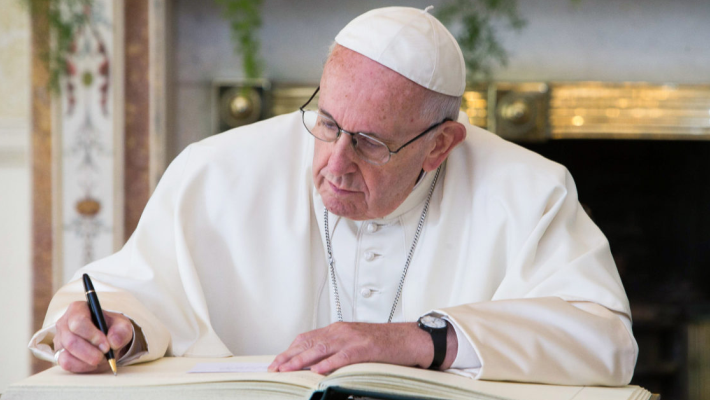
Pope Francis is dead.
Even before the newspapers finished rolling out their first prints, the conversation had already shifted to who should be the next pope.
The evening newspapers quickly began listing names of potential replacements, highlighting each candidate’s strengths and weaknesses.
Somewhere in the conversation, you’ll find a brief mention of the challenges the new pope will face.
Canon law specifies that any baptised male Catholic is eligible for election as pope. The last time that happened was in 1378. That was 647 years ago—not too long ago if you think of history’s long reach. But what followed is not something the Church would like to see again. It led to a schism that resulted in the emergence of two popes and, later, three. It stayed that way until 1417.
At this point, for any baptised male Catholic to become pope, he has to be ordained a priest, and the Church must make him a bishop before the cardinals would vote for him in a few days. The new law also requires that he be under 80 years old.
So, cardinals like Francis Arinze, 92, are out of contention.
Of course, people are mentioning some African cardinals among the contenders. Since the fifth century, no conclave has elected an African as pope.
Among those analysts mentioned in serious circles is 79-year-old Cardinal Robert Sarah from Guinea. He is one of the conservative cardinals poised to move the Church back to the centre and away from the left-of-centre position where Francis had taken it during his 12-year reign.
Cardinal Sarah wants Mass to return to the traditional Latin form. He publicly criticised Pope Francis for authorising the blessing of same-sex couples.
Each time the cardinals are about to elect a new pope, there are people outside who push for a Black pope. They argue that although the Church’s population has remained relatively steady as a proportion of the world’s population over the last century, there has been a shift in its growth toward Africa and South America.
Will this conclave elect a pope from Africa? Most unlikely. Before Pope John Paul II, Italian bishops had held the papacy for 455 straight years. They are eager to reclaim it, even though the composition of the College of Cardinals does not favour them.
Pope Francis was technically the first non-European pontiff in nearly 1,300 years. His election in 2013 was seen as a nod to the Church’s growth in Latin America, while the Church in Europe was in decline.
He died hours after meeting with J.D. Vance, the Vice President of the United States, in the Vatican. Some have had fun with that, comparing J.D. Vance to Susan Rice, who, shortly after she met with MKO Abiola in Abuja, saw Abiola die in Abacha’s detention.
History will remember Pope Francis for trying to reform the Catholic Church. He received a series of pushbacks from the conservatives within. But as we know, the Catholic Church faces a series of existential crises. It must either reform or continue its slow death.
Cardinals under the age of 80 will soon gather to elect a new pope. Their choice will determine whether the Church’s decline slows or accelerates.
The vexing issue of the role of women in the Church and what to do about homosexuality will not go away. The Church in the West cannot reverse course on these matters.
As the number of men willing to become priests declines, the Church will have to decide whether to allow priests to marry or permit married men to become priests. Depending on priests from Africa and other countries in the Global South to keep the Church going in the West is not sustainable.
In two to three weeks, the cardinals’ choice will determine the direction the Church will take.
But honestly, there are only two options—progressive or conservative. Neither will appeal to everyone.
Whatever the direction, it will lead to the disenchantment of more of the Church’s faithful. Those disenchanted that will stay, like some Catholics in the West, tactically ignore doctrines emanating from the Vatican.
After nine days of mourning and the election of a new pope, the real challenge begins.
As the first non-European pope, Pope Francis spoke the truth, especially to America under Trump. And like America, he battled with the question of what to do to keep his empire—the Church—from collapsing more rapidly.
Whoever takes over will have to deal with that classic challenge—the one every old and dying empire faces: the only way to remain the same is to change.
It’s not a question of when the Catholic Church will change; it’s how.
It’s the same quagmire America is dealing with under President Trump.
So far, the Church under Pope Francis has not panicked or pressed the panic button. Will the next pope panic and press it, just like Trump is doing in the face of America’s decline? That is the question facing the new pope.
None of the African cardinals in contention has shown any interest in correcting the damage the Church did in Africa. After antagonising scientific advancement in Europe for centuries, the Catholic Church came into Africa and wreaked havoc—havoc that African people are still suffering from today.
That same resistance to change now threatens the Church’s sustainability. Maybe only male Catholics in Africa who understand the significance of African artefacts, condemned in Africa by priests sent from Rome, but stolen and preserved in the Vatican, can truly reform the Church fast enough to save it.
So, as male Catholics across Africa mourn Pope Francis, they need to know that they, too, can become pope. All one needs to do is be ordained a priest, appointed a bishop, and get the cardinals to vote for him in two to three weeks.
For now, we say, Adios, Pope Francis. We’re sorry that none of our prophets and miracle healers in Africa reached you in time to perform a resurrection.
Rudolf Ogoo Okonkwo teaches Post-Colonial African History, Afrodiasporic Literature, and African Folktales at the School of Visual Arts in New York City. He is also the host of Dr. Damages Show. His books include “This American Life Sef” and “Children of a Retired God,” among others. His upcoming book is called “Why I’m Disappointed in Jesus.”

We have recently deactivated our website's comment provider in favour of other channels of distribution and commentary. We encourage you to join the conversation on our stories via our Facebook, Twitter and other social media pages.

More from Peoples Gazette

States
Independence: NBA urges Nigerians to expect better future
The NBA said that ordinary Nigerians should be deriving benefit from the subsidy removal rather than hardship.

Agriculture
FG tasks ECOWAS on leveraging financing strategies for agroecology
The federal government has urged stakeholders in the agriculture and finance sectors in the West Africa region to leverage financing strategies to enhance agroecology practices

Politics
Katsina youths pledge to deliver over 2 million votes to Atiku
“Katsina State is Atiku’s political base because it is his second home.”
Heading 5
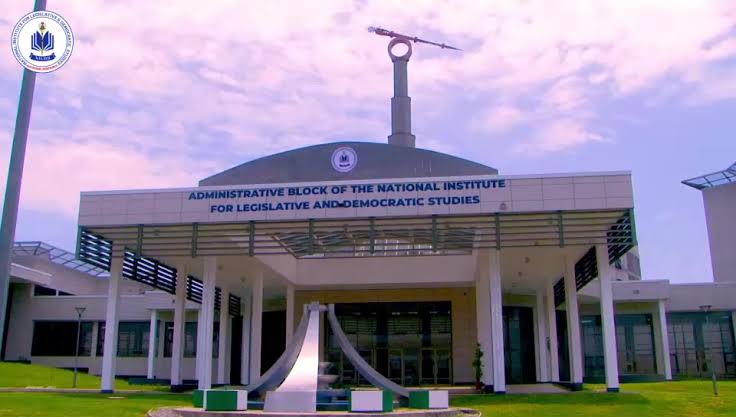
NILDS seeks stronger role for women in governance
According to the DG, democracy in Nigeria has come to stay and requires collective commitment.

Lagos
Lagos recruits 45 personnel to boost enforcement on Lekki-Epe corridor
Mr Osiyemi noted that the corridor had staffing challenges that slowed down operations.
Heading 2
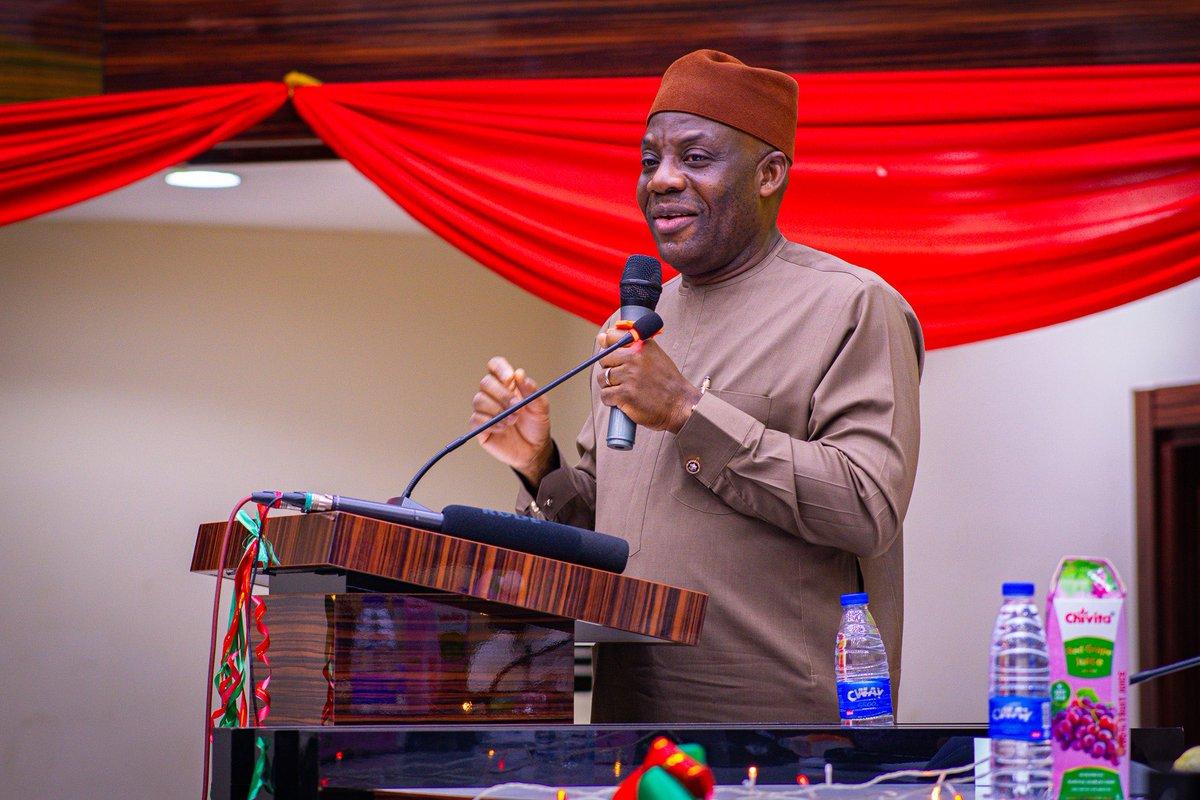
Education minister inaugurates Nigeria’s first robotic surgery academy
Mr Alausa said the initiative would expand advanced medical training.
Health
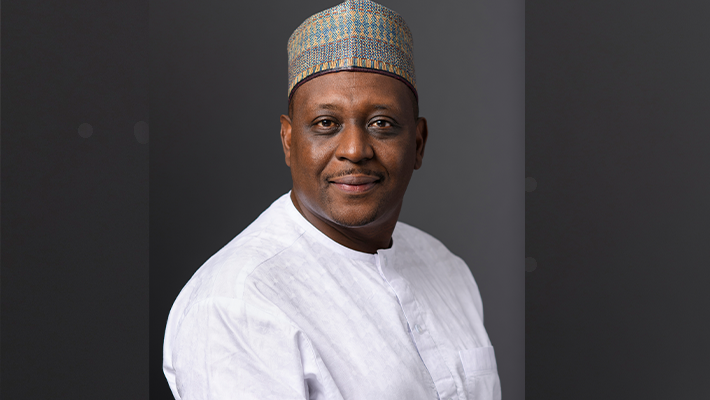
Pate warns politicians against politicising Ebola case
Mr Pate said health is a unifying issue that transcends political, ethnic and religious affiliations.
Economy
Tinubu’s economic reforms paving way for prosperity: Minister
The minister explained that the reforms were deliberate and courageous, aimed at addressing longstanding structural weaknesses.

Health
Kaduna expands last-mile health supply project to 1,000 facilities
Ms Isyaku said four zonal warehouses in Ikara, Sabon Gari, Zaria and Kafanchan, established under the project, were operational.


