

Why we need a new Bible, Quran and Bhagavad Gita

Did God create this vast universe—or was it a random act, as some scientists suggest? Most Africans will confidently say, “Of course, God created the universe,” and stop the conversation there.
But the critical question isn’t whether the universe emerged from a random act. People fixated on that question are often just defending their beliefs.
Scientists who support the “random act” theory are not married to it. They’ll abandon it the moment compelling evidence proves otherwise. They’re ready to embrace the next best theory as soon as it becomes verifiable.
The real question is this: Given what we now know about this immense, incomprehensible, ever-expanding universe, do our holy books—filled with folktale-like stories written by ancient people who knew little about the Earth, let alone the cosmos—truly honour God? Or do they diminish the concept of a higher, intelligent being capable of creating something so magnificent?
Which of these sacred texts doesn’t, in its limitations, shrink the divine to human proportions?
Scientists don’t present their theories as immutable truths. They say, “Here’s what we understand for now.” And when better knowledge arises, they evolve. Just as they discarded Dalton’s Atomic Theory, they’ll discard the Big Bang or the multiverse idea if fresh evidence demands it, whether in 100 years, 2,000 years, or 10,000 years.
But followers of holy books aren’t prepared to abandon even a single word.
Take, for instance, the idea of the immaculate conception: no matter how far science progresses—even if we colonise Saturn’s moons or conceive babies in metal wombs orbiting Jupiter—some believers will cling to it, unwavering. Many will even fight or kill in defence of what their scriptures declare to be true.
At some point, we must have the courage to admit that the problem might be the books themselves.
If I write a book, and its readers go out killing others based on their interpretation of my words, shouldn’t we question the book? If its central figure murders people, and followers imitate him, is the issue not the book?
I’ve been reading the Old Testament lately. It’s disturbingly similar to what’s happening in the Middle East today.
The Bible is filled with divine atrocities. In Genesis 6–8, God sends a flood to wipe out almost all living creatures, sparing only those that Noah shelters on the ark. If He created them, He could destroy them at will—but apparently forgot they were made in His image. Humanity, ever since, has taken that divine precedent and run with it, killing and erasing life they didn’t even create.
In Genesis 19, God destroyed Sodom and Gomorrah with fire and brimstone for their wickedness. In Exodus 7–12, He sends ten plagues upon Egypt, culminating in the death of innocent firstborn sons. In Numbers, Deuteronomy, and Joshua, He commands the Israelites to annihilate entire populations—men, women, and children—in the conquest of Canaan. (Wink, wink—Gaza, 2024.) And in 1 Samuel 15, He orders the complete destruction of the Amalekites.
Biblical scholars have defended these acts for centuries, justifying the violence as necessary, righteous, and divine.
I hope someone, somewhere, is writing a new holy book.
And if no one is, and you believe you have the skill, this is your calling.
The other day, while reading the Old Testament, I had an epiphany:
The problem isn’t us. The problem is the book.
And we—”people of the book”—have failed to rise above it.
I don’t care whether you follow the Bible, the Quran, the Bhagavad Gita, or some forgotten gospel—it makes no difference.
You are only as good as your book.
Humanity has clung to these texts for generations, lived by their codes, and imitated their prophets. Many have obeyed to the letter.
It hasn’t gone well.
Some custodians have tried to revise and modernise these texts to keep pace with a changing world. But those efforts have failed—Failed because the foundation itself is flawed.
Time moves faster than cautious reformers can keep up.
The core of these books is so brittle that even gentle edits threaten to collapse the whole structure.
Take the Bible—it’s the one I know best. In it, God is the protagonist. God is to the Bible what Okonkwo is to Things Fall Apart—the lead. But unlike Okonkwo, God is to be worshipped. His commands were obeyed. His actions emulated. And that’s the problem.
The atrocities God committed—or ordered—still echo through time. People replicate them, quoting chapter and verse. They justify modern horrors with ancient mandates. So many passages in the Old Testament could be mistaken for today’s headlines in Gaza or Israel.
The only difference is the weapons. The words are the same. The zeal—unchanged. The cruelty—still familiar.
My friends, the book is the problem.
Throw out the books.
We need a new one—a holy book with a God who reflects the humanity we strive for, not the vengeance we inherited.
Anything short of that, and we’re just spinning our wheels, wishing for peace while praying to gods who never modelled or mandated it.
Rudolf Ogoo Okonkwo teaches Post-Colonial African History, Afrodiasporic Literature, and African Folktales at the School of Visual Arts in New York City. He is also the host of Dr. Damages Show. His books include “This American Life Sef” and “Children of a Retired God.” among others. His upcoming book is called “Why I’m Disappointed in Jesus.”

We have recently deactivated our website's comment provider in favour of other channels of distribution and commentary. We encourage you to join the conversation on our stories via our Facebook, Twitter and other social media pages.

More from Peoples Gazette

States
Independence: NBA urges Nigerians to expect better future
The NBA said that ordinary Nigerians should be deriving benefit from the subsidy removal rather than hardship.

Agriculture
FG tasks ECOWAS on leveraging financing strategies for agroecology
The federal government has urged stakeholders in the agriculture and finance sectors in the West Africa region to leverage financing strategies to enhance agroecology practices

Politics
Katsina youths pledge to deliver over 2 million votes to Atiku
“Katsina State is Atiku’s political base because it is his second home.”
Heading 5
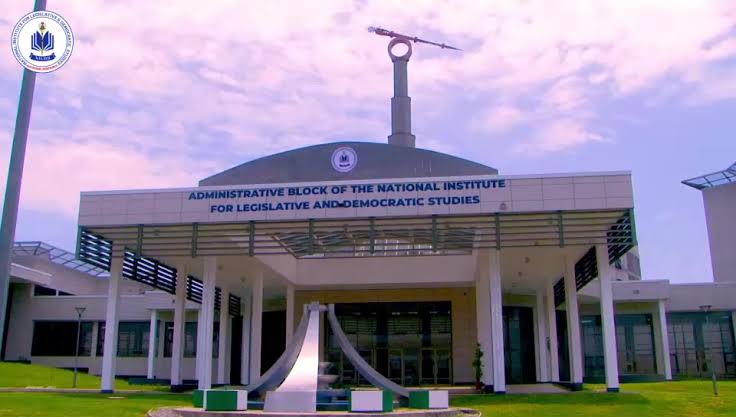
NILDS seeks stronger role for women in governance
According to the DG, democracy in Nigeria has come to stay and requires collective commitment.

Lagos
Lagos recruits 45 personnel to boost enforcement on Lekki-Epe corridor
Mr Osiyemi noted that the corridor had staffing challenges that slowed down operations.
Heading 2
Education minister inaugurates Nigeria’s first robotic surgery academy
Mr Alausa said the initiative would expand advanced medical training.
Health
Pate warns politicians against politicising Ebola case
Mr Pate said health is a unifying issue that transcends political, ethnic and religious affiliations.
Economy
Tinubu’s economic reforms paving way for prosperity: Minister
The minister explained that the reforms were deliberate and courageous, aimed at addressing longstanding structural weaknesses.

Health
Kaduna expands last-mile health supply project to 1,000 facilities
Ms Isyaku said four zonal warehouses in Ikara, Sabon Gari, Zaria and Kafanchan, established under the project, were operational.


