

Russia develops method to predict flood risks, reduce damage

Russian researchers on Thursday said they have developed a programme to calculate the characteristics of outburst floods.
The researchers at Saint Petersburg State University (SPbU) said the new development enables the prediction of failures in earthen dams of reservoirs and lakes.
They said it also enables the prediction of outbursts of mountain glacial lakes formed by moraine deposits (rock debris, clay and pebbles created by glacier movement).
The scientists’ development is designed to provide early warning of water release and thereby reduce potential destructive consequences, as reported on the university’s website.
They noted that unstable glacial lakes can suddenly drain, losing large volumes of water due to rapid warming or extreme precipitation.
The researchers added that reservoirs are also at risk, including from abnormal heavy rainfall that erodes embankments and can trigger flooding.
The programme is capable of predicting key parameters of a potential dam breach: the time of failure, peak water discharge, total flood volume and the size of the breach opening.
All these are based on data such as dam dimensions, height above the lake level, soil composition and properties, as well as other inputs.
“The uniqueness of our solution lies in the fact that we have developed a method to account for the heterogeneity of earthen dams, since soil exhibits different hydro-physical properties at different points.
“We also considered two main failure mechanisms: overtopping and erosion of a filtration channel within the dam body,” said the project lead, Associate Professor at SPbU, Galina Pryakhina.
The programme is intended to analyse potential breaches in water bodies located in remote mountainous regions where hydrological monitoring stations are absent.
Previously, calculations for such areas required field data collected during expeditions or the use of satellite imagery.
The researchers tested the programme using three lakes where outbursts of floods have already occurred: Bashkara in the Caucasus, Maashey in the Altai, and Nurgan in Mongolia.
In the near future, the team plans to add a module for calculating water inflow, allowing simulations to account for precipitation and glacier melt contributions.
This is expected to improve the accuracy of predictions regarding the behaviour of entire lake systems.
(TV BRICS/NAN)

We have recently deactivated our website's comment provider in favour of other channels of distribution and commentary. We encourage you to join the conversation on our stories via our Facebook, Twitter and other social media pages.

More from Peoples Gazette

States
Independence: NBA urges Nigerians to expect better future
The NBA said that ordinary Nigerians should be deriving benefit from the subsidy removal rather than hardship.

Agriculture
FG tasks ECOWAS on leveraging financing strategies for agroecology
The federal government has urged stakeholders in the agriculture and finance sectors in the West Africa region to leverage financing strategies to enhance agroecology practices

Politics
Katsina youths pledge to deliver over 2 million votes to Atiku
“Katsina State is Atiku’s political base because it is his second home.”

World
Finland’s Appeal Court reduces terrorism sentence of IPOB agitator Simon Ekpa
A Finnish district court had last year sentenced Mr Ekpa to six years’ imprisonment for terrorism and tax fraud.
NationWide
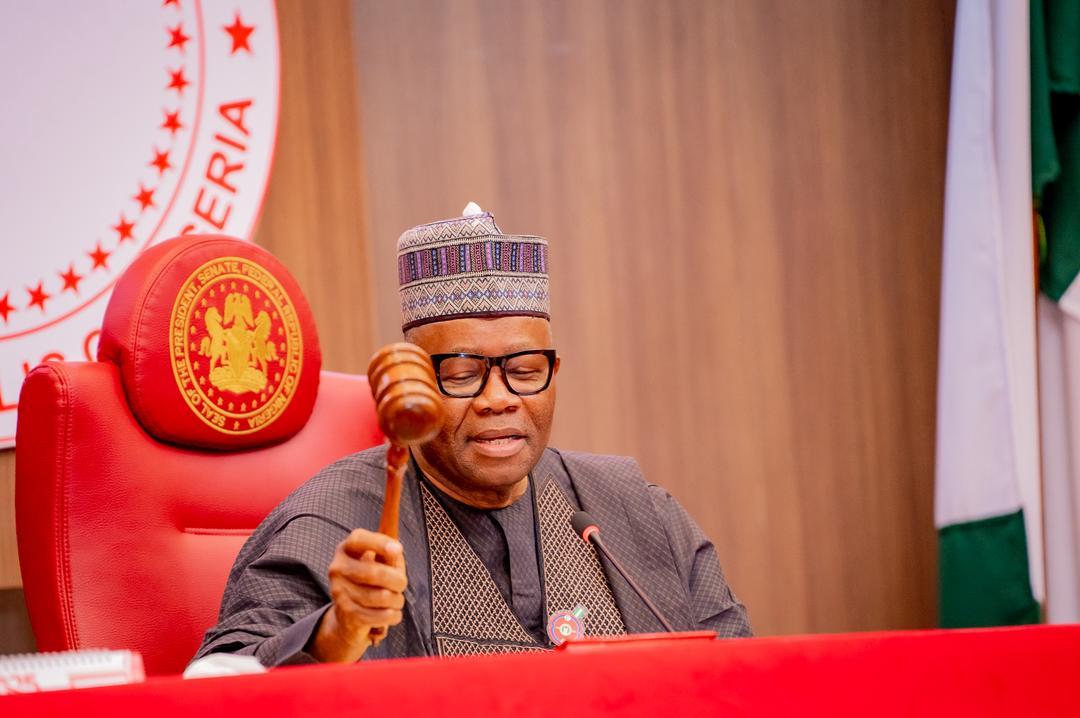
2027: ‘No vacancy’ for Akpabio’s seat, senators declare
The lawmaker said Mr Akpabio had already secured the Senate presidency in the 11th assembly.

Kano
Kano police arrest two suspects over possession of firearm
Mr Kiyawa stated that the police team attached to the farm centre intercepted a tricycle on reasonable suspicion.
Heading 3
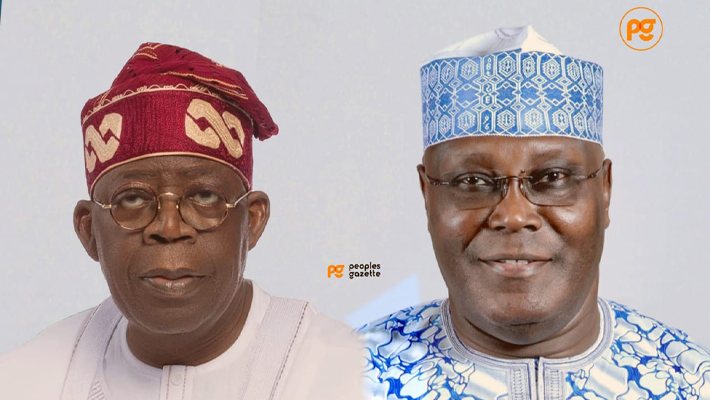
Tinubu wants another term but ashamed to face Nigerians to account for his first term: Atiku
“Now he wants another mandate. Before asking Nigerians for one, he must face them and account for the first term,” Mr Abubakar said.

Health
Diphtheria: 93% of affected children didn’t receive full vaccine doses, says NPHCDA
The NPHCDA CEO said some affected children had either not received any vaccine or received only one of the three recommended doses.
States
LAWMA begins clearing Iyana Oworo’s black spot waste
Mr Gbadegesin said LAWMA was investigating the source of the illegal dumping at the location.


