

Security Council debates Russia’s withdrawal from Ukraine grain deal

UN Security Council on Monday debated on Russia’s withdrawal from the crucial Ukraine grain deal and discussed how the landmark agreement to export grain and related foodstuffs from Ukraine would be sustained.
Russia requested the meeting following its decision to suspend participation in the UN-brokered Black Sea Grain Initiative “for an unspecified period of time,” announced this past weekend, in response to alleged Ukrainian attacks against its ships.
Two senior UN officials briefed the council at UN headquarters and also emphasised the need to keep the deal alive amid the ongoing war and the global cost of living crisis.
The UN’s Emergency Relief Coordinator, Martin Griffiths, and the head of its trade and development agency (UNCTAD), Rebeca Grynspan, briefed ambassadors on the development and its impacts so far.
“Ukraine’s grain exports are not a food aid operation. They do operate as a huge lever on price, with positive ripple effects throughout the world. New security allegations are a cause of grave concern to the secretary-general and many member states are worried now that the deal is in trouble,” said Mr Griffiths.
Ukraine and Russia account for roughly 30 per cent of the world’s exported wheat and barley, one fifth of its maize, and over half of its sunflower oil.
Russia is also the world’s largest exporter of fertilisers, accounting for 15 per cent of global exports.
The Black Sea Grain Initiative was signed by the UN, Ukraine, Russia and Türkiye during a ceremony in Istanbul in July.
Under the deal, ships transporting grain from three Ukrainian ports travel along an agreed corridor to markets worldwide.
The UN and Russia also signed a parallel agreement on grain and fertiliser exports.
Mr Griffiths said it would be “a grave abuse” of the Black Sea Grain Initiative if it were used in any way for military operational advantage.
“The United Nations has the solemn privilege of assisting the parties to implement this unique arrangement. Acting as a secretariat, the UN is ready to investigate, along with the nember states party to the initiative, any, and all evidence presented, if requested,” he added.
Furthermore, the mechanism implementing the initiative – the Joint Coordination Centre (JCC), comprising representatives of the four signatories – has established agreed processes for incidents and any accidents.
“This is of course why Russia’s suspension is concerning: There is a painstaking process, in the JCC, to arrive at a consensus on matters large and small even when a hot war is raging. The JCC has to be, and is, meticulously impartial,” he said.
Regarding Russia’s allegations, Mr Griffiths stated that “no military vessels, aircraft or assets are, or have been, involved in support of the initiative by any party.”
The corridor that vessels travel along “is just lines on a chart,” he added, and provides neither cover nor protection for offensive or defensive military action.
Mr Griffiths also addressed the alleged misuse of cargo vessels for military purposes, noting that no vessels are in the corridor on the night the reported attacks took place, and none reported an incident over the weekend.
Meanwhile, emergency measures have been taken to release some of the cargo from Ukrainian ports and to inspect some of the roughly 100 vessels that are queued up and ready to sail.
The relief chief insisted that the exports from Ukraine and Russia were vital in a world where millions were going hungry and finding it hard to pay their bills.
“Let me also say very clearly that we expect all Member States to work to support the implementation of the Memorandum of Understanding with the Russian Federation, also signed on 22 July, to ensure their own food and fertiliser exports can expeditiously reach global markets,” he told the council.
Ms Grynspan amplified this message in her briefing.
She said since the two agreements were signed, grain exports from Ukraine and Russia increased substantially, and food prices declined for six consecutive months.
However, uncertainty around the continuation of the Initiative is causing prices to spike again, with wheat futures rising by over six per cent on Monday alone.
The official also warned of the “fertiliser crunch,” with high prices affecting farmers, which could also impact availability of other staples such as rice.
She said the focus had been on finding solutions so that key markets would be able to access Russian fertiliser.
“What we have called the ‘chilling effect’ of the sanctions on the private sector, overcompliance, reputational risks, market avoidance, are still a real obstacle. Transaction costs on the insurance premiums, financial payments, shipping costs, and transport, for Russian food and fertiliser exports, are very high, leading to continued high global food and fertiliser prices,” Ms Grynspan said, speaking via videolink.
Regarding UN efforts, she reported that there had been “very intense engagements” with the United States, the European Union, the United Kingdom, and other countries, as well as the private sector.
“But, even with clear exemptions on the sanctions, there is still a lot of work to be continued,” she added. “Specifically, the need to further clarify exemptions for food and fertiliser within the different sanction’s regimes, the need to address indirect constraints to food and fertiliser er trade, as well as improve the private sector’s willingness to engage.”
(NAN)

We have recently deactivated our website's comment provider in favour of other channels of distribution and commentary. We encourage you to join the conversation on our stories via our Facebook, Twitter and other social media pages.

More from Peoples Gazette

States
Independence: NBA urges Nigerians to expect better future
The NBA said that ordinary Nigerians should be deriving benefit from the subsidy removal rather than hardship.

Agriculture
FG tasks ECOWAS on leveraging financing strategies for agroecology
The federal government has urged stakeholders in the agriculture and finance sectors in the West Africa region to leverage financing strategies to enhance agroecology practices

Politics
Katsina youths pledge to deliver over 2 million votes to Atiku
“Katsina State is Atiku’s political base because it is his second home.”

Heading 3
UBEC begins distribution of two million packs of sanitary towels to improve school attendance
Ms Garba said the initiative was designed to address barriers to girls’ education.
States
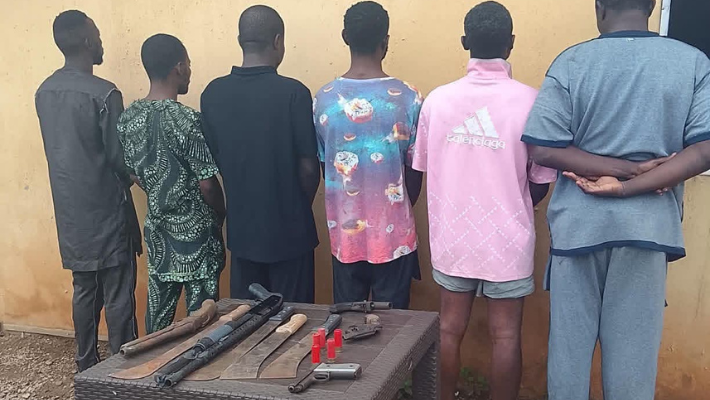
Police nab six armed robbers, recover weapons in Oyo
The police boss reaffirmed the command’s resolve to sustain intelligence-led operations against criminals.

Heading 2
FBI seizes about $17 billion, arrests hundreds in raid on Ghana Yahoo Boys enclave
The operation was described by Mr Patel on social media as part of the agency’s efforts to combat fraud.
States
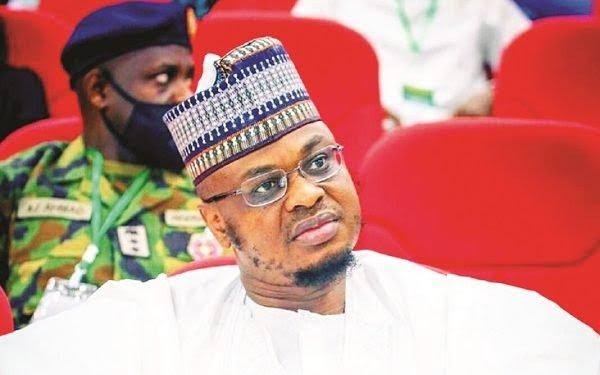
Gombe: Pantami threatens legal action over omission from INEC’s governorship list
His lawyers described the omission of Mr Pantami’s name from the governorship candidates’ list as unlawful.
Heading 5
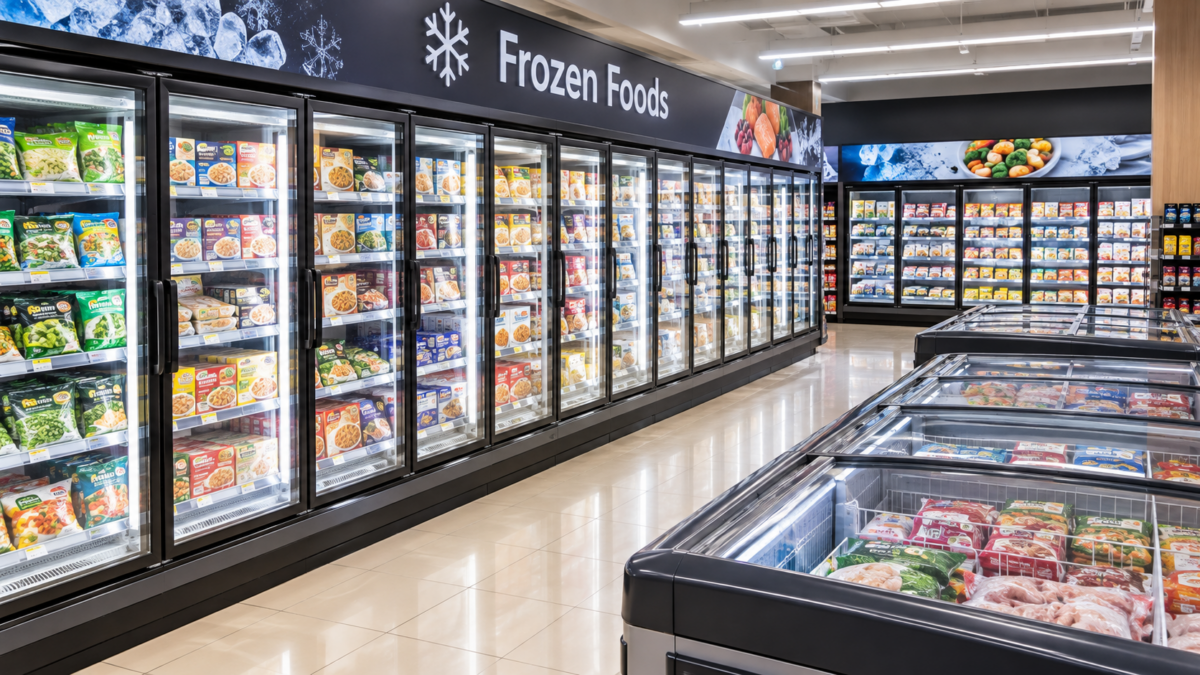
French supermarkets hit by cyberattack, causing freezers to heat up
Reports noted that the full extent of the cyberattack remained unclear.

World
McKinsey demotes consultant over LinkedIn comments
The company distanced itself from Mr Bradley’s remarks.


