

Slain Imo monarchs didn’t get police permission to hold meeting: CP Rabiu Hussaini
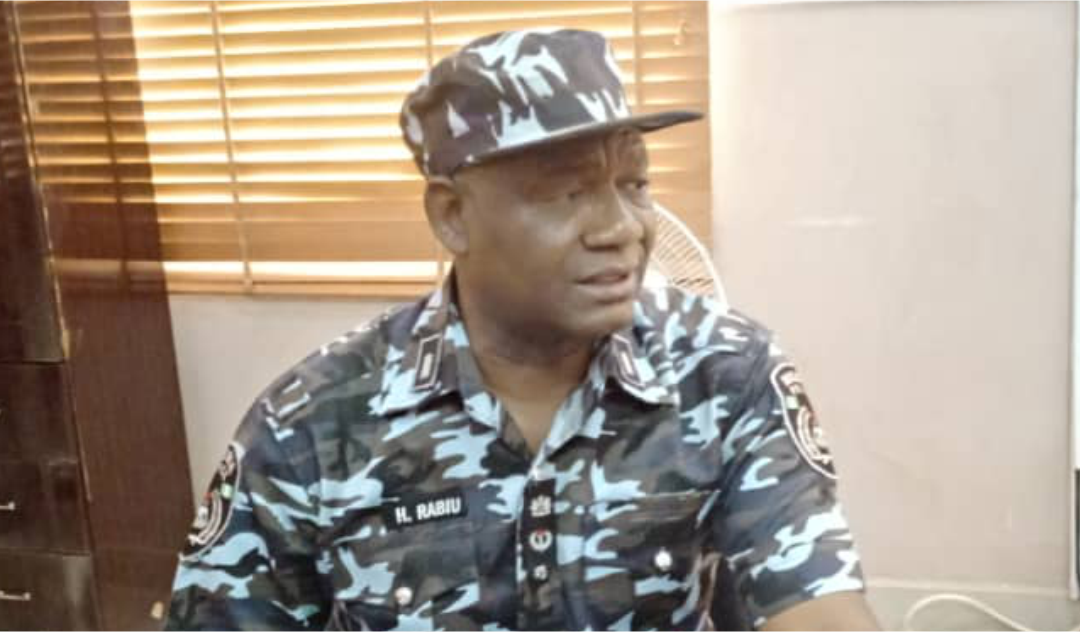
Traditional rulers in Imo did not get permission to hold the meeting where two of them were killed by gunmen on Tuesday, the state police command said in a statement.
Imo police commissioner Rabiu Hussaini said “since hoodlums razed Njaba Police Division and killed two officers, only policemen on vehicular patrol were posted to the area to help check crime.
“When the command got wind of the attack, the commissioner of police mobilised the command’s tactical unit to the meeting venue to foil the attack.
“At about 3 p.m., information was received that hoodlums, suspected to be members of the proscribed Independent People of Biafra/Eastern Security Network (IPOB/ESN) were attacking the venue.
“It was at where the Transitional Chairman of Njaba Local Government Council, Mr Emeka Ihenacho, was holding meeting with some transitional rulers.
“The commissioner of police immediately dispatched the command’s tactical teams to the scene and on their arrival they were informed that the hoodlums had fled into the bush on sighting the police.
“At the scene, it was revealed that the council’s transitional chairman had invited and was having meeting with 15 traditional rulers of Njaba communities without informing the police or other security agencies.
“While the meeting was in progress, bandits suspected to be IPOB/ESN members came and started shooting at them indiscriminately, after which they ran back into the bush.’’
Mr Hussaini commiserated with the bereaved families and that the fleeing bandits would be arrested and prosecuted,’’ the statement read.
Alongside other federal agencies, the police have faced frequent attacks linked to unidentified gunmen operating across the South-East in recent months. The police have repeated said they have capacity to secure the region, but the crisis has nonetheless continued to fester.
Last month, Chike Akunyili was killed between Onitsha and Enugu while returning from an award event in honour of his late wife Dora. The suspects are still at large.
Although the police have insisted that they should be informed ahead of gatherings, there’s no law mandating civilians in Nigeria to provide information about their legitimate events to the police in advance.
(NAN)

We have recently deactivated our website's comment provider in favour of other channels of distribution and commentary. We encourage you to join the conversation on our stories via our Facebook, Twitter and other social media pages.

More from Peoples Gazette

States
Independence: NBA urges Nigerians to expect better future
The NBA said that ordinary Nigerians should be deriving benefit from the subsidy removal rather than hardship.

Agriculture
FG tasks ECOWAS on leveraging financing strategies for agroecology
The federal government has urged stakeholders in the agriculture and finance sectors in the West Africa region to leverage financing strategies to enhance agroecology practices

Politics
Katsina youths pledge to deliver over 2 million votes to Atiku
“Katsina State is Atiku’s political base because it is his second home.”

Diaspora
Adetoros, Walters: Three sisters who drowned in sea like their mother died by suicide, coroner rules
Their mother, Ms Janice, drowned at sea at the age of 43

Economy
Nigeria pushes global tax reforms, cheaper development loans at UN
Nigeria has called for urgent reforms of the international financial architecture to address high borrowing costs and persistent development financing gaps.

Economy
Board chairman, co-owner of Nodus Bank jailed 62 months for multimillion-dollar wire fraud
The former board chairman and co-owner of Nodus International Bank has been sentenced to 62 months in prison for wire fraud.

Anti-Corruption
Fraudster convicted for defrauding crypto exchange Uranium Finance of $50 million
Jonathan Spalletta has been convicted of computer fraud and money laundering in connection with his hacks of the decentralised cryptocurrency exchange Uranium Finance.

World
Co-creator of dark web marketplace ‘Empire’ Raheim Hamilton jailed 40 years
Mr Hamilton agreed to forfeit certain illicit proceeds, including about 1,230 bitcoin and 24.4 Ether, as well as three properties in Virginia.

Heading 4
Petrol, diesel prices displayed on Google Maps to help motorists find cheaper fuel amid soaring energy costs
Petrol stations across the UK are required to report fuel price changes within 30 minutes or risk being fined.


