

Some foundational arguments on state police (Part Deux)
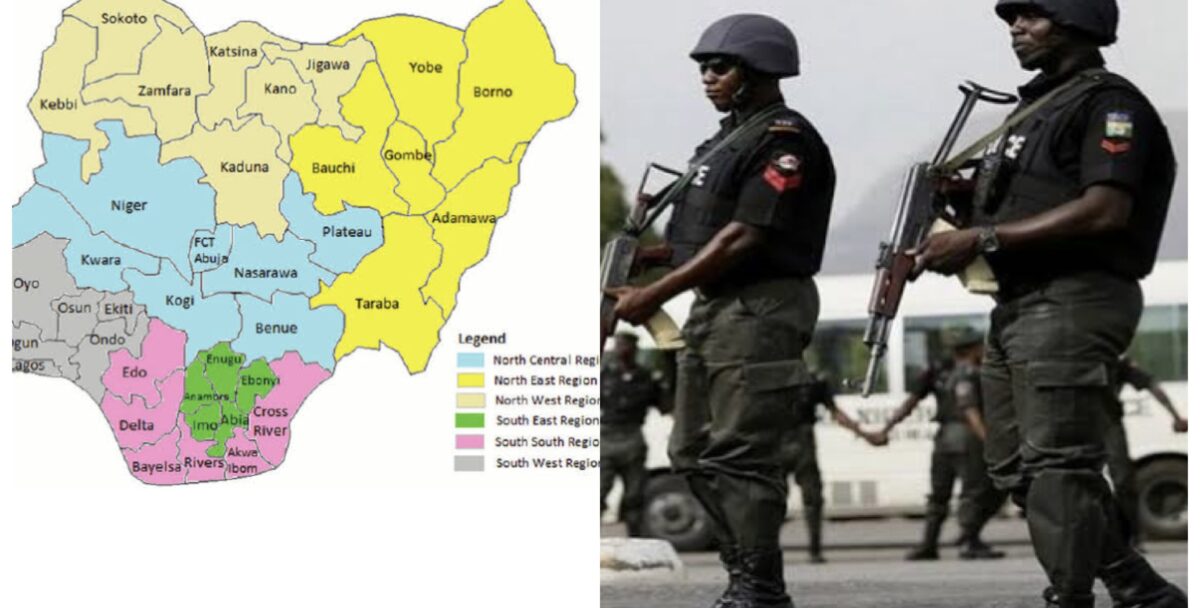
The conclusion of the first part of this essay was that Nigeria inherited an expeditionary police force from British colonial rule and retained its essential character after independence, even though political power passed from colonial administrators to Nigerian rulers. That historical inheritance explains why the debate on state police cannot begin and end with constitutional amendments or political negotiations over who should control the police. An institution designed to project the authority of the state into society does not become a democratic police service merely because its control is transferred from one level of government to another. The question before Nigeria, therefore, is not simply whether the country should establish state police.
The more important question is what kind of police federalism Nigeria should build. This distinction is important because countries that operate federalism do not organise policing in the same way. There is no single model called state police, just as there is no universal model of federalism. Every federation has developed a policing structure that reflects its constitutional history, legal traditions and understanding of the relationship between the citizen and the state. Nigeria can certainly learn from those experiences, but it cannot borrow institutions without first understanding the principles that sustain them.
Canada provides one useful example because it does not require every province to maintain its own police force. Instead, Canada operates what scholars describe as a contract policing system. The Royal Canadian Mounted Police serves as the federal police service, but it also provides provincial and municipal policing in several provinces and territories under contractual arrangements.
Provinces such as Ontario and Quebec have established their own provincial police services because they prefer to exercise direct responsibility for policing within their jurisdictions, while other provinces have concluded that contracting policing services from the federal force is more efficient and economical. What is striking about the Canadian model is not simply that provinces have choices, but that those choices exist within a constitutional and legal framework that clearly defines powers, responsibilities, funding arrangements and public accountability.
The debate is therefore less about political control than about the effective delivery of police services under the rule of law.
The United States represents a different model altogether. It operates perhaps the most decentralised policing system in the world. There is no single police institution that commands all others. Federal agencies investigate federal crimes. Every state maintains its state police or highway patrol. Counties have sheriffs whose offices derive their authority from state law, while cities and municipalities maintain their own police departments.
These agencies do not exist in a simple chain of command. Each exercises jurisdiction defined by law, while courts determine the legality of their actions and constitutional rights limit the powers they may exercise. The result is not a disparate system held together by politics but by constitutional imprimaturs in which authority is dispersed and regulated through law.
Australia presents yet another model. Every state and territory maintains its own police service, while the Australian Federal Police is responsible for federal offences, national security, international policing and specialised investigations. Although these policing institutions cooperate extensively, neither exists merely as an extension of the other. Their relationship is governed by legislation, intergovernmental agreements and established institutional practices. Coordination is achieved through cooperation rather than command, while operational independence remains an important feature of the system.
India’s experience is particularly relevant to Nigeria because both countries inherited British colonial policing and both emerged from colonial rule with institutions that had originally been designed to maintain imperial authority. The Constitution of India places the police within the legislative competence of the states, meaning that each state maintains its own police force under its own government. The Union Government retains responsibility for central investigative agencies and central armed police forces that perform specialised national functions, but ordinary policing is constitutionally recognised as a state responsibility.
But India’s experience also demonstrates that constitutional decentralisation does not automatically eliminate political interference or institutional weaknesses. The contemporary debates in India concern the need to insulate state police from partisan influence, strengthen police accountability, and implement reforms repeatedly recommended by commissions and the Supreme Court. Constitutional design, in other words, did not remove the need for continuous institutional reforms.
These comparative experiences reveal an important truth that is often overlooked in the Nigerian debate. None of these federations began by asking only who should control the police. They first addressed the legal foundations upon which policing would operate. Questions about accountability, prosecutorial independence, judicial oversight, civilian complaints, funding, recruitment, professional standards, operational autonomy and constitutional rights became part of the fulcrum of policing rather than matters left to political discretion. The police were conceived as institutions operating under law, not merely as agencies exercising governmental power.
This is the point that Professor Chidi Odinkalu consistently made in his recent interventions at the Arise Television town hall debate on the subject, including his interview on Arise Television. His argument is that the debate over state police cannot be reduced to a matter of distributing police powers between the Federal Government and the states, because policing is only one component of the administration of justice.
Every arrest must lead to a legal process governed by prosecutors, courts, defence lawyers and judicial institutions. Altering one component while leaving the others untouched risks reproducing the same institutional failures within a different constitutional arrangement. His observation directs attention to a larger question that Nigeria has postponed since its independence.
What philosophy of policing should guide the Republic? The answer cannot simply be that police powers should be decentralised. Decentralisation describes the location of authority. It does not define the purpose of the authority. A police service organised around coercion, political obedience and executive command may remain fundamentally unchanged whether it is controlled from Abuja or from the capitals of the thirty-six states.
The real task before Nigeria is therefore institutional reconstruction rather than constitutional relocation. Recruitment must reflect professional competence rather than political patronage. Police training must emphasise constitutional rights, investigative competence and community confidence rather than the management of subject populations.
Independent complaints mechanisms must command public trust. Prosecutorial institutions must possess sufficient independence to prevent investigations from becoming political instruments. Judicial oversight must ensure that police powers remain subject to constitutional limitations. None of these reforms depends entirely upon the creation of state police, but all of them will determine whether state police succeed or fail if they are eventually established.
This explains why the examples of Canada, the United States, Australia and India should be approached with care. Nigeria should not imitate their institutional names while ignoring the constitutional cultures that sustain them. Those countries differ in their political histories, but they share one important characteristic: their policing systems derive legitimacy from legal frameworks that define authority, allocate responsibility, and establish mechanisms through which the police remain answerable to the public. Their institutions are not perfect, and each continues to confront significant challenges, but the conversation about policing is conducted within a constitutional understanding that the police exist to serve society rather than to dominate it.
Nigeria has now arrived at a similar constitutional moment. The demand for state police reflects genuine concerns about insecurity, local knowledge and the limitations of an excessively centralised police organisation. Those concerns deserve serious consideration. They should not, however, lead the country into believing that constitutional re-engineering alone can resolve problems whose origins lie in the historical character of the institution itself. The debate on state police should therefore proceed with philosophical caution and constitutional clarity.
The objective should not be to multiply police forces across the federation, but to create police institutions that are genuinely republican in character, professionally independent in their operations, and firmly accountable to the Constitution and the people whose rights they exist to protect.
Unless that institutional transformation accompanies constitutional reform, Nigeria may discover that it has not abandoned the expeditionary police inherited from colonial rule but has merely reproduced it in thirty-six different jurisdictions. As Antonio Gramsci cautioned, a ruling class that has lost its cultural hegemony cannot simply introduce coercive institutions to force compliance with its illusion. As we say in local parlance, kò lè work.
Abdul Mahmud, a human rights attorney in Abuja, writes weekly for The Gazette

We have recently deactivated our website's comment provider in favour of other channels of distribution and commentary. We encourage you to join the conversation on our stories via our Facebook, Twitter and other social media pages.

More from Peoples Gazette

States
Independence: NBA urges Nigerians to expect better future
The NBA said that ordinary Nigerians should be deriving benefit from the subsidy removal rather than hardship.

Agriculture
FG tasks ECOWAS on leveraging financing strategies for agroecology
The federal government has urged stakeholders in the agriculture and finance sectors in the West Africa region to leverage financing strategies to enhance agroecology practices

Politics
Katsina youths pledge to deliver over 2 million votes to Atiku
“Katsina State is Atiku’s political base because it is his second home.”

States
Remi Tinubu inaugurates 50 CNG buses, launches ₦1 billion empowerment programme in Edo
Mrs Tinubu said the initiatives would improve transportation and create economic opportunities for residents.

Uncategorized
Alleged Fraud: Witness tells court he facilitated N1.4 billion forex transactions for Yahaya Bello’s associate
Justice Maryanne Anineh adjourned the case until October 27 and November 24, 2026, to continue the trial.
Politics
2027: Only eight women on INEC’s list of Katsina’s 420 legislative candidates
The final list released by INEC showed that only eight women will be contesting in the general elections in Katsina.

World
Finland’s Appeal Court reduces terrorism sentence of IPOB agitator Simon Ekpa
A Finnish district court had last year sentenced Mr Ekpa to six years’ imprisonment for terrorism and tax fraud.
NationWide
2027: ‘No vacancy’ for Akpabio’s seat, senators declare
The lawmaker said Mr Akpabio had already secured the Senate presidency in the 11th assembly.

Kano
Kano police arrest two suspects over possession of firearm
Mr Kiyawa stated that the police team attached to the farm centre intercepted a tricycle on reasonable suspicion.


