

South Africa in top five countries with best infrastructure in Africa: President Ramaphosa
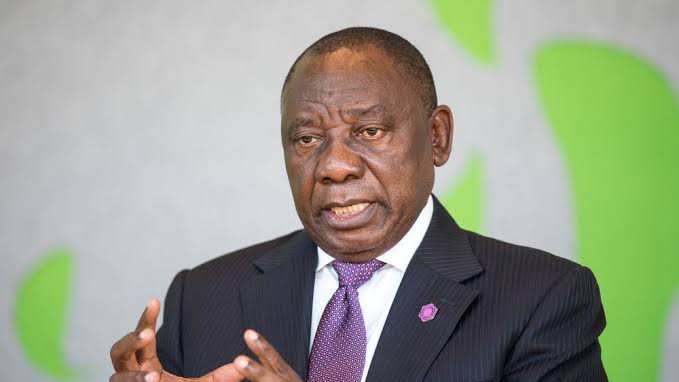
BETTER INFRASTRUCTURE IS ESSENTIAL FOR BETTER LIVES
Dear Fellow South African,
While many parts of the country continue to experience poor delivery of basic services, South Africa has a good core network of public infrastructure that is improving the lives of our citizens.
Our country consistently ranks highly on indices published by the African Development Bank that evaluate the status of transportation, electricity, ICT and water and sanitation infrastructure. South Africa ranks in the top five countries in Africa with the best public infrastructure.
This is important because infrastructure development plays a key role in ensuring fast economic growth and alleviating poverty.
However for this world-class infrastructure to continue to support our developmental goals, it has to be properly, effectively and efficiently maintained. And decisions on infrastructure investment have to respond to the growing need and upgraded appropriately.
Last week, I attended the launch of a new phase of upgrades to the Vulindlela Bulk Water Supply Scheme in KwaZulu-Natal, a water infrastructure project that mainly services the uMgungundlovu and uMsunduzi municipalities.
When the first phase of the scheme was commissioned 25 years ago, it was only servicing 100,000 people. That number has almost tripled in the intervening years, putting a strain on the existing infrastructure resources. Once the current upgrades are completed, approximately 350,000 residents will receive clean, quality water.
The Darvill wastewater treatment plant outside Pietermaritzburg has also been upgraded and will now be able to treat up to 100 million litres a day and better service households, businesses and industries in the municipality.
We have good quality infrastructure, but in far too many instances it is not being properly maintained and upgraded. Last year, the South African Institution of Civil Engineering gave the country’s social infrastructure a D rating, with E being failed or failing. Passenger rail scored particularly low, achieving an E.
We continue to witness the detrimental consequences of failure to maintain public infrastructure. We are seeing accidents, disease outbreaks and other tragedies that in a number of instances have been associated with dilapidated infrastructure.
The maintenance of public infrastructure is often the responsibility of local government. It remains of concern that municipalities are failing to spend conditional grants allocated to them for maintenance and upgrades of infrastructure.
The National Treasury recently reported that slightly more than half of the Municipal Infrastructure Grant was being spent by municipalities. This grant is for upgrading and building new infrastructure and rehabilitating existing infrastructure.
At the last meeting of the President’s Coordinating Council, in June, we agreed on greater accountability from municipalities that consistently underspend on their conditional grant allocations. Part of the problem is that municipalities, especially smaller municipalities, lack implementation capacity.
However, there are municipalities that are spending conditional grants successfully and timeously. For example, approximately 91% of funding allocated to municipalities to fund reconstruction and rehabilitation after floods in the Western Cape, Eastern Cape and KwaZulu-Natal was spent by the respective municipalities.
This illustrates that with the necessary support, technical assistance, planning and coordination, the problem of municipal underspending on public infrastructure can be overcome.
The Department of Cooperative Governance, National Treasury and national and provincial government will continue to support municipalities to use their budgets effectively and fulfil their responsibilities to the South African people.
Because of its vital developmental function, we continue to prioritise investment in infrastructure across government. Construction is underway on several bulk water, housing, energy and roads projects. Together with better infrastructure maintenance, we are determined that these investments will make a big difference in people’s lives.
When social infrastructure is well-maintained not only do citizens benefit, but businesses are also supported and the economy as a whole grows and develops.
With best regards,

We have recently deactivated our website's comment provider in favour of other channels of distribution and commentary. We encourage you to join the conversation on our stories via our Facebook, Twitter and other social media pages.

More from Peoples Gazette

States
Independence: NBA urges Nigerians to expect better future
The NBA said that ordinary Nigerians should be deriving benefit from the subsidy removal rather than hardship.

Agriculture
FG tasks ECOWAS on leveraging financing strategies for agroecology
The federal government has urged stakeholders in the agriculture and finance sectors in the West Africa region to leverage financing strategies to enhance agroecology practices

Politics
Katsina youths pledge to deliver over 2 million votes to Atiku
“Katsina State is Atiku’s political base because it is his second home.”

World
Henri Kagan, Kenso Soai win Nobel chemistry prize
The Royal Swedish Academy of Sciences has awarded the Nobel Prize in Chemistry 2026 to Henri B. Kagan and Kenso Soai.

Lagos
Passenger on board Kenya Airways Lagos-bound flight dies
A passenger on board a Kenya Airways flight from Nairobi to Lagos on Tuesday died after being unresponsive for 20 minutes before the plane landed.
Lagos
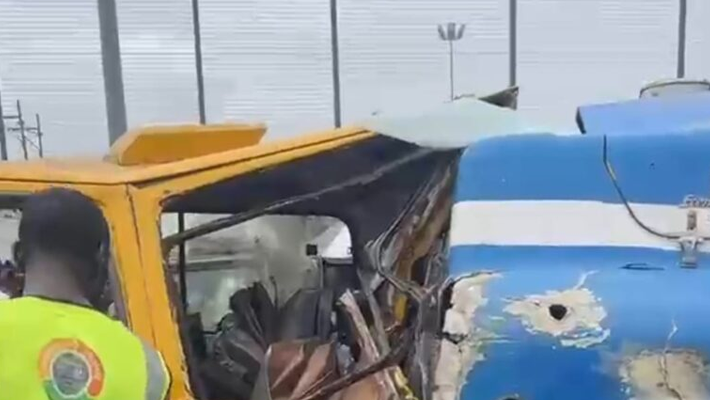
LASTMA arrests truck driver after casualties recorded in multiple-vehicle crash
Operatives of the Lagos State Traffic Management Authority have apprehended a truck driver following a multiple-vehicle crash that critically injured four persons.
Politics
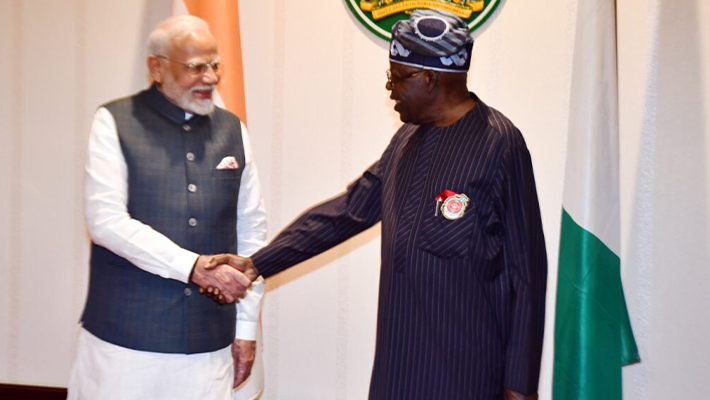
Tinubu hails Indian PM Modi for 25 years in political power
Mr Tinubu said the “quarter-century of unbroken leadership” testified to the confidence Indians placed in Mr Modi’s ability to deliver efficient governance.

Politics
Makinde-Daura group inaugurates presidential campaign committee
The Makinde-Daura group inaugurated its National Campaign Management Committee, emphasising grassroots mobilisation to win the majority of Nigeria’s 103 million registered voters.

Economy
Tinubu govt offers 40 oil blocks as Nigeria 2026 licensing round opens
The federal government has inaugurated the 2026 oil and gas licensing round, offering 40 blocks across land, shallow water and deepwater terrains to local and foreign investors.


