

Speaker Abbas inaugurates special committee to tackle oil theft

The Speaker of the House of Representatives, Tajudeen Abbas, has inaugurated a special committee on oil theft to tackle one of the largest threats to Nigeria’s economy.
Mr Abbas said during the ceremony on Wednesday in Abuja that Nigeria was losing an estimated 300,000 barrels of crude oil per day due to theft, vandalism and other criminal activities.
According to him, some of the severe consequences of this include revenue loss, environmental disasters, threats to regional peace and security, the proliferation of arms, and a poor investment climate.
The speaker said that the nation was reported to be incurring losses of oil revenues estimated at N1.29 trillion annually due to industrial-scale theft.
He explained that the committee’s primary objective was to determine the proximate and remote causes of oil theft and recommend remedial measures to the parliament.
“We set up this special committee to underscore our unwavering commitment to protect the nation’s resources for the good of all our citizens and to punish the perpetrators of these dreadful crimes.
“I charge you, therefore, to investigate all dimensions of oil theft, focusing on the actions of all actors, including criminal gangs, militia groups, the local populace, company employees and security agencies.
“I urge the members of this committee to approach your mandate with diligence, objectivity, a sense of urgency, and patriotism.
“The findings and recommendations from your work will also serve as a foundation for sustainable solutions rather than ad hoc measures.
“I also expect your efforts to contribute significantly to enhancing the integrity of our oil sector and promoting sustainable development.
“I call upon all stakeholders, including government agencies, industry players, security agencies, civil society organisations, and the general public, to extend their full cooperation to this special committee for it to deliver on its mandate,” he said.
Mr Abbas said that Nigeria was facing significant financial challenges due to a combination of rising expenditures and falling revenues.
He recalled that the proposed revenue and expenditure for 2023 stood at N9.73 trillion and N20.51 trillion, respectively.
The speaker added that there was a fiscal deficit of N10.78 trillion, or about 4.78 per cent of the GDP.
According to him, this deficit is the largest in Nigeria’s history, and with a budget more than double the proposed revenue, the country is faced with the challenge of borrowing to cover the gap.
“It is for this reason that the House will significantly raise the targets for all government revenue-generating agencies.
“I am convinced these agencies can generate much more than they currently do.
“In our recent engagement with MDAs on the 2024-2026 MTEF, we made it clear that a lot more will be required of our key revenue-generating agencies in 2024.
“We expect them to double their total annual revenue profile. However, to achieve this, these agencies must reduce waste and improve efficiency, especially in collection.
“In addition to this, revenue-generating agencies must ensure transparency in the management of generated revenues.
“Let me state clearly that the House will not tolerate low performance by agencies or failure to show evidence of required remittances to the Federation Account.
“We shall also closely monitor and undertake strict oversight of the activities of all revenue-generating agencies to ensure compliance,” Abbas said.
Earlier, the Chairman of the Committee, Rep. Ado Doguwa (APC-Kano State), said the record from the National Extractive Industries Transparency Initiative (NEITI) report 2021 indicated that the oil and gas sector accounted for 72.26 per cent of Nigeria’s total exports and government foreign exchange.
He said the sector accounted for 40.55 per cent of government revenue and provided 19,171 jobs.
Mr Doguwa said that in spite of the seemingly robust contribution of the oil and gas sector to the national economy, the country has yet to derive maximum benefits from its abundant hydrocarbon resources.
According to him, this is due to oil theft and losses through pipeline vandalism, pipeline integrity issues, compromises, measurement inaccuracies, outright sabotage and general insecurity in the oil-producing communities.
Mr Doguwa stressed that issues of oil theft and pipeline vandalism were not new but remained persistent threats to Nigeria’s economy, environment and national security.
“The urgency of addressing these challenges and bolstering our regulations, technology and security measures cannot be overstated.
“Oil theft is a large-scale illegal business estimated to be worth $133 billion per year globally.
“This makes it the world’s biggest theft of a natural resource and is also considered to be the number one most smuggled natural resource globally.
“From the 2021 NEITI, it is estimated that between 2019 and 2021, Nigeria lost 643 million barrels of crude, amounting to $48 billion, from thefts.
“A recent report by a presidential investigative panel affirms the apparent micro-economic impact of crude oil theft.
“The report states that with oil theft and illegal bunkering taking as much as 200,000 to 400,000 barrels per day of the country’s oil production at the onset of these illegalities to now more than 800,000 barrels per day, the country’s fiscal stability is therefore threatened.
“The report further painted a frightening scenario where losses to oil thieves and official leakages could overtake official receipts of all oil revenues into the Nigerian treasury,” he said.
Mr Doguwa added that challenges might appear enormous, but with the political will of the house leadership, members and committee, they could be surmountable, saying that the tales of woe could be rewritten to those of blossoming prosperity.
The chairman said he was optimistic that, with the inauguration and the support of the house leadership, the committee would dust off all existing recommendations and re-evaluate them.
He said the committee would do this in line with current realities and ensure monitoring of the implementation of relevant recommendations in collaboration with relevant government agencies.
(NAN)

We have recently deactivated our website's comment provider in favour of other channels of distribution and commentary. We encourage you to join the conversation on our stories via our Facebook, Twitter and other social media pages.

More from Peoples Gazette

Agriculture
FG tasks ECOWAS on leveraging financing strategies for agroecology
The federal government has urged stakeholders in the agriculture and finance sectors in the West Africa region to leverage financing strategies to enhance agroecology practices

Politics
Katsina youths pledge to deliver over 2 million votes to Atiku
“Katsina State is Atiku’s political base because it is his second home.”
Africa
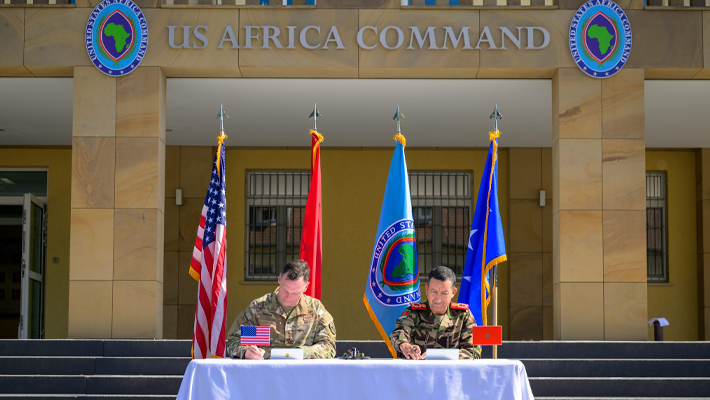
Anti-Terrorism: U.S AFRICOM, Morocco to establish tech-driven training, experimentation centre in Africa
Mr Anderson said the centre would increase readiness and advance capabilities of both nations.

Sport
Argentina stun England to set up World Cup final clash with Spain
Spain defeated France 2-0 at the Dallas Stadium on Tuesday to qualify for the final.

NationWide
FG enhances international recognition of Nigerian passports
Mr Akinlabi said the milestone was achieved on July 13.
Heading 3
FG, states, LGs shared N2.550 trillion June revenue: FAAC
Mr Mokwa said the revenue was shared at the July meeting of the committee.

Heading 2
14-year-old boy charged with terror offences targeting London mosques
The boy was arrested on 9 July on suspicion of criminal damage to a vehicle.

States
Delta content creator arrested after alleged rape victim dies by suicide
According to the victim, Mr Ogbonna initially demanded sex in exchange for financial help.


