

SPECIAL: How Oyo govt’s neglect leaves Ayegun community with empty schools, unsafe roads, blackout
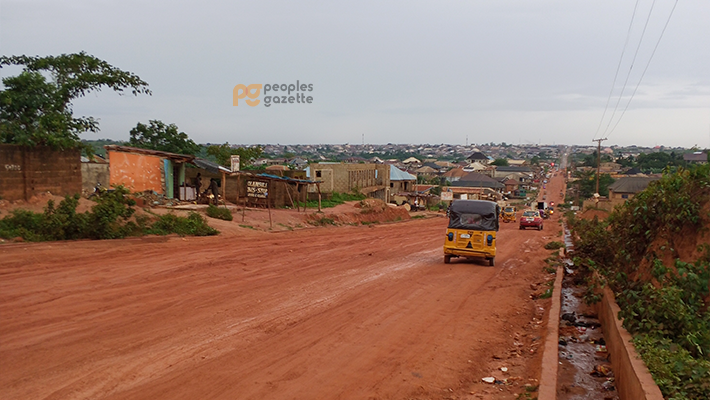
For residents of Ayegun community in the Oluyole Local Government Area of Ibadan, the much-talked-about gains of democracy are a distant promise as Governor Seyi Makinde seems to look away.
Struggling with impassable roads, dilapidated school structures, and grossly inadequate electricity, residents of the more than 70-year-old community say they have continued to wait for the dividends of democracy and proactive leadership to address their multiple concerns.
Ayegun’s road to rot
From Fatusi junction, an interstate untarred route that, at the slightest rainfall, dissolves into muddy pools, to Okande junction, where the same road erupts into clouds of reddish-brown dust during the dry season, users described plying the road as a challenging experience.
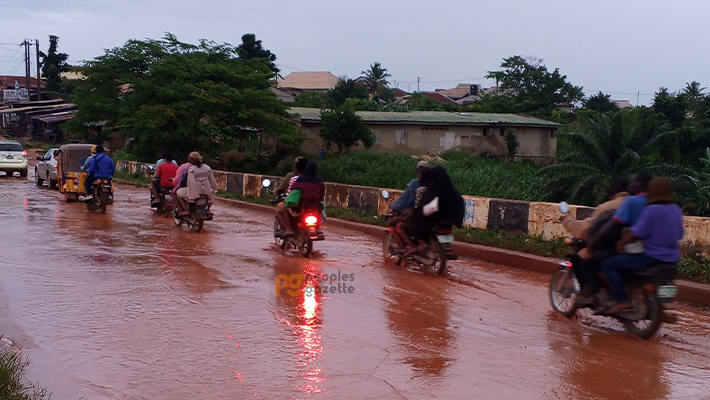
While waiting for his next passenger, Musa Isa, a commercial motorcyclist who regularly transports passengers between the Fatusi and Olojuoro communities, told Peoples Gazette that the road’s deplorable condition frequently damaged motorcycles, tricycles, and other vehicles.
Mr Isa said the deplorable condition of the road often leads to passengers falling off motorcycles, tricycles getting stuck in the mud, and abrupt disruptions to road users’ journeys.
“What we are facing on this Ayegun road is severe. From Fatusi to Olojuoro, it is not uncommon to see people fall on the road, and motorcycles and vehicles often break down. We continue to work as riders because it is our only source of income. Not working at all would not be beneficial to anyone,” Mr Isa stated. “They had been working on the road before they stopped. If this road is fixed, there will be development. Tricycles get stuck, leading to passengers often disembarking abruptly during trips.”
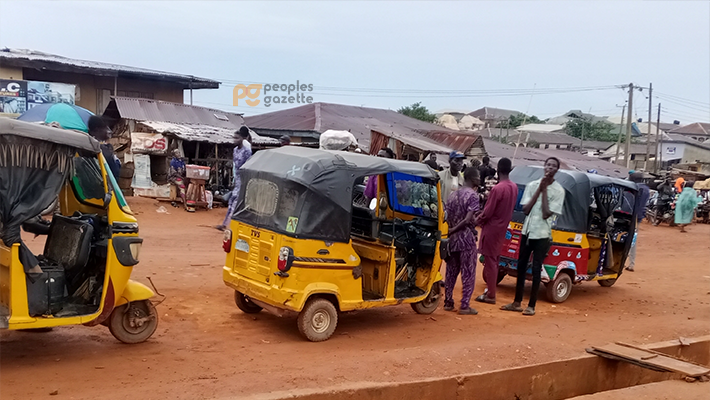
Also expressing concern, Kazeem Olajide, a commercial tricyclist who plies Ayegun to Academy bus-stop route daily, stated that the travails of road users could not be lightly measured.
The tricycle rider explained that money, which should be spent on other needs, is often diverted to repairing wheel misalignment, describing it as one of the most common mechanical faults caused by the road.
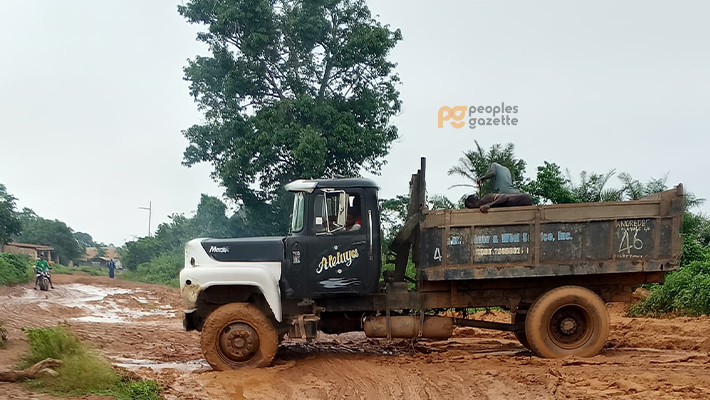
“What we, cyclists and motorcyclists, face on this road is serious. With the rain that fell today, you will be surprised by how many passengers are waiting in Olomi because tricyclists are avoiding Ayegun due to the bad road,” Mr Olajide told The Gazette. “God should help us, and our government should kindly assist. This road is really giving us problems, and there is hardly a week that we do not have to spend money on repairs to our tricycles. The same applies to vehicles, as there are often cases of wheel misalignment on this road. The road we are talking about is a major one because it leads to Ijebu Igbo. The communities here are quite large. The kind of problem we are experiencing should not be happening,” he said.
Transformer that produces blackout
Beyond the poor road network that makes trips to shops, churches, mosques, schools, business centres, and other destinations difficult, Ayegun residents also contend with year-long challenges in electricity supply and consumption.
Romoke Olajumoke, a mill operator and landlady in Jagun-Ayegun community, stated that communities such as hers have been without electricity throughout the year, adding that residents have had to purchase poles and cables, and bear the costs of connection and maintenance on multiple occasions.
Ms Olajumoke accused the electricity distribution company of providing an inadequate power supply for most of the month and only improving service when electricity bills were due for payment.
“We bought poles and tapped electricity, but they told us the government is the owner of electricity. We paid, but the supplied electricity was low voltage. When we asked for a solution, they told us we should buy a transformer,” said Ms Olajumoke. “We got a transformer and used the electricity for a while. Soon, we started encountering problems. It began to trip off frequently. Our experience has been that electricity is usually supplied towards the end of the month,, and when the new month starts, there is the usual inadequate supply. There was a time when they brought a high voltage that negatively affected the number of households here.”
At other times, the current is too low for comfort.
“They told us that we should change our poles from wooden poles to concrete poles. We did,” the resident stated. “Since December till today, we have not had electricity. We have been asked to help fix the electrical fault. Landlords who have been in the community are asked to pay N5,000, while the new ones just tapping electricity to their houses are to pay N8,000.”
Ms Olajumoke noted that the situation has resulted in disruptions to frozen-food ventures, loss of livelihoods, and a shift among many male residents toward commercial motorcycle riding, particularly because the absence of electricity has discouraged artisanal work.
“Politicians have been promising us, but they are failing us. We want the government to help us,” Ms Olajumoke said.
A civil servant and resident of the community, Adio Owolabi, shared a similar tale.
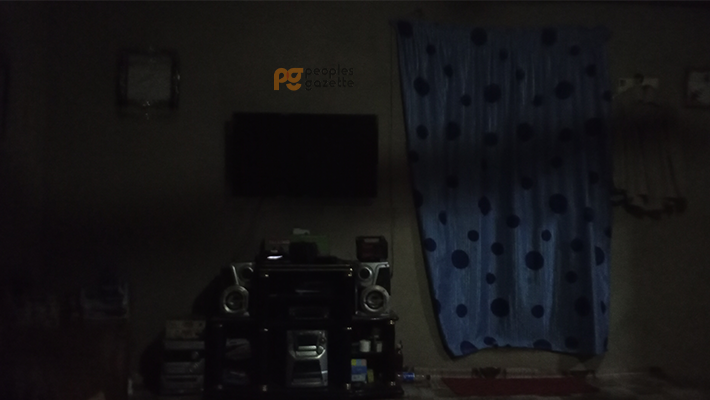
“Each time it is repaired, it does not take up to four days before the electricity goes off again, and the money usually spent on it is huge.
“A lot of artisans have abandoned their previous work for motorcycle riding. If there is electricity, people who are tailors, welders and rewires would be able to carry out their normal businesses comfortably, and there would not be much struggle for everyone,” Mr Owolabi said.
Ayegun’s sordid schools
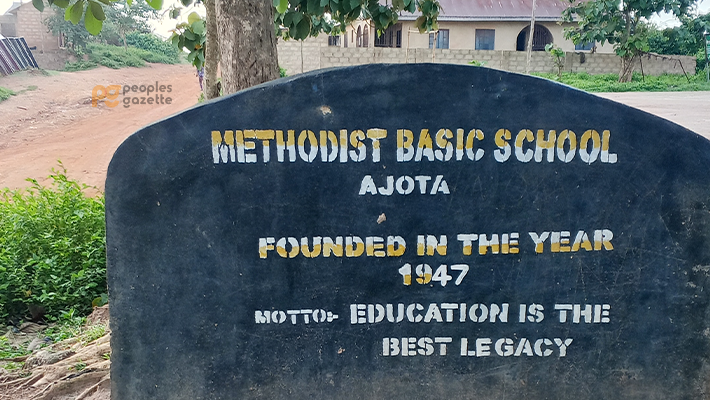
The condition of school facilities in the Ajota and Inu Odi Okiti communities of Ayegun is the third dimension of the challenges confronting the densely populated community. Without a fence, Methodist Basic School in Ajota-Ayegun is a single structure housing a few classrooms for both the lower and upper primary levels, where all teaching and learning activities reportedly take place. Opposite the structure stands a ramshackle building overtaken by weeds.
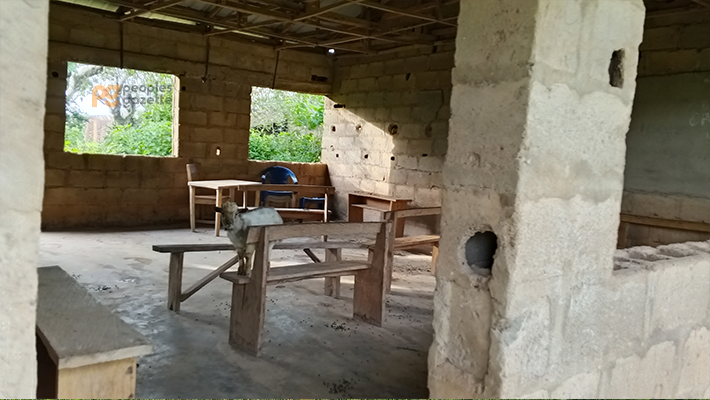
At St. Patrick Catholic School in the Inu Odi Okiti community, adjacent to Ajota and separated by a circular road under construction, the grounds are littered with goat and sheep excreta. Only five desks and chairs were found in one of the classrooms. One classroom indicated that academic activities were last held in the facility on May 5, 2023.
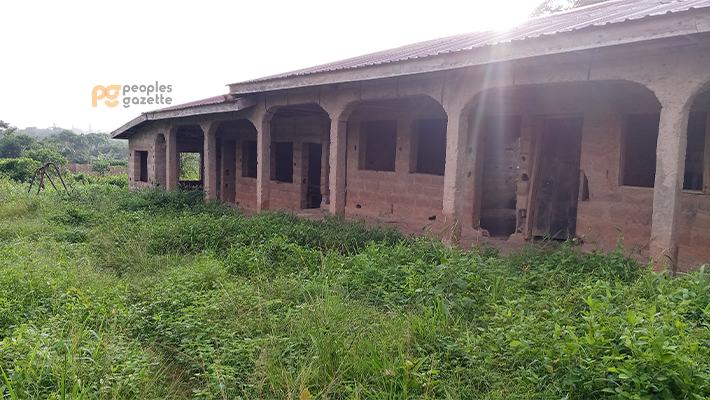
Kolade Balogun, a landlord and community teacher who once volunteered at the school, explained that the school’s fate was sealed due to the failure of relevant authorities to promptly address its deteriorating conditions, despite calls for help via letters and his personal efforts to sustain its operations.
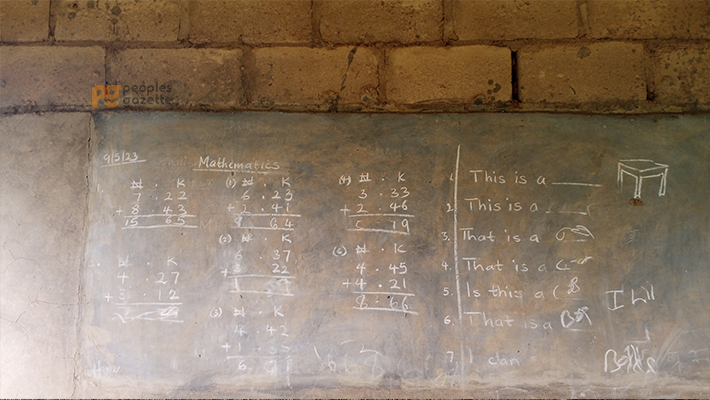
One of such letters seen by The Gazette complained about “unplastered walls, no chalkboards, no toilets, insufficient desks and benches, holes in building blocks, no windows and doors, lack of teachers, a bushy environment, no playground or sports field, no teaching charts and materials, cracked walls, an unsecured well and an environment that has become home to snakes, scorpions and poisonous lizards”.
“I met with the community and applied as a community teacher. We agreed on the salary and other issues. When I arrived, I met the headmaster and another teacher, as well as about seven to nine pupils. When I went through the system, I saw that it lacked many things. I started working very hard, cutting bushes and trees about three or four times to make the environment suitable for the children. I did it all alone,” Mr Balogun told The Gazette. “Another disappointment for me was that I was owed a salary. The salary was N25,000 naira per month, and they (the community) owed me for about three months, so I left the place and joined another private school at the time.”
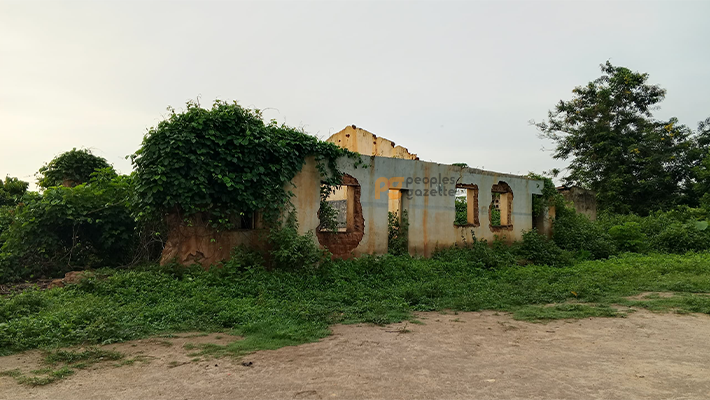
The Baale of the Okiti community, Kamorudeen Adekunle, said, “The first problem we have is that we do not have teachers. That was what led to the school’s disintegration. When only the headmaster is left to teach many classes, the money I have had to spend on that school is countless, including what my mogajis (family heads) have contributed. However, because there are not enough teachers, many parents decided to withdraw their children.”
Mr Adekunle appealed to the authorities of Governor Seyi Makinde’s government to rehabilitate the school.
“The government should assist us in renovating the school to make it suitable. When they renovate it and provide teachers, it will restore teaching and learning activities. As you have seen, goats are messing up the environment. They should also provide benches and desks for the children,” Mr Adekunle said.
He also urged the Oyo government to resolve the perennial power and road issues.
“There is only a transformer in Ayegun. In the Inu Odi community, there is no electricity. The electricity supply that an area like Jagun and other communities have, Inu Odi Okiti does not receive,” Mr Adekunle stated. “We need the government to assist in grading our roads. They should also help us construct drainage systems.”
Joshua Temitope, a youth in the community, expressed concern over the lack of democratic dividends for residents in the residential communities, citing the absence of basic social amenities.
“I can say for a fact that the citizens enjoy absolutely nothing when it comes to the dividends of democracy. This is evident in the absence of basic social amenities. For example, the road is always muddy and slippery during the rainy season, and in the dry season, it is dusty,” said Mr Temitope. “This has a lot of negative impacts on the health of the people, coupled with the fact that there is only one functioning yet underfunded and understaffed primary healthcare centre that serves the community. Also, some parts of the town, such as Lako, Jagun, and Ateji, among others, have not had electricity since last year.”
He added, “It is safe to say that there is no government presence as regards the provision of basic social amenities for the citizens. The government in Oyo state has neglected this part of the state, leaving citizens at the mercy of worsening health, education and other social conditions.”
Finding light in darkness
The spokesman for the Ibadan Electricity Distribution Company (IBEDC), Ibadan Division, Frank Williams, told The Gazette that the power outage, dating back to 2024, was primarily caused by a fallen pole that disrupted power supply to the area, as well as the refusal to accept redistributed bills.
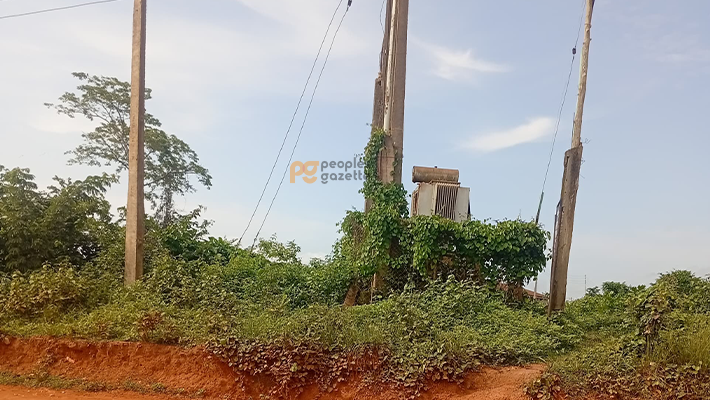
Mr Williams stated, “Since 2024, a fallen pole has disrupted power supply to the area. After the pole was repaired, a community connected to one of the transformer phases rejected the bill redistribution and stated that they no longer required the supply. The outright resistance prevented us from restoring the supply.
“While some communities have since indicated they want power restored, the situation has created lingering issues affecting supply to areas under the Lako Jakun, Ateji, Ajota, Inu Odi in Ayegun, Oluyole LGA in Ibadan, Oyo state.”
Mr Williams expressed IBEDC’s readiness to reconnect “these communities, but the ongoing situation continues to leave them underserved”, adding that the “company, too, is grossly affected by this. We are planning a community engagement with the leaders and representatives. We believe this would establish a mutually beneficial relationship”.
Politicians’ perspective
Waheed Akintayo, the representative of Oluyole constituency in the Oyo State House of Assembly, told The Gazette that the worst section of the road belongs to the federal government.
“That portion of the road is a federal road, and the project currently being carried out there is being funded by the federal government of Nigeria. I am aware that part of the project has been completed, while some sections are still under construction,” Mr Akintayo explained. “I intend to raise a motion on the floor of the House to draw the attention of the federal government, which may have forgotten that they have a project that they are doing there.”
The Oyo lawmaker claimed he was unaware of the deplorable condition of the schools in the area, blaming the area’s large size, which also serves as his constituency.
“On Methodist Basic School, Ajota, and St Patrick Catholic School, Inu Odi, I must confess to you that I am not aware of what you are saying about these two schools. You know Oluyole is too big.
“Oluyole has a federal constituency, being a local government, and it is also the same as the state constituency. I need people to reach out to me, calling our attention to some of the infrastructures in their domain, to let us know what is happening there,” said Mr Akintayo.
The lawmaker added, “I recently facilitated two basic schools in Oluyole. If I were aware of the condition of those schools, I might have chosen the two schools for the projects instead. The two basic schools I am talking about are one at Faroko, under Ward 5 along Soka Road, and another is at Olokonla in Ward 3, along the Egbeda Atuba Road, close to the circular road.”
Mr Akintayo admitted that although he lacked the authority to execute projects, he would assist in bringing the concerns to the attention of the relevant ministries and agencies.
The lawmaker advised the affected communities to approach the electricity distribution company to understand the reasons behind the inadequate supply and find a common ground to resolve the issues.
The commissioner for public works, infrastructure and transport in Oyo state, Abdulmojeed Mogbonjubola; the Oyo state government spokesman, Sulaimon Olanrewaju; the executive chairman of the Oyo State Universal Basic Education Board (OYOSUBEB), Nureni Adeniran; and the commissioner of education, science and technology, Olusegun Olayiwola, did not immediately respond to requests for comment.

We have recently deactivated our website's comment provider in favour of other channels of distribution and commentary. We encourage you to join the conversation on our stories via our Facebook, Twitter and other social media pages.

More from Peoples Gazette

States
Independence: NBA urges Nigerians to expect better future
The NBA said that ordinary Nigerians should be deriving benefit from the subsidy removal rather than hardship.

Agriculture
FG tasks ECOWAS on leveraging financing strategies for agroecology
The federal government has urged stakeholders in the agriculture and finance sectors in the West Africa region to leverage financing strategies to enhance agroecology practices

Politics
Katsina youths pledge to deliver over 2 million votes to Atiku
“Katsina State is Atiku’s political base because it is his second home.”

States
NDPHC begins project to end 15-year blackout in Kaduna community
Mr Agim said the Rigasa project underscored NDPHC’s commitment to extending critical electricity infrastructure beyond generation.

Politics
Nigerians are happy with Tinubu’s leadership; he has earned their support: APC Chairman
Mr Yilwatda said the APC was proud to present what he described as the most competent and credible presidential candidate.

States
Gunmen kill woman, injure two farmers in Plateau
The victims were attacked while harvesting groundnuts at their farms in the village.

Politics
2027: Shettima, Uba Sani rally support for Tinubu’s re-election
Mr Shettima urged Kaduna residents to renew the mandates of Messrs Tinubu and Sani, saying the APC is committed to continuity and development.

World
Trump posts meme tagging Ilhan Omar ‘scam from Somalia’
Mr Trump posted a screenshot of an incoming phone call with a portrait of Ms Omar without her hijab and inscription that reads: “Scam likely from Mugadishu, Somalia.”
Heading 5
Seven killed, 34 injured as gunmen open fire at church funeral
CCTV footage showed three gunmen making their way from a road toward the church.


