

Stakeholders seek revival of state-owned moribund industries in Ekiti, Osun, Ondo
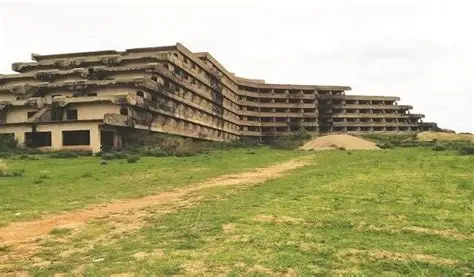
Stakeholders are demanding the resuscitation of the state-owned moribund industries across Ekiti, Osun and Ondo States to tackle unemployment and boost economic growth.
They noted that reviving the moribund companies would help move the states from civil-service dependence to thriving industrial hubs.
In separate interviews on Sunday, the stakeholders argued that a recurring pattern of policy inconsistency, structural neglect, bad management and high operational costs had left most of the historic factories moribund.
They noted that the three states, once dotted with thriving factories, are now marred by the skeletal remains of moribund industries, noting that “these silent giants” stand as stark reminders of lost potential and a struggling economy.
For years, Ekiti State’s economy was largely civil-service driven, with many state-owned agro and industrial projects either abandoned, underfunded, or poorly managed.
For instance, the Ikun Dairy Farm in Moba Local Government Area, abandoned for over 40 years, was supposed to be a flagship dairy and livestock project but lacked equipment, cattle and working capital.
The multi-million naira poultry farms initiative, involving wooden-shed poultry construction units across 16 local government areas, initiated by former Governor Ayodele Fayose, had completely failed.
Also, the Ikogosi Warm Springs Resort and other Tourism/Community Assets were listed among abandoned flagship projects needing commercial and technical viability review.
The common causes and challenges cited for the collapse of these industries were poor infrastructure, lack of power, insecurity, weak private-sector participation, and mismanagement.
Speaking on the development, Ekiti-based entrepreneur Segun Ibitola urged the state government to do more to upgrade the Ikun Dairy Farm to meet internationally acceptable standards and generate export earnings.
Mr Ibitola lamented that the dairy farm used to be the best in the 1980s and 1990s, producing milk that was sold at affordable prices to people at the grassroots.
However, the Ekiti State Commissioner for Industries, Trade and Investment, Omotayo Adeola, said the state would focus on boosting micro, small and medium enterprises (MSMEs).
She noted that the state government remains resolute in providing a conducive business environment supported by sound policies, infrastructure development and technical assistance to enable enterprises to grow.
Ms Adeola mentioned the Ekiti-Egypt Industrial Investment Mission in July 2026, which secured potential investments worth up to $500 million, as a good case to buttress her point, with a focus on agriculture, agro-processing, commercial farming, seed production, textiles, manufacturing and solid minerals.
According to her, the government’s immediate priority is to convert expressions of interest into concrete investments through site visits, commercial agreements, capital deployment, and the establishment of factories.
The commissioner disclosed that a 76 per cent stake in Ikun Dairy Farm had been sold to Promasidor Nigeria Limited.
“Ikun Dairy Farm is now operational for the first time in 40 years, producing over 80,000 litres of milk per month, with a full capacity target of 10,000 litres per day and a $5 million new investment for equipment, cattle and out-grower feed scheme,” she said.
The commissioner said Ikogosi Warm Springs already had a deal with Irin Ajo Travels and Tours and Future Africa to take over and operate it, and listed other PPP initiatives now operational, including FMS Farms, JMK Foods, Promise Point, AROG Limited, Stallion Group, and Egbeja Snail Village.
“On agriculture, YSJ Farms is now operating, processing and packaging Igbemo Ofada Rice, cassava, yam, maise, etc. Off-takers now come from Lagos, Ondo, Osun, Kwara. Over 1,000 youth farmers are engaged.
“NBS records Ekiti as having the lowest food inflation in Nigeria due to this surge,” she said.
Ms Adeola said the administration had replicated and revived the Awolowo-era Farm Settlements, with three Renewed Hope Farm Dormitories commissioned in Eporo, Iyemero, and Ikere, with 13 more created.
She said the administration was also leveraging infrastructure development and providing an enabling environment for old industries to revive and for new ones to emerge.
“There is a clear-cut policy to revisit the commercial and technical viability of abandoned projects, security infrastructure to make Ekiti safe for investment, as well as a $1.6m 350KW hydropower and 7.5MW gas turbine project approved, plus solar and metering programs,” Ms Adeola said.
In his contribution, the Ekiti State Commissioner for Agriculture and Food Security, Dr Ebenezer Boluwade, said the state’s main focus is on building agricultural value chains to improve the economy.
“We want to build agricultural value chains where farmers have reliable markets, processors have access to the volumes and quality they require, and more of the value created from our agricultural resources remains within Ekiti.
“Connecting production to industry is central to our food security, employment and economic development agenda,” he said.
In Osun, an economist at Obafemi Awolowo University (OAU), Ile-Ife, Dr Clement Olaniyi, urged the state government to prioritise reviving local industries and establishing new ones to tackle growing unemployment.
Mr Olaniyi, a senior lecturer, said although government alone cannot provide jobs for everyone, it should strengthen secondary, technical and tertiary institutions with modern equipment and facilities to enable young people to acquire skills and become self-reliant.
According to him, government should create an enabling environment for entrepreneurship by providing infrastructure and social amenities, as well as implementing measures to reduce the cost of doing business.
The economist added that poor electricity supply and rising production costs have forced many businesses to spend heavily on generators, diesel, and petrol, reducing their profitability.
Similarly, the South-West Zonal Secretary of the Social Democratic Party (SDP), Wale Balogun, said Nigeria is facing unemployment and production problems.
“A country that revives its factories, mines, farms, processing plants and manufacturing capacity can create millions of direct and indirect jobs. The ultimate objective should be simple: use government resources to build an economy that creates jobs, rather than an economy that merely creates contracts.
“Thus, a conscious effort should be made to revive strategic industries, with priority given to sectors such as textiles, steel, vehicle assembly, machine tools and petrochemicals, among others,” he said.
In the same vein, Suleimon Oyeniyi, lead consultant at the Centre for Economic Development, called on the state government to deploy land and mineral resources to drive industrialisation, reduce import dependence and create mass employment for youths.
“For too long, we have exported jobs and imported poverty. The solution is right here under our soil and in our farms. We are sitting on wealth but buying back finished products,” he said.
Mr Oyeniyi added that with policy consistency, infrastructure, and financing, the government would turn its resources into factories in the shortest possible time.
Speaking, the Commissioner for Information and Strategy in Osun, Kolapo Alimi, said reviving local industries was a major component of the current administration’s economic development agenda, adding that the government was working to attract investors to establish new industries across the state.
He said the government’s intervention had helped to stimulate activities around existing industries while creating opportunities for more investments and job creation.
“The government has been deliberate in reviving our local industries and creating an environment where new industries can also come in. The government want to see industries operating, employing our people and contributing meaningfully to the economy of the state,” he said.
In Ondo State, Niyi Adesokan, a former chairman of the Nigeria Union of Local Government Employees (NULGE), Okitipupa Local Government chapter, urged the state government to give more priority to the rebuilding of dead industries like Okitipupa Oil Palm Plc, Okitipupa, Oluwa Glass Industry, Igbokoda, and other moribund state-owned companies.
Mr Adesokan said rebuilding dead industries would create more jobs and employment opportunities for graduates leaving schools every year and reduce the growing labour market population due to unemployment.
He noted that the present federal government under President Bola Tinubu was doing well by increasing monthly allocations to states, but the allocation must be used judiciously to develop the state and benefit the masses.
“I want the state government to give priority to the resuscitation of all the moribund industries in the state, like Okitipupa Oil Palm, Okitipupa, and Oluwa Glass Industry, Igbokoda.
“The reawakening of dead or moribund industries will create more jobs for our graduates, and this will reduce the number of job searches among our youths, and this will eventually reduce the crime rate in our society,” Mr Adesokan said.
However, Ebenezer Adeniyan, the chief press secretary to the governor, argued that Governor Lucky Aiyedatiwa was driving the state’s economic transformation through strategic investments and policy reforms.
Mr Adeniyan said the present administration has continued to attract major investments such as the Ondo Deep Sea Port, refinery, free trade zone and fertiliser plant.
According to him, the administration’s economic policies aim to make the state an attractive investment destination where businesses can thrive, create jobs, and diversify the state’s revenue base, while supporting small and medium-scale enterprises (SMEs) and agro-processing industries.
He said the government reforms contributed significantly to the Dangote Group’s return to the state, with plans to establish what would become Nigeria’s largest industrial zone in the state.
According to him, the government has revived some moribund industries through public-private partnership (PPP) arrangements.
“The state has signed Memoranda of Understanding (MoUs) on the revival of industries such as Ifon Ceramics, Oluwa Glass and Okitipupa Oil Palm. The government also has another company establishing an independent power plant in the state.
“As of today, about seven moribund industries are being revived through PPP arrangements,” he said.
He said the state had signed several investment agreements, including a proposed 500,000 barrels-per-day refinery, a 1,471-hectare Free Trade Zone in Ilaje, and a $4 billion petrochemical, fertiliser and cement project, as well as entered into a $50 billion investment agreement involving Backbone Infrastructure Nigeria Limited and Sunshine Infrastructure JV to accelerate industrial development in the state.
In the same vein, the vice chairman of the Ondo State Development and Investment Promotion Agency (ONDIPA), Emmanuel Omomowo, reiterated that the government is implementing policies to revive moribund industries, attract fresh investments, and expand the state’s industrial base.
Mr Omomowo said the state government is opening multiple sectors of its economy to domestic and foreign investors, with opportunities in agriculture, the blue economy, bitumen, oil, solid minerals, and silicon sand.
According to him, the state government is committed to creating a seamless, investor-friendly business environment by reducing bureaucratic bottlenecks and promoting ease of doing business.
He said the government was also strengthening institutional collaboration with the private sector through public-private partnerships (PPPs) to ensure transparency, attract long-term capital and guarantee the sustainability of major investment projects.
(NAN)

We have recently deactivated our website's comment provider in favour of other channels of distribution and commentary. We encourage you to join the conversation on our stories via our Facebook, Twitter and other social media pages.

More from Peoples Gazette

States
Independence: NBA urges Nigerians to expect better future
The NBA said that ordinary Nigerians should be deriving benefit from the subsidy removal rather than hardship.

Agriculture
FG tasks ECOWAS on leveraging financing strategies for agroecology
The federal government has urged stakeholders in the agriculture and finance sectors in the West Africa region to leverage financing strategies to enhance agroecology practices

Politics
Katsina youths pledge to deliver over 2 million votes to Atiku
“Katsina State is Atiku’s political base because it is his second home.”
Politics
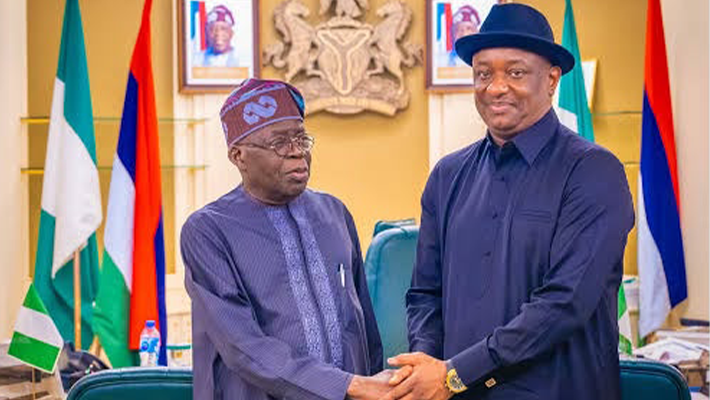
Tinubu appoints Keyamo director of APC air mobilisation
President Bola Tinubu has appointed aviation minister Festus Keyamo as director of air mobilisation for the All Progressives Congress’ 2027 re-election campaign.

Sport
NPFL: Barau FC, Kwara United play 1-1 draw in Kano
Barau FC and Kwara United drew 1-1 in their Nigeria Premier Football League (NPFL) encounter at Sani Abacha Stadium, Kano, on Sunday.

Sport
Euromatch NPFL: Matchday 10 results
Here are the results of the Matchday 10 fixtures in the ongoing 2026/2027 Euromatch Nigeria Premier Football League (NPFL), played on Sunday.
Politics
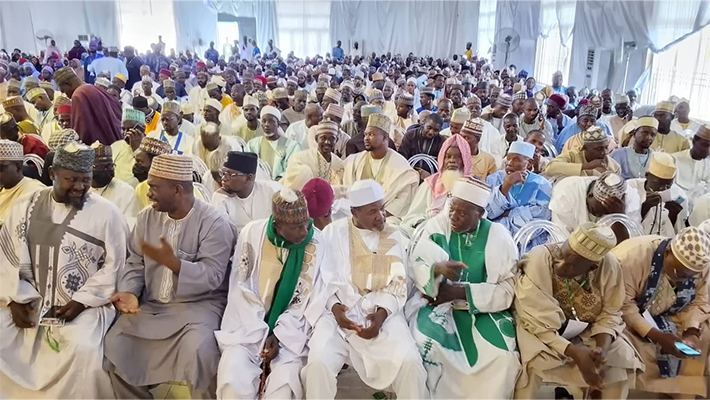
1,117 Muslim clerics in Katsina endorse Tinubu’s 2027 re-election bid
Thousands of Islamic clerics from the Izala and Tijjaniyya groups in Katsina State have endorsed President Bola Tinubu’s 2027 re-election bid.

Anti-Corruption
Nine suspects arrested in FBI’s latest operation against Yahoo Boys in Nigeria
The FBI boss made the disclosure on Sunday.

NationWide
Nigeria edge Uganda by 1 run to win Cricket World Cup Africa qualifier
Nigeria scored 148 runs in 19.4 overs before restricting Uganda to 147 for nine in 20 overs at the Nigeria Cricket Federation (NCF) Oval 1 on Sunday.


