

Stakeholders advocate increased productivity, local content to strengthen naira
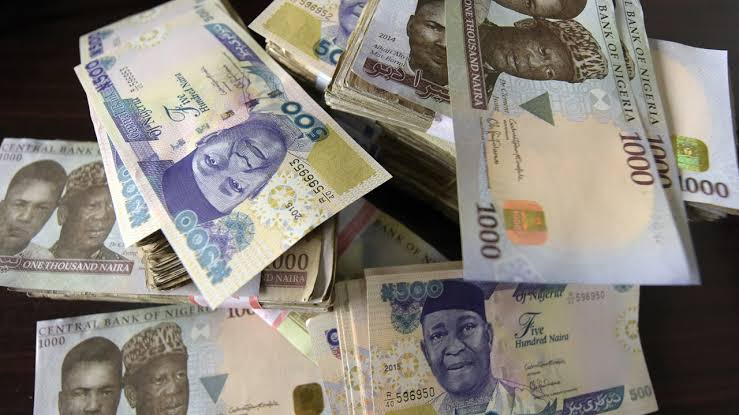
As the naira continues to experience volatility in its value, some stakeholders have called for increased local production of goods and services to strengthen the currency.
The naira recently crossed N1, 000 to the dollar mark at the parallel market. The currency also continued to weaken considerably at the official market due to persistent dollar scarcity and speculative activities of illegal forex dealers.
The Federal Government in June allowed the currency to depreciate as part of measures to attract inflows and help revive the economy.
The naira weakened as much as 40 per cent in the official market.
While the official market rate and the parallel market rate initially converged, the gap has since widened as a shortage of dollars prompted a surge in FX demand.
Some stakeholders, however, believe that the Federal Government is depending on oil to shore up the value of the naira.
Operators in the oil sector suggest that the government should decisively tackle insecurity, sabotage of oil assets, and regulatory issues to achieve this.
The Minister of State for Petroleum Resources (oil), Heineken Lokpobiri, said that the government’s target was to see how it could get to two million barrels per day and beyond by the end of the year.
According to the President of the Association of Bureaux De Change Operators of Nigeria, Aminu Gwadabe, the only way to strengthen the naira was by continuing to send confidence to the market.
Mr Gwadabe said that achieving this required the full participation of BDC operators in the retail segment of the foreign exchange market.
He said that the country had all it takes to achieve a strong and stable exchange rate and build a highly liquid forex market that supports the domestic economy.
Mr Gwadabe said the continuous depreciation of the naira in both official and parallel markets did not benefit the BDCs and the domestic economy, adding that steps should be taken to reverse the trend and strengthen the local currency for maximum impact on the economy.
On its part, the Manufacturers Association of Nigeria said limited dollar liquidity and high exchange rate costs had weakened industrial production since currency reforms were announced in June.
According to the association, no CBN forex intervention will be effective without boosting the level of liquidity and transparency.
A past president of the Chartered Institute of Bankers of Nigeria, Okechukwu Unegbu, said improved local production of commodities, increased consumption of local products, and reduced importation of goods and services would help to strengthen the naira.
Mr Unegbu also suggested that the Nigerian government should begin to price commodities for export in naira.
“We are not producing anything, and the only thing that can help the naira to stabilise is when we produce commodities that can be exported. Our exports should also be priced in naira. Even our crude oil; we have very quality crude, it should be priced in naira,” he said.
He said that the naira appeared relatively stable in the past because the government was supporting the currency with borrowings.
He said that the recent lifting of the ban on FX supply to importers of 43 commodities, which were banned by ex-president Muhammadu Buhari’s government, would further exert pressure on the naira.
“People will start looking for FX to bring those commodities in. This will further put pressure on the naira. We need to avoid foreign goods and consciously work to firm up the naira.
“Nigerians have a penchant for foreign goods. If we all decide not to import anything and consume what we can produce, the naira will firm up.
“In the past, the government was supporting the naira with borrowings. That era is over. Now, we will need to look inwards to increase production and also reduce the cost of governance,” he said.
(NAN)

We have recently deactivated our website's comment provider in favour of other channels of distribution and commentary. We encourage you to join the conversation on our stories via our Facebook, Twitter and other social media pages.

More from Peoples Gazette

Agriculture
FG tasks ECOWAS on leveraging financing strategies for agroecology
The federal government has urged stakeholders in the agriculture and finance sectors in the West Africa region to leverage financing strategies to enhance agroecology practices

Politics
Katsina youths pledge to deliver over 2 million votes to Atiku
“Katsina State is Atiku’s political base because it is his second home.”

States
Kaduna LG welcomes NLC delegation on sensitisation tour, recommits to workers’ welfare
Mr Suleiman reaffirmed the union’s commitment to protecting workers’ welfare and promoting industrial harmony across the state.

Uncategorized
Gov. Soludo’s wife urges youths to embrace skills acquisition, continuous learning
Mrs Soludo encouraged youths to embrace continuous learning and never stop acquiring new skills.

Heading 2
13 victims rescued as troops overpower terrorists in Zamfara gun battle
Mr Danja said the rescue followed intelligence-led operations in the affected areas.

States
Scrap scarcity major challenge in Nigeria’s steel sector: Expert
Mr Madagua described scrap as a key raw material for steel production.

World
UK proposes midnight social media ban for teens
The government also wants features considered addictive such as auto-play and infinite scroll to be disabled by default.
States
EEDL warns customers against illegal electricity connections
The head of communications said every customer had the right to be connected to electricity through a transparent and approved process.


