

Stakeholders laud Nigeria’s inclusion in initiative for childhood cancer

Stakeholders in the cancer space have applauded the World Health Organisation’s (WHO) inclusion of Nigeria as a beneficiary of the Global Initiative for Childhood Cancer (GICC).
They gave their commendation while speaking with journalists on Saturday in Abuja.
Nigeria joined 76 other countries to become a beneficiary of the GICC, an initiative aimed at increasing the survival rate of children with cancer globally to 60 per cent by 2030.
The GICC also seeks to reduce children’s suffering and improve their quality of life.
Dr Uche Nwokwu, national coordinator, National Cancer Control Programme (NCCP), ministry of health and social welfare, said inclusion of Nigeria as a focal country of the initiative was a commendable feat.
According to him, the nation will begin to benefit from donations and partnership support from all partners working with WHO, including St. Jude’s Children’s Hospital, United States.
“One fundamental thing that needs to be noted is that children with cancers are generally curable, so the response of children to cancer treatment is usually better than the response of adults to cancers.
“So it makes it important for children to be given all the attention that they deserve.
“Unfortunately, before now, the country was not giving the desired attention to children with cancers.
“In our National Cancer Control Plan of 2007 to 2013 and the one of 2018 to 2022, there was no mention of children with cancers in that plan,” he said.
Mr Nwokwu said when the Cancer Health Fund (CHF) was established, it covered only breast, cervical and prostate cancers, excluding children with cancers, which was a major omission.
He added that currently, Nigeria was focusing on improving access to children with cancer.
“So this application to WHO is a major step to see how we could address the gap in providing services for children with cancers.
According to him, leukaemia is the major cancer affecting children, noting that treatment options for cancer include medicines and radiotherapy services.
“However, there are very few centres that have dedicated pediatric radiotherapy and oncologists, and because of that, many of them do not have access to treatment as required.
“So this inclusion to GICC is going to help us to get all the partnership support from across the globe to support children with cancers,” he said.
The national president, Nigeria Cancer Society (NCS), Prof. Abidemi Omonisi, said being part of the initiative was a significant milestone for Nigerian children and families affected by childhood cancer.
According to him, Nigeria’s inclusion in the Initiative is a testament to the country’s commitment to improving childhood cancer care and outcomes.
“This achievement is in line with our agenda to create a robust awareness of childhood cancer, galvanising political support to combat childhood cancer and establishing more specialised childhood cancer registries in Nigeria.
“During my tenure as the Acting Director, Nigerian National System of Cancer Registries (NSCR -NICRAT) in November 2023, we established the first Childhood Cancer Registry in Nigeria at Lagos University Teaching Hospital (LUTH).
“So with this good news from the WHO, we are now more energised as a society to pursue this agenda on childhood cancer in Nigeria,” Mr Omonisi said.
According to the International Agency for Research on Cancer (IARC), there has been an increase in incidences of childhood cancers globally.
Data from IARC showed that in 2022, more than 275,000 children and adolescents (aged 0 to 19 years) were diagnosed with cancer worldwide and more than 105,000 children died from cancer.
(NAN)

We have recently deactivated our website's comment provider in favour of other channels of distribution and commentary. We encourage you to join the conversation on our stories via our Facebook, Twitter and other social media pages.

More from Peoples Gazette

States
Independence: NBA urges Nigerians to expect better future
The NBA said that ordinary Nigerians should be deriving benefit from the subsidy removal rather than hardship.

Agriculture
FG tasks ECOWAS on leveraging financing strategies for agroecology
The federal government has urged stakeholders in the agriculture and finance sectors in the West Africa region to leverage financing strategies to enhance agroecology practices

Politics
Katsina youths pledge to deliver over 2 million votes to Atiku
“Katsina State is Atiku’s political base because it is his second home.”

States
Police rescue Catholic priest, five other kidnap victims in Benue
The PPRO said that the victims were rescued on Sunday evening by security agents.
Heading 5
El-Rufai’s ex-ally Bashir Sai’du joins APC, says ADC dead in Kaduna
Mr Sani said that there was no discrimination in the APC.
States
Kano will lead other northern states to secure victory for Tinubu in 2027, says Gov. Yusuf
Mr Yusuf said the North had confidence in Mr Tinubu and remained committed to supporting his second-term ambition.
NationWide
CGC Volleyball League: Anambra Queens, COAS Spikers record wins
Sunshine Spikers also recorded a straight-set victory over Life Camp VC, winning 25-22, 25-21 and 25-20.
States
Cross River targets N19 billion revenue from 2026 carnival
Mr Otu noted that the government was repositioning the festival as a major economic asset.
Lagos
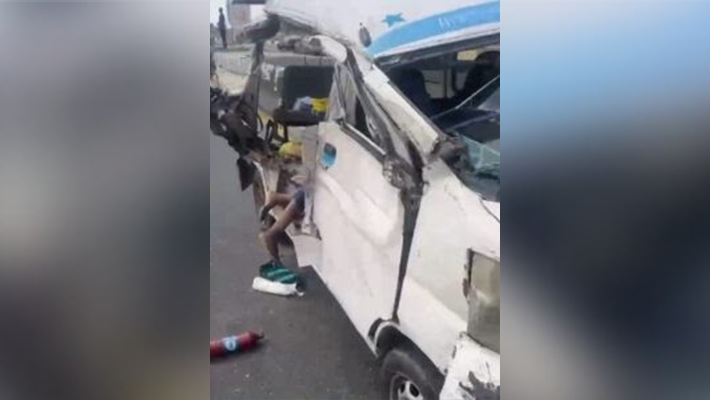
Two die, two injured in Lagos road crash
Mr Bakare-Oki expressed sympathy to the families of the deceased and wished the injured victims a speedy and complete recovery.


