

Stakeholders seek robust digital evidence management against AI-driven cybercrime
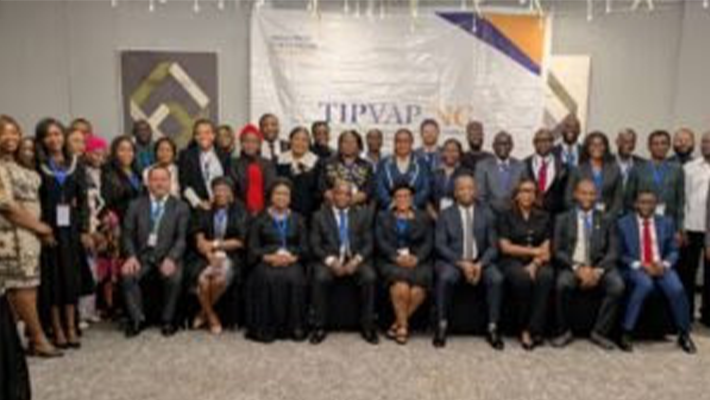
Stakeholders in Nigeria’s criminal justice system have called for stronger digital evidence management, inter-agency collaboration and continuous capacity building to help the country stay ahead of increasingly sophisticated cybercriminals.
They made the call during a specialised training on Cybercrime, Artificial Intelligence (AI) and Digital Evidence for members of the Joint Case Team on Cybercrime (JCTC) and designated Federal High Court judges on Friday in Lagos.
The specialised training was organised by the International Centre for Migration Policy Development (ICMPD), in partnership with the JCTC.
The workshop was delivered under the Building an Environment Free of Human Trafficking in Persons and Violence Against Persons (TIPVAP) Project, funded by the Government of the Kingdom of the Netherlands’ Ministry of Justice and Security.
The Director of Public Prosecutions of the Federation, Rotimi Oyedepo, SAN, said cybercrime had evolved beyond conventional hacking and online fraud.
He said it now included AI-assisted crimes, deepfakes, voice cloning, ransomware attacks, cryptocurrency enabled offences, identity theft and complex transnational cyber networks.
According to him, criminals are adapting faster than ever, making innovative, intelligence-driven and forward-looking approaches essential.
“Our response cannot remain static. It must be innovative, intelligence-driven, collaborative and forward-looking,” he said.
Mr Oyedepo said the Joint Case Team on Cybercrime remained one of Nigeria’s most strategic innovations, bringing investigators, prosecutors, regulators and forensic experts onto one coordinated platform.
Highlighting collaboration, he said cybercrime could not be tackled by isolated institutions because investigations increasingly crossed national borders and involved multiple agencies.
“The fight against cybercrime cannot be won by isolated institutions. It requires partnership, trust, coordinated intelligence and shared responsibility,” he said.
Speaking on the training, Mr Oyedepo said its inclusion of judges strengthened the criminal justice process because cybercrime investigations ultimately ended in the courtroom.
Highlighting the outcome, he said participants were now better equipped to identify red flags, conduct diligent investigations and build stronger prosecutions.
He said investigators also learnt that rushing cases to court without thorough investigations could weaken prosecutions and affect proof beyond reasonable doubt.
Speaking further, Mr Oyedepo said participants examined the recovery, preservation and presentation of digital evidence from phones, computers and other electronic devices.
Highlighting challenges affecting cybercrime prosecution, he identified inter-agency rivalry and delays in international cooperation as major obstacles.
“The essence is to reinforce and emphasise teamwork because no one can be an island in the administration of criminal justice,” he said.
On his part, the ICMPD TIP-VAP Project Manager, Matthias Esene, said the organisation supported the training because technology had changed the way traffickers operated.
Mr Esene said traffickers increasingly exploited digital platforms, encrypted communications, social media and artificial intelligence.
He said strengthening the capacity of the JCTC would directly improve Nigeria’s response to trafficking in persons through its partnership with the National Agency for the Prohibition of Trafficking in Persons (NAPTIP).
“Strengthening the capacity of the JCTC therefore directly contributes to strengthening Nigeria’s response to trafficking in persons,” he said.
Offering an international perspective, a cybercrime and electronic evidence expert from Estonia, Markko Künnapu, stated that access to electronic evidence remained one of the biggest global challenges.
“I think the biggest problem is how to quickly get evidence and use it in criminal proceedings,” he said.
Highlighting lessons from international practice, Mr Künnapu said Nigeria should continue strengthening cooperation through existing legal instruments and partnerships with governments and service providers.
On her part, a Deputy Director and Head of the Cybercrimes Unit, Federal Ministry of Justice, Jamila Akaaga-Ade, said collective action remained central to combating cybercrime.
Mrs Akaaga-Ade, who is also the Head of the JCTC, said effective international cooperation could only be achieved where strong national collaboration already existed among relevant institutions.
“The main takeaway for me is the need for collective action in countering cybercrimes,” she said.
Sharing his experience, CSP Samuel Umezurike of the Nigeria Police Force National Cybercrime Centre, Abuja, said participants gained practical knowledge on AI-generated crimes, voice cloning and cybercrime investigations.
He said interactions with judges exposed investigative shortcomings that often weakened prosecutions in court.
Also speaking, a prosecutor with the Federal Ministry of Justice, Becky Jibo, said the training deepened participants’ understanding of acquiring, preserving and presenting electronic evidence.
Highlighting the importance of due process, Ms Jibo said investigators must obtain necessary court orders where required and maintain an unbroken chain of custody.
She noted, “When evidence is not properly handled, it becomes useless and the case may be lost. But when it is properly gathered and preserved, it strengthens prosecution.”
Over 40 participants attended the four-day training, including investigators, prosecutors, analysts, forensic experts and six designated Federal High Court judges.
(NAN)

We have recently deactivated our website's comment provider in favour of other channels of distribution and commentary. We encourage you to join the conversation on our stories via our Facebook, Twitter and other social media pages.

More from Peoples Gazette

States
Independence: NBA urges Nigerians to expect better future
The NBA said that ordinary Nigerians should be deriving benefit from the subsidy removal rather than hardship.

Agriculture
FG tasks ECOWAS on leveraging financing strategies for agroecology
The federal government has urged stakeholders in the agriculture and finance sectors in the West Africa region to leverage financing strategies to enhance agroecology practices

Politics
Katsina youths pledge to deliver over 2 million votes to Atiku
“Katsina State is Atiku’s political base because it is his second home.”

Heading 2
Court overrules El-Rufai’s objection to DSS forensic witness
Mr El-Rufai arrived at court amid heavy security, accompanied by his wife and Isa Kudan, the ADC governorship candidate in Kaduna State.

World
Trump fires U.S. ambassador Kimberly Guilfoyle after allegations she demanded money from donor
Mr Trump had said he was considering firing Ms Guilfoyle amid allegations that she demanded $100,000 from a political donor
States
NAFDAC nabs two suspects over counterfeit alcoholic beverages in Lagos
NAFDAC said the suspects also revalidated expired and unsafe beverages for resale and stockpiled banned imported products.
States
Troops arrest suspected arms racketeers in Anambra
The army added that the suspects are currently in the custody of the 302 Artillery Regiment for further investigation.

World
Pope Leo XIV diagnosed with lung cancer after surgery: Vatican
The Vatican on Tuesday said Pope Leo XIV’s surgery to remove a nodule from his lungs confirms he has cancer.

Hot news Home top
63-year-old Duane ‘Keffe D’ Davis sentenced to 40 years for murder of Tupac
Shakur was killed in a drive-by shooting in Las Vegas while he visited the city to see a Mike Tyson boxing bout.


