

Tax trust low as two-thirds of Nigerian households face informal levies, says NESG

More than two-thirds of Nigerian households have encountered informal levies imposed by non-government groups or individuals, according to a Nigerian Economic Summit Group survey highlighting weak public confidence in tax administration.
The NESG Tax Perception Survey 2026 found that 67.2 per cent of households had experienced such demands at least once. Among businesses, 13.9 per cent reported being asked to pay charges they considered illegal.
Although 74.4 per cent of households recognised the government’s right to collect taxes, their average trust in tax authorities stood at 2.01 on a four-point scale.
The survey covered 18,000 households and 9,097 businesses across Nigeria’s 36 states and the Federal Capital Territory.
Its findings were presented in Abuja on Tuesday during a session at the 32nd Nigerian Economic Summit, where participants discussed fairness, accountability and ways to encourage voluntary tax payments.
The NESG identified concerns about unequal treatment, informal charges and poor disclosure of how public revenue is spent as barriers to confidence in the system.
It said enforcement alone would not improve compliance without simpler processes, clearer communication and evidence that taxes were funding services people needed.
The findings also showed differences in tax knowledge. 40 per cent of households had a moderate understanding of tax laws, while 80 per cent of businesses reported awareness of the laws. Access to digital tax services and complaint channels also remained uneven.
Speaking at the session, Joint Revenue Board executive secretary Olusegun Adesokan said reforms were intended to make tax administration fairer and more accountable.
He said the government was working to harmonise state and local government taxes to ease the burden of multiple levies. Twenty states had adopted the proposed framework, he added.
Mr Adesokan also cited uniform presumptive tax regulations introduced by the finance minister to promote consistent treatment of taxpayers. Presumptive taxation simplifies tax calculations, particularly for small businesses with limited financial records.
He said revenue agencies also needed greater operational independence to recruit qualified staff and carry out their duties professionally.
Of the 37 subnational tax authorities assessed, he said 15 had full autonomy, another 15 had partial autonomy, while seven had none.
BudgIT country director Vahyala Kwaga said governments needed to demonstrate what their spending achieved, rather than focus solely on meeting revenue and expenditure targets.
“Far too often, budgets appear to be target-setting exercises,” he said.
Mr Kwaga said improvements in hospitals, schools, roads and other public facilities would give taxpayers clearer evidence of how their money was used.
He called for public involvement in tax and spending decisions, adding that governments should explain how citizens’ contributions influenced policy.
He also urged states to establish accessible complaint channels, including tax ombudsmen, and said access to quality public services should reflect people’s needs rather than how much tax they paid.
International Budget Partnership country director Yinka Babalola said doubts about fairness in tax collection were undermining public acceptance.
“Nigerians accept the principle of taxation, but they’re not very sure that the practice is actually being carried out the way they would expect,” Mr Babalola said.
He urged revenue authorities to publish annual information on tax waivers and incentives, alongside greater disclosure about compliance by wealthy individuals and large companies.
Mr Babalola said tackling illegal levies and adequately funding the tax ombudsman’s office would help taxpayers challenge unfair treatment. Such support, he added, should be available across the states.
On technology, Taxaide and Taxtech chief executive Bidemi Daniel Olumide called for government tax platforms to connect with the systems businesses use for their daily operations.
He said common technical standards would support electronic payments, tax returns and invoicing, making compliance easier and improving transaction records.
For areas with limited digital services, he proposed equipping revenue collectors with point-of-sale devices linked to government systems to receive electronic payments and record collections.

We have recently deactivated our website's comment provider in favour of other channels of distribution and commentary. We encourage you to join the conversation on our stories via our Facebook, Twitter and other social media pages.

More from Peoples Gazette

States
Independence: NBA urges Nigerians to expect better future
The NBA said that ordinary Nigerians should be deriving benefit from the subsidy removal rather than hardship.

Agriculture
FG tasks ECOWAS on leveraging financing strategies for agroecology
The federal government has urged stakeholders in the agriculture and finance sectors in the West Africa region to leverage financing strategies to enhance agroecology practices

Politics
Katsina youths pledge to deliver over 2 million votes to Atiku
“Katsina State is Atiku’s political base because it is his second home.”
Africa
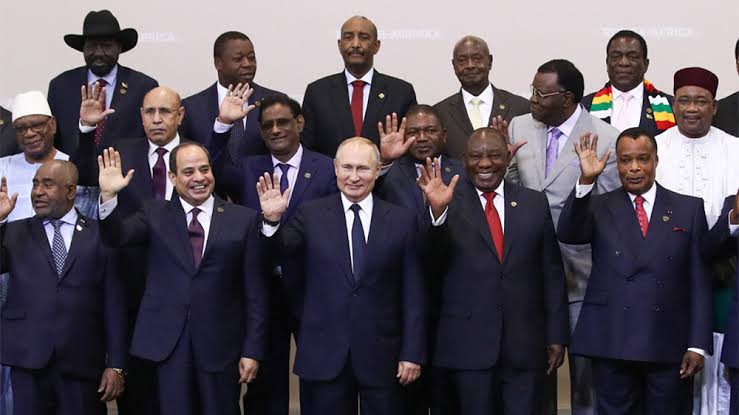
Russia hails Africa’s resilience in fighting ‘information segregation’
Russia has praised Africa’s resilience in the collective fight against what it called “information segregation”.

States
Army demands discipline, integrity, courage from recruits
The Nigerian Army urged its recruits to uphold discipline, courage, integrity and ethical leadership to promote unity within military formations.

NationWide
Fagbemi says FG to draft executive bill to tackle emerging cyber threats
The federal government is drafting an executive bill to strengthen Nigeria’s legal framework for tackling emerging cyber threats.
Africa
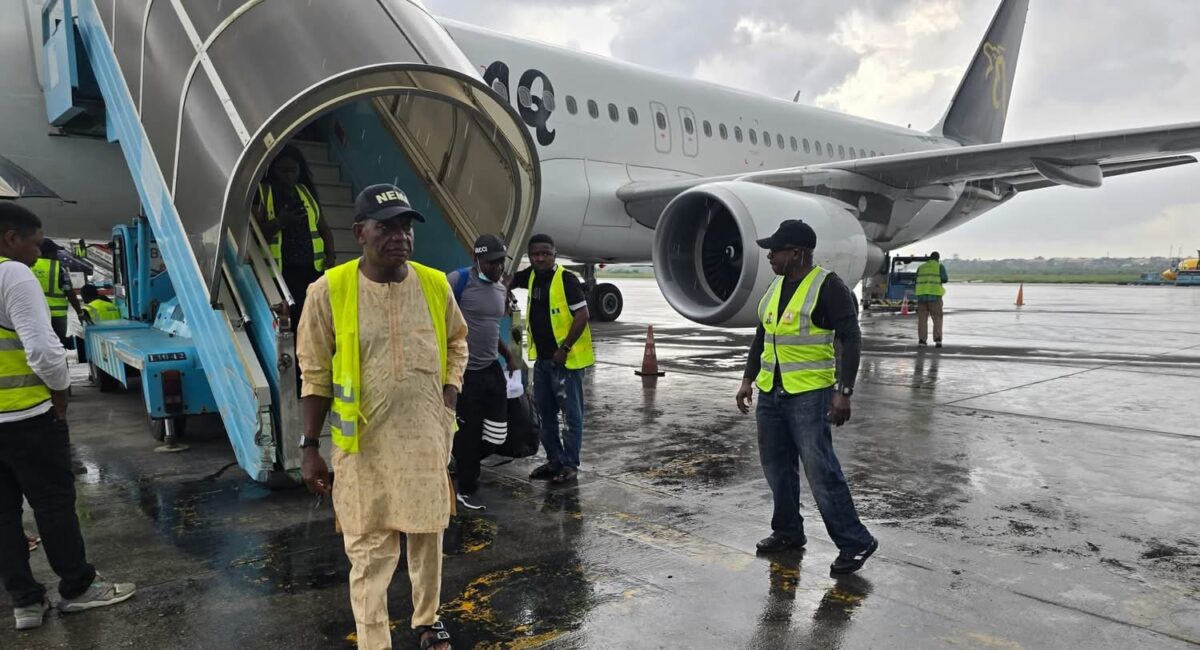
NEMA receives 180 Nigerians repatriated from Libya
NEMA received 180 Nigerians returning from Libya under the Assisted Voluntary Return programme coordinated by the International Organisation for Migration.

Economy
Tinubu approves N70,000 monthly transport allowance for workers
Three months before the presidential election, President Bola Tinubu’s administration approved a six-month N70,000 transport allowance for workers.

Anti-Corruption
Customs to tackle money laundering ahead of Nigeria’s 2027 assessment
The Nigeria Customs Service has pledged to sustain efforts against money laundering and terrorist financing.


