

Tech firm CEO Jamshid Ghomi with $35 million mansion arrested for secretly aiding Iran’s nuclear programme

A dual U.S.-Iranian national and CEO of an Iran-based technology company was arrested on Wednesday on a federal criminal complaint charging him with violating U.S. sanctions against Iran by acquiring sophisticated U.S.-origin networking, security, and encryption equipment for Iranian customers—including the Iranian regime’s nuclear and military establishments.
Jamshid Ghomi, 63, of Newport Coast, California, is charged with conspiracy to violate the International Emergency Economic Powers Act. Mr Ghomi was expected to make his initial appearance on Wednesday afternoon in U.S. District Court in Santa Ana, California.
According to the affidavit filed with the complaint, Mr Ghomi is the founder, owner, and CEO of Faraz Pardaz Rayaneh Co. Ltd., a Tehran-based computer networking company. For more than a decade, Ghomi has used FPR to procure U.S.-origin networking equipment for customers in Iran in violation of U.S. sanctions. Mr Ghomi or FPR never obtained a licence from the U.S. Department of the Treasury’s Office of Foreign Assets Control authorising those transactions.
Mr Ghomi identified, negotiated, purchased, and arranged the shipment of large quantities of controlled U.S. technology for his own company. From 2011 to 2015, he used his own eBay and PayPal accounts to make more than 400 purchases of computer-networking equipment, directing the goods to intermediaries in the United Arab Emirates.
In 2023, Mr Ghomi personally negotiated the purchase of U.S.-origin networking equipment directly from suppliers in Minnesota and Nebraska, routing it through a UAE front company and on to FPR in Iran. None of these items could be lawfully exported to Iran without a license from OFAC.
From 2014 to 2018, Mr Ghomi arranged the smuggling of more than 250 metric tons (275.6 U.S. tons) of networking equipment into Iran, using freight forwarders and intermediaries in Dubai to conceal the true destination.
Mr Ghomi knew this conduct was illegal and took deliberate steps to conceal it. He directed his UAE co-conspirators to keep his name off shipping paperwork, omit invoices from shipments bound for Iran, and, on at least two occasions, hide U.S.-origin computer equipment inside larger shipments.
He used front companies in the UAE to obscure his role, and he personally received warnings on invoices and software licenses that exporting these goods to Iran was prohibited. Mr Ghomi and his co-conspirators referred to Iran as “Motherland” in their internal correspondence concerning the equipment’s procurement.
FPR’s annual sales exceeded $10 million and ran to hundreds of Iranian companies and government entities, many of which were subject to U.S. sanctions. A relatively small but significant portion of that business went to the most sensitive end-users in Iran: the Iranian regime’s nuclear and military establishment.
From 2017 to 2023, FPR supplied U.S.-origin computer networking equipment to the Atomic Energy Organisation of Iran—the Iranian government agency responsible for Iran’s nuclear programme, including its centrifuge and uranium-enrichment programmes. The U.S. State Department sanctioned AEOI in 2020 for playing a leading role in Iran’s non-performance of its nuclear commitments, including exceeding the limits on its uranium stockpile and enrichment levels.
According to the affidavit, AEOI required FPR to register as an approved vendor, which it did in 2021 and 2022. From 2014 to 2022, FPR supplied U.S.-origin networking, security, and encryption equipment to Iran’s Ministry of Defence and Armed Forces Logistics—the Iranian ministry responsible for research, development, and manufacturing across Iran’s defence enterprise—and to affiliated military and defence-electronics entities. FPR’s 2017 contract with Iran Computer Industries, signed by Mr Ghomi, expressly identified the buyer as the ‘Ministry of Defence and Armed Forces Logistics—Iran Computer Industries’.
Mr Ghomi laundered the proceeds of his illegal business into the United States, depositing FPR’s Iranian sales revenue into its operating account at a sanctioned Iranian bank and then sweeping those funds to himself. Within days, he received corresponding wires into his U.S. accounts from a rotating set of unrelated trading companies and exchange houses in the British Virgin Islands, Hong Kong, Turkey, and the UAE.
Those wires bore false descriptions such as ‘Buying Goods’ and ‘For Consulting Fees’.
From 2011 to 2024, Mr Ghomi moved more than $15 million from Iran into his U.S. bank accounts and into a construction escrow account held on his behalf. He falsely reported those funds to the IRS as a foreign inheritance.
Mr Ghomi’s federal tax returns reported almost no income. His highest reported income in any year was $20,684.
Mr Ghomi claimed the Earned Income Tax Credit, a federal tax break for low- to moderate-income working individuals and families, in seven different tax years. Over the same period, Mr Ghomi reported more than $1.7 million in home mortgage interest and $1.25 million in state and local real estate taxes on his federal income tax returns.
Mr Ghomi funded the construction of his Orange County, California, mansion with the proceeds of his sanctions-evasion scheme.
Mr Ghomi purchased a vacant lot in Newport Coast in March 2010 for $4,490,000 and paid approximately $10,490,371 to construct the residence from 2010 to 2013. From May 2011 to August 2015, foreign-source wires totalling more than $7 million flowed into the escrow account funding the home’s construction. These wires came from many of the same trading companies as the transfers from FPR’s operating account, were handled by the same FPR employees, and bore the same false descriptions.
“A complaint is merely an allegation of criminal conduct, not evidence. All defendants are presumed innocent until proven guilty beyond a reasonable doubt in a court of law,” the U.S. Department of Justice statement on Wednesday.
If convicted, Mr Ghomi would face a maximum penalty of 20 years in prison.

We have recently deactivated our website's comment provider in favour of other channels of distribution and commentary. We encourage you to join the conversation on our stories via our Facebook, Twitter and other social media pages.

More from Peoples Gazette

States
Independence: NBA urges Nigerians to expect better future
The NBA said that ordinary Nigerians should be deriving benefit from the subsidy removal rather than hardship.

Agriculture
FG tasks ECOWAS on leveraging financing strategies for agroecology
The federal government has urged stakeholders in the agriculture and finance sectors in the West Africa region to leverage financing strategies to enhance agroecology practices

Politics
Katsina youths pledge to deliver over 2 million votes to Atiku
“Katsina State is Atiku’s political base because it is his second home.”

Economy
1.2 billion Nigerians, others living in multidimensional poverty: UNDP Report
Of the 1.2 billion, more than half are children. The report stated that 617 million children still lack access to education, electricity, clean water, etc.
Economy
Nigeria unveils 65 investment opportunities to boost growth, jobs
Nigeria has unveiled 65 investment opportunities across key sectors to attract domestic and foreign investments, create jobs and accelerate economic growth.
Lagos
Paradigm Initiative opens applications for 2026 Taiwo Bankole Scholarship in Lagos
The scholarship continues the legacy by helping young people in the community access higher education and pursue their ambitions, regardless of financial barriers.

Economy
New master plan to grow capital market to N750 trillion: SEC
The Securities and Exchange Commission says the new Nigeria Capital Market Master Plan (NCMMP) 2.0 targets market growth from N250 trillion to N750 trillion.
Economy
Shell to sell Nigeria gas distribution business to Vaaris Energy
Meanwhile, the company said the transaction was still subject to regulatory approval, and Shell Nigeria Gas Group would remain part of Shell until the deal was sanctioned.
States
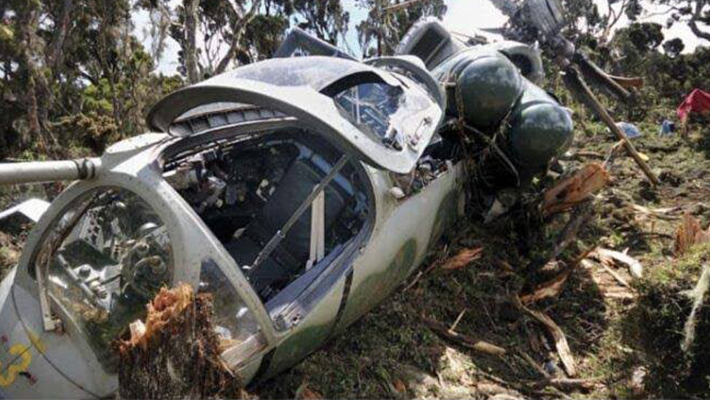
NAF recovery team, navy, NSIB divers recover crashed aircraft components
The Nigerian Air Force says recovery teams have retrieved additional components from its ATR 42-500 aircraft that crashed in Igbokoda village of Ondo.


