

The Black Queen of Hearts: Why Mia Mottley captures the global spirit
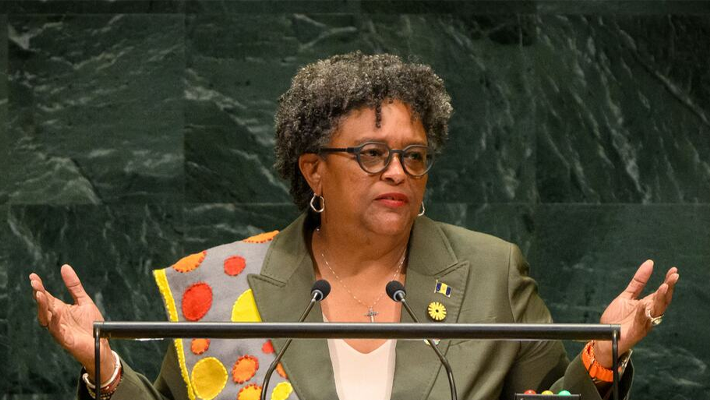
There are moments when a political speech becomes something larger than the occasion for which it was delivered. Mia Amor Mottley’s address to the United Nations General Assembly on 24 September was one of those moments. She did not simply speak for Barbados; she spoke from the long memory of Black people, from Africa to the Caribbean and across the diaspora, carrying into the Assembly the unresolved questions of race, power, dignity and freedom that have survived the formal end of colonial rule.
Her words travelled backwards to Emperor Haile Selassie and forward to a world still struggling with the inequalities the Ethiopian emperor confronted in 1963. Mottley returned to Selassie because history had placed them in the same room, separated by 63 years but confronting a remarkably familiar problem.
In 1963, Selassie warned the United Nations that peace could not survive in a world in which one race regarded itself as superior to another. Mottley brought those words from the past and made them speak to the present. Her formulation was stark: every human being possesses equal value and deserves equal respect. She then reached for another cultural memory, Bob Marley’s War, through which Selassie’s words became part of the political vocabulary of generations who may never have read the original speech.
Then came Dionne Warwick: What the world needs now is love, sweet love.
Mottley understood the power of the juxtaposition. Selassie had warned that racial hierarchy produces war. Marley turned the warning into music. Warwick gave the world a language of love. Mottley brought all three into the United Nations and made the argument that peace cannot be secured simply by managing conflict. A world that continues to assign different values to human lives cannot honestly claim to have overcome the conditions that produce conflict.
At a time when Nigeria, once one of the most consequential voices of Black consciousness, African solidarity and the struggle for racial equality, has receded from the global stage, Mia Mottley has emerged as an extraordinary voice for Africa and the African diaspora. The silence is especially striking because Nigeria is the most populous Black country on earth, a country whose history is deeply bound to the struggle for Black dignity and whose leaders once spoke with an authority that reached far beyond its borders.
In that diminished Nigerian presence, Mottley has assumed a moral and intellectual space that should not have been left vacant, speaking with uncommon clarity about the inequalities that continue to shape the relationship between Africa, the Caribbean and the wider world.
Mottley’s Africa is not an object of pity. Neither is the Caribbean. She speaks from a history in which Black people were transported across oceans, enslaved, colonised and placed within an international order whose institutions still distribute power unequally. Her intervention at the UN connected reparations with the contemporary distribution of global power, including the financial order and the composition of the Security Council. She called for permanent African representation on the Council and challenged the concentration of veto power among the five permanent members.
Mottley has consequently become something unusual in contemporary international politics: a Caribbean leader who refuses to regard Africa and the Caribbean as separate historical worlds. Her argument is increasingly about a common political inheritance and a common future. Only days before her UN address, she called for stronger Africa-Caribbean ties, arguing for freer movement of trade, people, education and opportunity between the two regions. She and Afreximbank President George Elombi have also spoken of the African diaspora as a potential economic partner and even as Africa’s “sixth sub-region”.
But her significance extends far beyond race. Mottley has become one of the clearest voices from the Global South challenging the terms on which international power operates. She asks questions that should occupy the powers of the West: Why do countries that contribute least to climate change frequently carry some of its greatest costs? Why do developing countries borrow at higher rates and then find themselves with fewer resources for development? Why should an international institution established in another age continue to reflect the power arrangements of that age?
At this year’s UNGA, she described a world facing multiplying obstacles to peace, food, water, finance, medicine, education and opportunity.
For Africans, her message carries another uncomfortable implication. Mottley speaks with the authority of a woman from a small Caribbean state because she refuses to measure political importance by geographical size. Barbados has a population smaller than many African cities. Yet its prime minister has managed to enter global debates on climate finance, reparations, international financial reform, multilateralism and racial justice with a confidence that many larger countries have struggled to sustain. Her example challenges the assumption that international relevance belongs only to great powers.
Perhaps this explains the force of Ruth Tiley-Gyado’s reaction after watching the address: “For a moment I thought it was a man talking in a woman’s body. She is what the Caribbeans need at this moment in their history.”
The remark was less about gender than about political presence. Mottley possesses the unusual ability to occupy a global stage without shrinking the history from which she comes. She carries Barbados into the room without allowing Barbados to become the limit of her argument.
For Africa and its diaspora, Mottley now represents something larger than the politics of Barbados. She represents the possibility of a Black political voice speaking to the world without seeking permission from the old centres of power. She represents a Caribbean consciousness reaching back towards Africa while looking forward to a relationship founded on partnership rather than sentiment. She represents the unfinished demand for equality which Selassie articulated, Marley popularised and successive generations inherited.
Her greatest achievement may lie in making an old question impossible to avoid: what kind of peace can exist in a world still organised around unequal human worth?
Mottley stood at the UN rostrum and answered in the language of history, justice and love. For a moment, the Queen of Barbados looked very much like the Black Queen of Hearts.
Abdul Mahmud, a human rights attorney in Abuja, writes weekly for The Gazette

We have recently deactivated our website's comment provider in favour of other channels of distribution and commentary. We encourage you to join the conversation on our stories via our Facebook, Twitter and other social media pages.

More from Peoples Gazette

States
Independence: NBA urges Nigerians to expect better future
The NBA said that ordinary Nigerians should be deriving benefit from the subsidy removal rather than hardship.

Agriculture
FG tasks ECOWAS on leveraging financing strategies for agroecology
The federal government has urged stakeholders in the agriculture and finance sectors in the West Africa region to leverage financing strategies to enhance agroecology practices

Politics
Katsina youths pledge to deliver over 2 million votes to Atiku
“Katsina State is Atiku’s political base because it is his second home.”
Heading 5
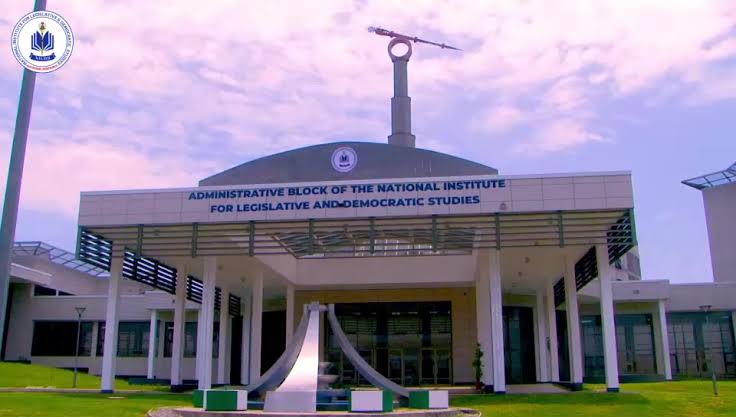
NILDS seeks stronger role for women in governance
According to the DG, democracy in Nigeria has come to stay and requires collective commitment.

Lagos
Lagos recruits 45 personnel to boost enforcement on Lekki-Epe corridor
Mr Osiyemi noted that the corridor had staffing challenges that slowed down operations.
Heading 2
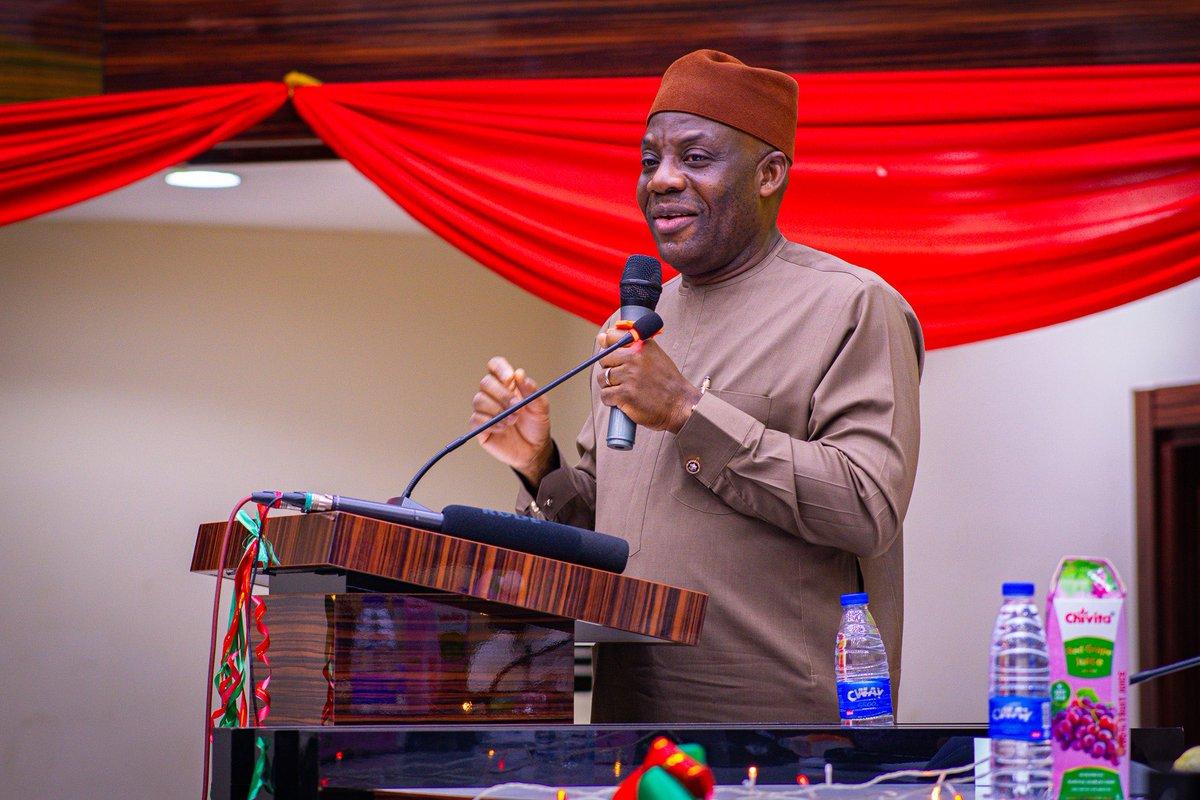
Education minister inaugurates Nigeria’s first robotic surgery academy
Mr Alausa said the initiative would expand advanced medical training.
Health
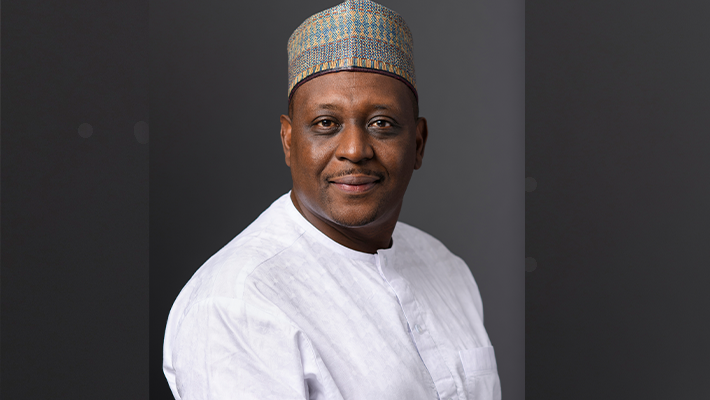
Pate warns politicians against politicising Ebola case
Mr Pate said health is a unifying issue that transcends political, ethnic and religious affiliations.
Economy
Tinubu’s economic reforms paving way for prosperity: Minister
The minister explained that the reforms were deliberate and courageous, aimed at addressing longstanding structural weaknesses.

Health
Kaduna expands last-mile health supply project to 1,000 facilities
Ms Isyaku said four zonal warehouses in Ikara, Sabon Gari, Zaria and Kafanchan, established under the project, were operational.


