

The dangerous moral vanity of Sheikh Gumi
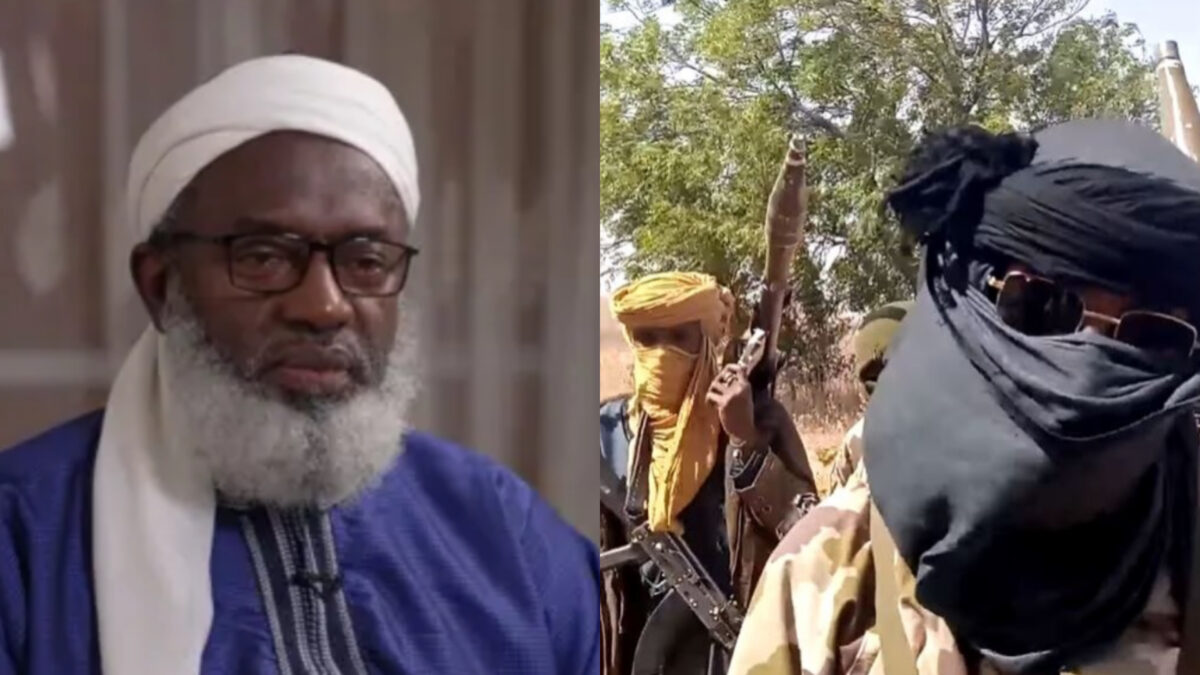
There is something profoundly offensive about the spectacle of a man who spent years rationalising criminal violence in the forests of Northern Nigeria now attempting to occupy the moral high ground over the elimination of a global terrorist commander. Sheikh Ahmad Gumi’s reaction to the reported killing of Abu Bilal al-Minuki by American forces working with the Nigerian military is not merely reckless in its implications; it is an exhibition of dangerous moral vanity wrapped in sanctimonious language and delivered with the smug confidence of a man who believes public memory is short and national grief is disposable.
“It’s a religious obligation to annihilate terrorists”, Gumi declared, before adding the poisoned qualification that such annihilation cannot be carried out “with Beelzebub and hands stained with the blood of innocent men, women, and children”. One must pause here and ask a simple question that Sheikh Gumi has never answered despite his endless public interventions on terrorism, banditry, kidnapping, and insurgency. If his hands are spotlessly clean, why has he not annihilated the terrorists himself?
For years, Nigerians watched with disbelief as Gumi transformed himself into the itinerant interlocutor of armed gangs and violent extremists who turned the forests of Kaduna, Zamfara, Niger, and Katsina into theatres of horror. Villages were razed. Farmers were slaughtered. Women were violated. Schoolchildren were abducted. Highways became corridors of death where travellers disappeared into captivity, and families sold ancestral lands to pay ransom. Through all this carnage, Gumi cultivated the image of a man who uniquely understood the grievances of the killers, as though the nation’s primary obligation was to psychoanalyse murderers while innocent citizens were buried in shallow graves across the North.
At critical moments when Nigerians expected unambiguous moral condemnation of these blood-soaked actors, Gumi offered sociological excuses, political justifications, and religious ambiguities that diluted the criminality of men carrying assault rifles against unarmed peasants. He spoke of marginalisation. He spoke of injustice. He spoke of negotiation. He spoke with a peculiar tenderness about men whose victims never received the luxury of philosophical interpretation before they were hacked down or carried into captivity. Now, from this deeply compromised moral platform, he seeks to lecture the Nigerian military and the United States about blood-stained hands. The hypocrisy is astonishing. Terrorism is not defeated in seminars. It is not defeated through cryptic sermons crafted to flatter violent actors. It is not defeated by clerics who appear more scandalised by counterterrorism operations than by the mass graves produced by terrorists themselves.
One need not romanticise the history of American military interventions or pretend that the Nigerian state has maintained a flawless human rights record in prosecuting the war against terror. Every democratic society must interrogate the conduct of military operations and demand accountability where civilians are harmed. But Gumi’s statement is not an appeal for legal accountability or ethical restraint. It is another example of the rhetorical double game he has perfected over the years, where terrorists are granted layers of explanation and understanding while states confronting them are reduced to embodiments of evil.
The absurdity of his position becomes even clearer when one considers the figure at the centre of this operation. Abu Bilal al-Minuki was not a village dissenter carrying a placard against economic hardship. He was identified as a senior commander within ISIS, one of the most barbaric terrorist organisations of the modern era whose legacy stretches across massacres, sexual slavery, bombings, executions, and sectarian extermination. If indeed such a figure has been eliminated through a joint operation, the appropriate response from any responsible religious leader should have been relief tempered with caution, not a sanctimonious sermon suggesting equivalence between those pursuing terrorists and the terrorists themselves.
There is also a greater danger in Gumi’s recurring interventions. They erode the moral clarity necessary for a country confronting existential violence. Every civilisation that survived organised terror understood one elementary principle. The deliberate massacre of civilians can never be turned into grievance politics. Once public discourse begins to grant killers the language of misunderstood victims, a country drifts into moral confusion.
Thousands are dead across Northern Nigeria because the state often appeared hesitant, uncertain in confronting armed groups that should have been crushed long before they metastasised into regional threats, and frustrated by the likes of Sheikh Gumi, who speak from both sides of their mouths. He cannot proclaim terrorism evil while persistently undermining the legitimacy of forces deployed against terrorists. He cannot claim moral superiority over soldiers confronting armed extremists while offering no practical alternative beyond laughable pronouncements. Most importantly, he cannot continue to launder ambiguity as wisdom while citizens bear the consequences of insecurity.
Nigeria has buried too many people to indulge this charade any longer. The country does not need clerics who flirt intellectually with violent actors while condemning those risking their lives to confront them. It does not need moral exhibitionists who do nothing but perform outrage for public consumption after years spent normalising engagement with criminals who devastated entire communities. If Sheikh Gumi truly believes terrorism must be annihilated and believes his own hands remain unstained by compromise, appeasement, or dangerous equivocation, Nigerians are entitled to ask why his years of proximity to these violent networks yielded no dismantled terror cells, no rescued territories, no defeated commanders, and no peace beyond media headlines announcing another dialogue in another forest while another village prepared for burial rites.
Abdul Mahmud, a human rights attorney in Abuja, writes weekly for The Gazette

We have recently deactivated our website's comment provider in favour of other channels of distribution and commentary. We encourage you to join the conversation on our stories via our Facebook, Twitter and other social media pages.

More from Peoples Gazette

States
Independence: NBA urges Nigerians to expect better future
The NBA said that ordinary Nigerians should be deriving benefit from the subsidy removal rather than hardship.

Agriculture
FG tasks ECOWAS on leveraging financing strategies for agroecology
The federal government has urged stakeholders in the agriculture and finance sectors in the West Africa region to leverage financing strategies to enhance agroecology practices

Politics
Katsina youths pledge to deliver over 2 million votes to Atiku
“Katsina State is Atiku’s political base because it is his second home.”

World
UK court sentences Irish lawmaker Jeffrey Donaldson to 15 years in prison for raping children
One of the women described the rape as “the worst moment of her life”.
Africa
Kenya announces second Ebola case, downplays wider spread
The ministry said the victim had been in contact with 128 people.
States
Bauchi govt restates commitment to girls education
The commissioner enjoined parents to support their children, especially girls, to complete their education.

Heading 4
Presidency to send State Police Bill to National Assembly in two weeks
He described the proposed legislation as the most consequential bill of Mr Tinubu’s administration.

States
FG reopens First Niger Bridge after 38 days
Mr Umahi said the intervention reflected President Bola Tinubu’s commitment to maintaining critical infrastructure.

Health
Group urges lawmakers to strengthen oversight on nutrition funding
The programme manager said accountability in nutrition financing has been lacking over the years.


