

Two years inadequate, abusers should get five years’ jail for violence, discrimination against women: Don

A university lecturer, Akachi Nworgu-Okonji, has called for a more punitive sanctions for violence and discrimination against women in the country.
Ms Nworgu-Okonji said that the current provision of two years imprisonment or option of half-a-million naira fine was grossly inadequate.
Ms Nworgu-Okonji, a law lecturer at the University of Nigeria, Enugu Campus, spoke at a one-day town hall meeting organised by WomenAid Collective (WACOL) and 50/50 Action Women, in collaboration with the Ford Foundation.
The interactive event was organised in Umuahia, Abia State capital for women groups and other stakeholders, including traditional rulers, religious and community leaders.
It was designed to change the norms and practices that promote violence against women and girls in Abia.
Ms Nworgu-Okonji argued that the violation of the extant law on violence and discrimination against women should be met with a more severe punishment.
She, therefore, proposed five years imprisonment or N1 million fine or both as against what obtained presently.
In her address, Ms Nworgu-Okonji identified spousal battery, female genital mutilation, child marriage, disinheritance of women and economic discrimination as some of the negative traditional practices.
She attributed the general underdevelopment of most communities in the South-East to the prevalence of such negative norms against women and the girl child.
The law researcher said that investigation revealed that gender-based violence causes more death and disability among women between the ages of 15 and 44 than cancer, malaria, accidents and war.
There was a consensus among the participants that the traditional institutions, including the traditional rulers (Eze-in-Council) and village maidens, otherwise called the “Umuada”, should take steps to discourage harmful traditional practices in their communities.
Ms Nworgu-Okonji urged them to embrace the advocacy to end the negative traditional practices for their communities to progress with the present global reality.
According to her, “if they can embrace change in technology, why would they not embrace change in culture?
“Change is constant and when it comes, we should be ready to accept it,” she said.
She said that aside from the national and state policies, there were no deliberate community actions and by-laws to end gender-based violence and harmful traditional practices.
The workshop, therefore, charged the traditional rulers and their Eze-in-Councils to come up with community by-laws and coordinated interventions to protect women’s rights.
It also advocated equal rights for both the boy and girl children in educational opportunities, family inheritance and economic empowerment.
It specifically urged families to give the girl children good education and basic hands-on skills in order to make them self-reliant and beneficial to their family and community.
The workshop further advocated for the sensitisation and mobilisation of men to play the role of change agents.
It advised men to cultivate the culture of writing their wills to avert family crises during the sharing of their property, after their demise.
It was also advised that existing legislations, including the Child’s Right Act, Violence Against Persons (Prohibition) Act, amonst others, could be used to end violence against women and the girl child.
Earlier, the Programme Officer and Head of Communications, Egodi Igwe, spoke on the activities of WACOL geared toward promoting and protecting the rights of women and young ones.
Mrs Igwe described any culture that recognises one gender above the other as unjust and should be done away with.
(NAN)

We have recently deactivated our website's comment provider in favour of other channels of distribution and commentary. We encourage you to join the conversation on our stories via our Facebook, Twitter and other social media pages.

More from Peoples Gazette

States
Independence: NBA urges Nigerians to expect better future
The NBA said that ordinary Nigerians should be deriving benefit from the subsidy removal rather than hardship.

Agriculture
FG tasks ECOWAS on leveraging financing strategies for agroecology
The federal government has urged stakeholders in the agriculture and finance sectors in the West Africa region to leverage financing strategies to enhance agroecology practices

Politics
Katsina youths pledge to deliver over 2 million votes to Atiku
“Katsina State is Atiku’s political base because it is his second home.”

Heading 3
UBEC begins distribution of two million packs of sanitary towels to improve school attendance
Ms Garba said the initiative was designed to address barriers to girls’ education.

States
Police nab six armed robbers, recover weapons in Oyo
The police boss reaffirmed the command’s resolve to sustain intelligence-led operations against criminals.

Heading 2
FBI seizes about $17 billion, arrests hundreds in raid on Ghana Yahoo Boys enclave
The operation was described by Mr Patel on social media as part of the agency’s efforts to combat fraud.
States
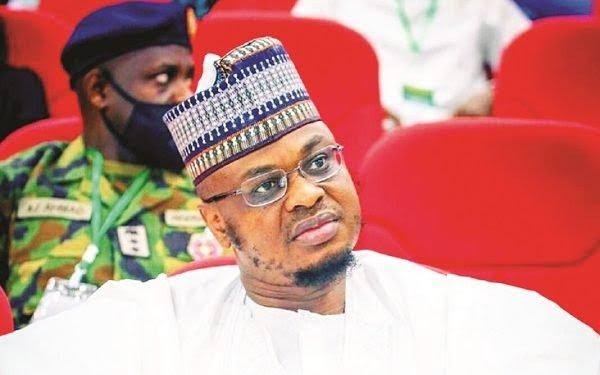
Gombe: Pantami threatens legal action over omission from INEC’s governorship list
His lawyers described the omission of Mr Pantami’s name from the governorship candidates’ list as unlawful.

Heading 5
French supermarkets hit by cyberattack, causing freezers to heat up
Reports noted that the full extent of the cyberattack remained unclear.

World
McKinsey demotes consultant over LinkedIn comments
The company distanced itself from Mr Bradley’s remarks.


