

U.S. Supreme Court okays controversial migration law in Texas

The U.S. Supreme Court on Tuesday allowed a controversial law that gives Texas authorities far-reaching powers on the border with Mexico to come into force for the time being.
The Republican governor of Texas, Greg Abbott, signed the law in December.
After a lengthy legal tug-of-war, the U.S. Department of Justice (DoJ) finally argued before the Supreme Court that Texas was overstepping its authority with the project and obtained a delay.
With Tuesday’s decision, the law can now come into force for the time being, while ongoing lawsuits by the DoJ and several human rights and civil rights organisations make their way through the courts.
The law criminalises irregular migration to the U.S. specifically across the Texas border.
It authorised state police officers to arrest people who are suspected of having illegally crossed the border from Mexico into the U.S.
Texas’ courts were also authorised to order deportations and imposed long-term prison sentences for repeated border crossings.
These powers were normally reserved for U.S. federal authorities.
Human and civil rights activists have warned of the danger of discrimination and racial profiling when people are checked by the police.
Neighbouring Mexico has categorically rejected any measure that would grant federal or municipal U.S. authorities powers in migration matters.
“Mexico will not accept deportations by the state of Texas under any circumstances,’’ the Foreign Ministry said in a statement.
The issue of migration has played a particularly important role in the U.S. presidential election campaign, with Republicans accusing U.S. President Joe Biden of having lost control of his country’s southern border.
Republican presidential challenger Donald Trump repeatedly used extreme formulations and spoke of an invasion of the U.S. by illegal migrants.
Thousands of people fleeing poverty and conflict in their home countries arrive in the U.S. every day.
Authorities are under pressure and the judicial system can barely keep up with the processing of asylum applications. (dpa/NAN)

We have recently deactivated our website's comment provider in favour of other channels of distribution and commentary. We encourage you to join the conversation on our stories via our Facebook, Twitter and other social media pages.

More from Peoples Gazette

Agriculture
FG tasks ECOWAS on leveraging financing strategies for agroecology
The federal government has urged stakeholders in the agriculture and finance sectors in the West Africa region to leverage financing strategies to enhance agroecology practices

Politics
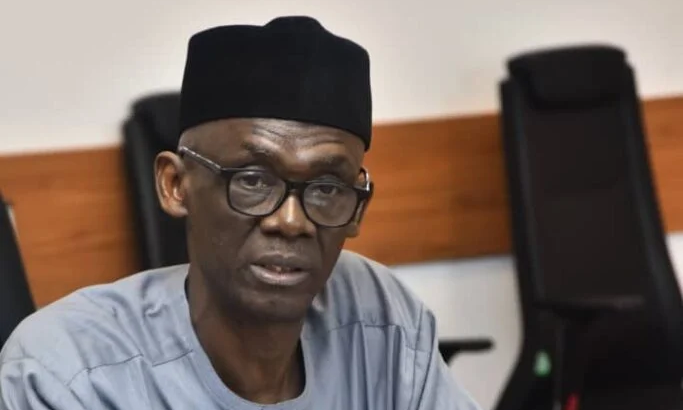
Katsina youths pledge to deliver over 2 million votes to Atiku
“Katsina State is Atiku’s political base because it is his second home.”
Economy
PTDF-backed ABU zeolite innovation could save Nigeria $300 millin annually: VC
Mr Ahmed stated this when he led the university management to the executive secretary of PTDF, Shuaibu Shehu Aliyu, for a courtesy visit.

Uncategorized
KADCHMA targets 27,000 private school teachers for health insurance enrollment in
KADCHMA has launched a sensitisation campaign targeting 27,000 private school teachers to enrol in the state’s contributory health scheme.

Showbiz
NBC to establish six regional studios to boost indigenous content
NBC says it will establish six production studios across Nigeria’s geopolitical zones to promote indigenous content and expand opportunities for content creators.

Economy
Edo: Gov Okpebholo assures welders of business-friendly environment
The governor assured members of the Welders Association in Edo of his administration’s readiness to continue creating an enabling environment for businesses to thrive.

States
Ahmad assumes office as commandant of Zaria army depot
Usman Ahmad on Tuesday assumed duty as the new Commandant of the Nigerian Army Depot, Zaria, succeeding Ahmadu-Bello Mohammed at the premier military training institution.
Africa
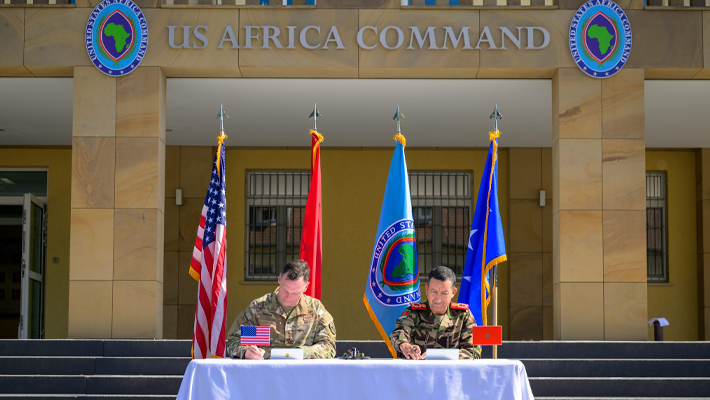
Anti-Terrorism: U.S AFRICOM, Morocco to establish tech-driven training, experimentation centre in Africa
Mr Anderson said the centre would increase readiness and advance capabilities of both nations.


