

UN commits to Nigeria’s 2026 humanitarian needs, response plan

Mohamed Fall, the United Nations resident and humanitarian coordinator, has reiterated the organisation’s commitment to supporting Nigeria in achieving its 2026 Humanitarian Needs and Response Plan.
Fall disclosed this in his remarks during the unveiling of the 2026 Nigeria HNRP for Borno, Adamawa, and Yobe, organised by the United Nations Nigeria, on Thursday in Abuja.
The introduction of the 2026 HNRP underscored the need for coordinated action to save and protect lives through humanitarian action led by the Nigerian government, supported by national organisations and international partners.
According to him, the UN-led humanitarian assistance in Nigeria is ending, and the next phase belongs to the country.
Mr Fall said, “It belongs to the national institution. It belongs to the state authorities. It belongs to the civil society, and it belongs to the community themselves.
“The transition of the humanitarian operation in Nigeria to be more nationally-led and resourced is at the heart of the 2026 humanitarian ministerial responsibility.”
He thanked the humanitarian minister, Bernard Doro, for the ministry’s strong partnership with the humanitarian community, adding that domestic resources are being mobilised to achieve the targets.
“We will invest in systems. We will strengthen the partnership. We will continue to mobilize resources, but this has to be done alongside the government of Nigeria, both at the federal, state, and local levels,” Mr Fall said.
Mr Doro restated the need to adopt the model that had been practised to achieve results in the North-West.
According to him, over the years, humanitarian action has played a vital role in mitigating the impact of conflict, climate shocks, displacement, and food insecurity, particularly in Borno, Adamawa, and Yobe.
Mr Doro said, “This effort has provided life-saving support to millions of Nigerians. However, under the Renewed Hope Agenda of President Bola Tinubu, it is clear that humanitarian response must not remain as an end in itself.
“Humanitarian action must serve as a bridge supporting stabilisation, restoring dignity, and enabling households and communities to move permanently out of vulnerability and poverty. The 2026 HNRP, therefore, represents an important shift.
(NAN)

We have recently deactivated our website's comment provider in favour of other channels of distribution and commentary. We encourage you to join the conversation on our stories via our Facebook, Twitter and other social media pages.

More from Peoples Gazette

States
Independence: NBA urges Nigerians to expect better future
The NBA said that ordinary Nigerians should be deriving benefit from the subsidy removal rather than hardship.

Agriculture
FG tasks ECOWAS on leveraging financing strategies for agroecology
The federal government has urged stakeholders in the agriculture and finance sectors in the West Africa region to leverage financing strategies to enhance agroecology practices

Politics
Katsina youths pledge to deliver over 2 million votes to Atiku
“Katsina State is Atiku’s political base because it is his second home.”
Heading 5
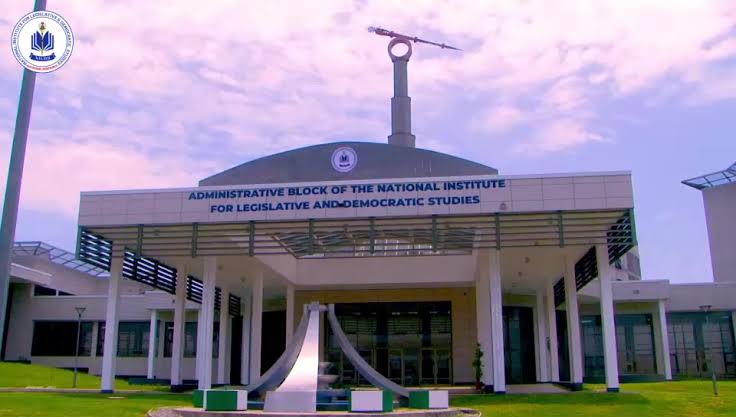
NILDS seeks stronger role for women in governance
According to the DG, democracy in Nigeria has come to stay and requires collective commitment.

Lagos
Lagos recruits 45 personnel to boost enforcement on Lekki-Epe corridor
Mr Osiyemi noted that the corridor had staffing challenges that slowed down operations.
Heading 2
Education minister inaugurates Nigeria’s first robotic surgery academy
Mr Alausa said the initiative would expand advanced medical training.
Health
Pate warns politicians against politicising Ebola case
Mr Pate said health is a unifying issue that transcends political, ethnic and religious affiliations.
Economy
Tinubu’s economic reforms paving way for prosperity: Minister
The minister explained that the reforms were deliberate and courageous, aimed at addressing longstanding structural weaknesses.

Health
Kaduna expands last-mile health supply project to 1,000 facilities
Ms Isyaku said four zonal warehouses in Ikara, Sabon Gari, Zaria and Kafanchan, established under the project, were operational.


