

VAT hits N2.42 trillion as Tinubu’s tax reforms begin to deliver results
The latest Value Added Tax (VAT) report released by the National Bureau of Statistics (NBS) provides strong evidence that Nigeria’s tax and economic reforms are beginning to produce measurable results.
According to the NBS, VAT collections reached N2.42 trillion in the first quarter of 2026, representing a 17.06 per cent increase from the N2.07 trillion recorded in the same period of 2025. The figure also reflects a 9.98 per cent increase compared to the N2.20 trillion generated in the fourth quarter of 2025.
These numbers are significant because they indicate growing economic activity, improved tax compliance and stronger revenue administration. More important, they demonstrate that Nigeria is making progress in its long-standing effort to reduce dependence on oil revenue.
A closer look at the data reveals where the growth is coming from. Of the N2.42 trillion collected in the first quarter, local VAT payments contributed N1.11 trillion, foreign VAT payments accounted for N830.47 billion, while import VAT generated N477.55 billion. The strong performance of foreign VAT highlights the increasing contribution of the digital economy and cross-border transactions to government revenue.
The sectoral breakdown is equally revealing. The manufacturing sector remained the largest contributor, accounting for 29.75 per cent of total VAT collections. This was followed by the information and communication sector at 20.61 per cent, while mining and quarrying contributed 12.32 per cent.
These figures show that productive sectors of the economy are expanding and contributing more to national revenue. Manufacturing growth is particularly important because it supports industrialisation, job creation and value addition within the economy.
Similarly, the strong performance of the information and communication sector reflects the growing importance of technology, telecommunications and digital services in Nigeria’s economic transformation.
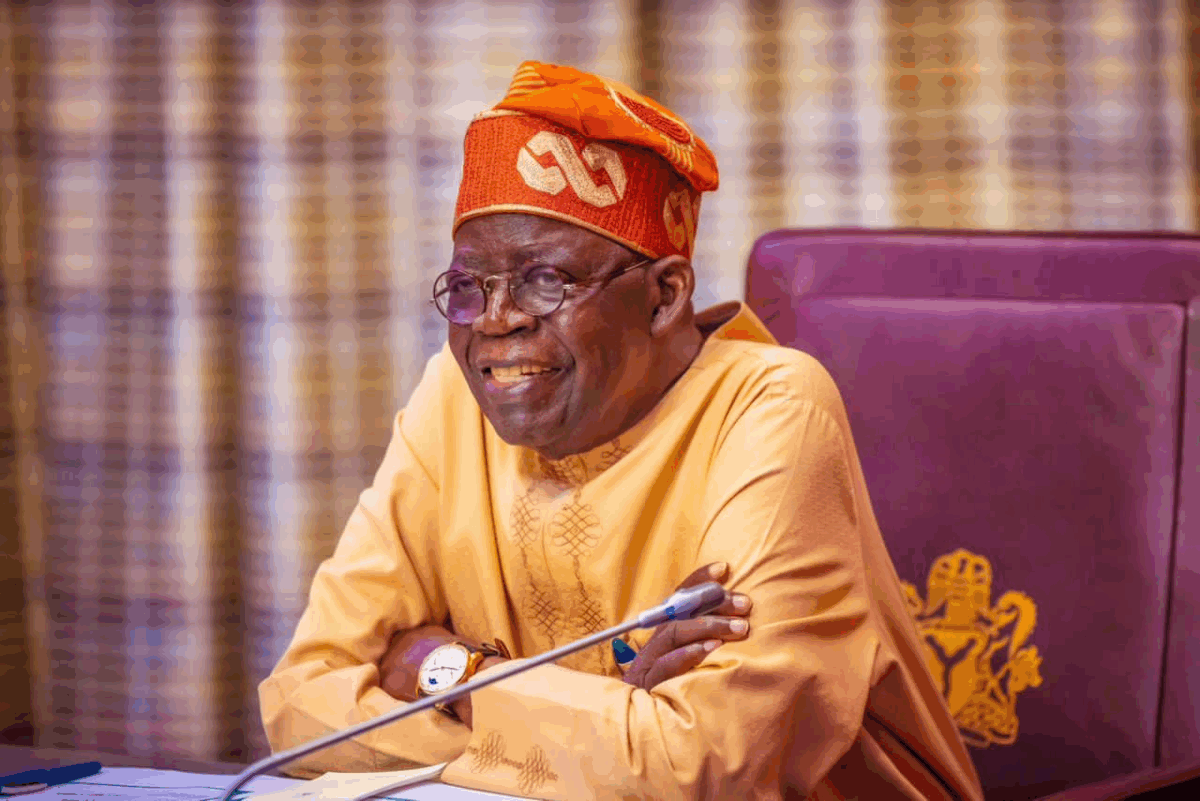
The VAT growth reported by the NBS did not happen by accident. It reflects the impact of ongoing economic reforms introduced by the administration of President Bola Ahmed Tinubu.
Since assuming office, the administration has prioritised fiscal reforms aimed at strengthening government revenue, improving tax efficiency and creating a more sustainable economic framework.
An important part of this effort has been the drive to modernise tax administration and improve compliance. In this regard, the leadership of the Nigeria Revenue Service (NRS) deserves recognition for its commitment to enforcing tax laws, reducing leakages, expanding the tax net and leveraging technology to improve collection processes.
The increase in VAT revenue demonstrates that effective tax administration can boost government income without necessarily increasing tax rates. Instead, better compliance, improved monitoring and stronger enforcement can generate substantial gains while supporting economic growth.
For policymakers, the message from the NBS report is clear. Nigeria’s future lies in building a diversified revenue base anchored on productive economic activity rather than relying heavily on crude oil earnings. Stronger non-oil revenue provides the government with more resources to invest in infrastructure, education, healthcare, security and other development priorities.
While challenges remain, the first quarter VAT figures provide reasons for optimism. A 17.06 per cent year-on-year increase in VAT revenue, combined with strong contributions from manufacturing, telecommunications and mining, suggests that the foundations for sustainable economic growth are gradually being strengthened.
The NBS report is therefore more than a revenue update. It is an indication that tax reforms are taking effect, economic activity is expanding, and Nigeria is moving closer to a more resilient and diversified economy. If current reforms are sustained, the country’s fiscal outlook will continue to improve, creating greater opportunities for growth, investment and national development.
The message from the latest NBS data is straightforward. Nigeria’s tax reforms are beginning to work, revenue generation is improving, and the country is building a stronger foundation for long-term economic prosperity.
Arábìnrin Adérónke Atoyebi is an award-winning investigative journalist and technical assistant on broadcast media to the executive chairman of the Nigeria Revenue Service.

We have recently deactivated our website's comment provider in favour of other channels of distribution and commentary. We encourage you to join the conversation on our stories via our Facebook, Twitter and other social media pages.

More from Peoples Gazette

States
Independence: NBA urges Nigerians to expect better future
The NBA said that ordinary Nigerians should be deriving benefit from the subsidy removal rather than hardship.

Agriculture
FG tasks ECOWAS on leveraging financing strategies for agroecology
The federal government has urged stakeholders in the agriculture and finance sectors in the West Africa region to leverage financing strategies to enhance agroecology practices

Politics
Katsina youths pledge to deliver over 2 million votes to Atiku
“Katsina State is Atiku’s political base because it is his second home.”

Africa
Ghana to stop raw mineral exports by 2030: Mahama
Mr Mahama reaffirmed that government policy will pivot from merely extracting raw materials to building complete industrial value chains.

Africa
Ghanaian broadcaster Kwame Dzokoto dies after collapsing during live show
Mr Dzokoto died early Thursday while participating as a panelist on the morning show on Owass FM/Radio in Tarkwa, Ghana’s Western Region.

Economy
Lagos butchers seek land for Eko Ranches, plan pilot scheme
The Lagos State Butchers Association says it is seeking approval to begin a pilot ranching scheme at Oko-Oba Abattoir while awaiting land for Eko Ranches.

World
Five Nigerians appointed to UN information system consultation group
Five Nigerians have been appointed to the 92-member Multistakeholder Consultation Group of the United Nations Group on the Information Society.
States
Mbah inaugurates multibillion-naira pharmaceutical company in Enugu
Governor Peter Mbah has inaugurated Anchorage Pharmaceutical Industries Limited, a multibillion-naira pharmaceutical company in Trans-Ekulu, Enugu.

Maiduguri
Shettima arrives in Maiduguri to inaugurate projects
Vice-President Kashim Shettima has arrived in Maiduguri, Borno, to inaugurate Kashim Ibrahim University Teaching Hospital, a hostel, and 104 staff housing units.


