

Violence stripping women, girls in Sahel region of right to viable future: UN

Deepening violence and poverty, driven by displacement, hunger, and terrorism, are stripping women and girls of their right to safety, education, and a viable future in Africa’s Sahel region.
Sima Bahous, executive director of UN Women, told ambassadors in the Security Council on Thursday in New York.
Ms Bahous said risks to women and girls across the vast region were severe and systemic, as political instability, environmental collapse, and a declining international presence took their toll.
From abductions and child marriage to exclusion from schools and public life, their lives and opportunities are being steadily stripped away, the UN Women chief regretted.
“In the Sahel, where the world’s gravest concerns converge, women and girls bear the brunt,” Ms Bahous said.
She added that crises due to increasing terrorism, poverty, hunger, a crumbling aid system, and shrinking civic space are “converging, violently and disproportionately, on their bodies and their futures.”
In countries like Niger, Chad, Burkina Faso, and Mali, life for women under extremist control “is one of erasure from public space,” Ms Bahous said.
Their movement, visibility, and even clothing are heavily restricted. Schools have been burned or shut down, leaving more than one million girls without access to education.
“Abduction is not a by-product of terrorism in the Sahel; it is a tactic,” Ms Bahous said.
She said that in Burkina Faso alone, the number of women and girls abducted had more than doubled over the past 18 months. She added that in Mali, 90 per cent of women have been affected by female genital mutilation, while the rate of child marriage in parts of the region is among the highest in the world.
Maternal mortality, driven by early pregnancy and poverty in the region, is among the world’s worst.
“The distances women and girls travel for water or firewood are growing longer, while their safety is shrinking,” Ms Bahous said.
Two-thirds of women surveyed reported feeling unsafe during these journeys.
Climate change only deepens the hardship, with extreme heat and drought increasing both mortality and food insecurity across the region.
Despite mounting needs, international support is waning, as only eight percent of this year’s humanitarian appeal for the region had been met by May.
Development assistance has fallen nearly 20 per cent over the past two years. As a result, women’s protection and empowerment programmes have been suspended, while government ministries focused on gender equality are being defunded, merged, or closed.
At the same time, democratic and civic space is narrowing.
“We cannot abandon the Sahel, whatever the politics, whatever the funding landscapes, whatever the geopolitical headwinds,” Ms Bahous said. “Let us stand with the women of the Sahel, not out of charity, but in recognition of their power to shape a better future.”
Leonardo Santos Simão, Head, UN Office for West Africa and the Sahel, also warned that a deteriorating security environment, marked by waves of jihadist attacks and political turbulence, was undermining progress and fuelling displacement.
He added that shrinking space for media, civil society, and women’s organisations was threatening hard-won gains and that a broader crisis was undermining governance and peacebuilding efforts.
The UNOWAS head said, “The region’s economy remains highly vulnerable to external shocks. Although macroeconomic indicators show improvement, rising debt levels continue to constrain governments’ capacity to provide essential services.”
(NAN)

We have recently deactivated our website's comment provider in favour of other channels of distribution and commentary. We encourage you to join the conversation on our stories via our Facebook, Twitter and other social media pages.

More from Peoples Gazette

Agriculture
FG tasks ECOWAS on leveraging financing strategies for agroecology
The federal government has urged stakeholders in the agriculture and finance sectors in the West Africa region to leverage financing strategies to enhance agroecology practices

Politics
Katsina youths pledge to deliver over 2 million votes to Atiku
“Katsina State is Atiku’s political base because it is his second home.”
Heading 4
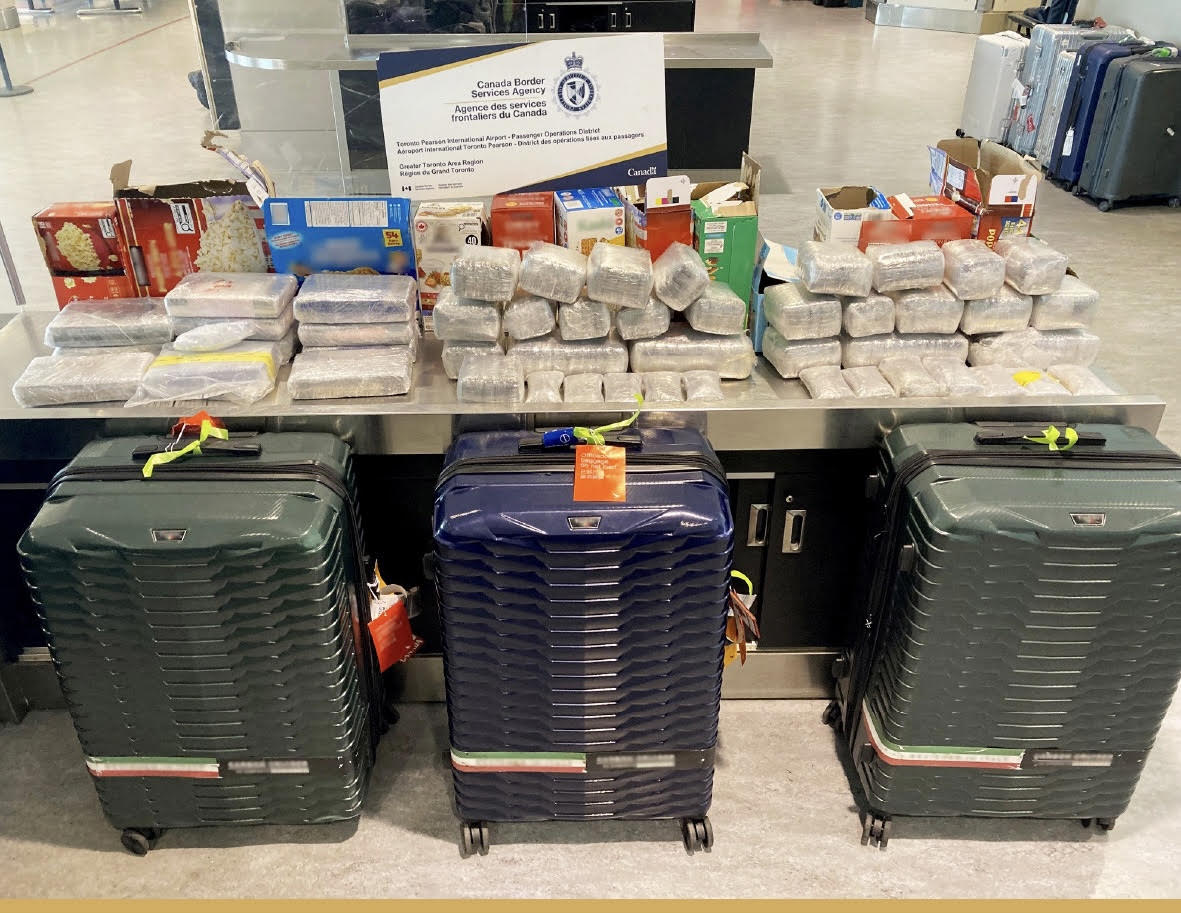
Sri Lanka-bound 44kg hashish, 13kg cocaine intercepted at Canada’s Toronto Pearson’s airport
The suspect was subsequently arrested by law enforcement officers before being transferred into the custody of the Royal Canadian Mounted Police (RCMP).

NationWide
Africa Magic airs documentary celebrating Olu Jacobs’ legacy
The late Jacobs co-founded the Lufodo Group and the Lufodo Academy of Performing Arts with his wife.

Africa
Ebola cases rise as outbreak expands to 63 health zones in DR Congo: WHO
WHO said delays in diagnosis and access to adequate treatment could contribute to preventable deaths.

States
Edo govt. targets jobs, revenue through tourism, hospitality sectors
Mr Okaeben said the state government was committed to creating an enabling environment where talents could thrive.
NationWide
Army trains 380 soldiers in specialised skills to boost operations
Mr Adejimi said the training was designed to improve the technical capabilities of personnel.

States
Police nab two suspects for alleged car theft in Niger village
The suspected soldier and one other took to their heels, while the other two were arrested.


