

Visa of Chinese scientist who edited babies’ genes revoked
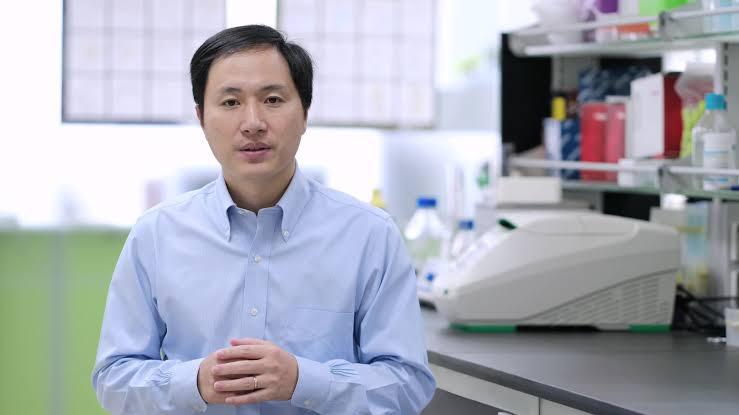
Hong Kong has revoked the visa of He Jiankui, a controversial Chinese scientist who edited the gene of babies.
The Chinese scientist’s visa was revoked for giving false information, the Hong Kong authorities said on Tuesday.
Immigration officials in Hong Kong believed that Mr Jiankui, who sparked international controversy and ethical debate in 2018 after creating the world’s first “gene-edited” babies resistant to HIV, had lied on the application form for a talent scheme.
Nearly five years ago, at an international conference in Hong Kong, Mr Jiankui announced that he had achieved a scientific breakthrough by modifying two embryos before they were placed in their mother’s womb, using a technology known as CRISPR-Cas9.
Hong Kong revoked Jiankui’s work visa and launched an investigation after the public condemned the government in the wake of the news that the convicted scientist was granted one, despite having a criminal record in China for medical malpractice.
“After reviewing the application, the Immigration Department suspected the visa/entry permit was obtained by false representation, and the Director of Immigration had declared the visa/entry permits invalid in accordance with the law, and would conduct a criminal investigation to follow up,” said the Hong Kong government.
In December 2019, a court in Shenzhen, China, sentenced Mr Jiankui to three years’ imprisonment and a fine of £360,320 for breaking China’s regulations by carrying out scientific research and practising medicine without a licence after it was suspended a year earlier.
Despite criticism from many international health experts, Mr Jiankui maintained that his scientific research and experiments were to help the poor.
He opened a laboratory in Beijing solely for developing affordable drugs for rare genetic diseases.

We have recently deactivated our website's comment provider in favour of other channels of distribution and commentary. We encourage you to join the conversation on our stories via our Facebook, Twitter and other social media pages.

More from Peoples Gazette

States
Independence: NBA urges Nigerians to expect better future
The NBA said that ordinary Nigerians should be deriving benefit from the subsidy removal rather than hardship.

Agriculture
FG tasks ECOWAS on leveraging financing strategies for agroecology
The federal government has urged stakeholders in the agriculture and finance sectors in the West Africa region to leverage financing strategies to enhance agroecology practices

Politics
Katsina youths pledge to deliver over 2 million votes to Atiku
“Katsina State is Atiku’s political base because it is his second home.”

Kano
Police kill two suspected bandits, recover N10 million ransom in Kano
Mr Kiyawa said that during the ambush, two of the suspected bandits were neutralised, while the third suspect escaped with injuries.
Politics
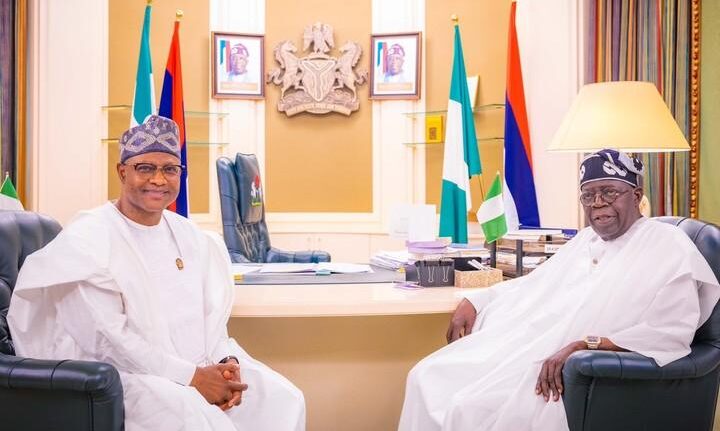
2027: Kaduna targets three million votes for Tinubu, says Gov. Sani
Mr Sani also said Mr Tinubu had promised to support the return of Rep. Abbas Tajudeen as speaker of the House of Representatives for a second term.

Sport
Man City beat Ipswich to maintain EPL winning streak as Chelsea, Liverpool secure away victories
Erling Haaland restored Man City’s lead from close range in the 34th minute and scored again in the 69th minute to make it 3-1.

NationWide
EU to deliver €20 million defence support to Nigerian armed forces
Ms Katung-Babatunde further said the ambassador revealed that an EU technical delegation would be visiting Nigeria in November to agree on delivery
NationWide
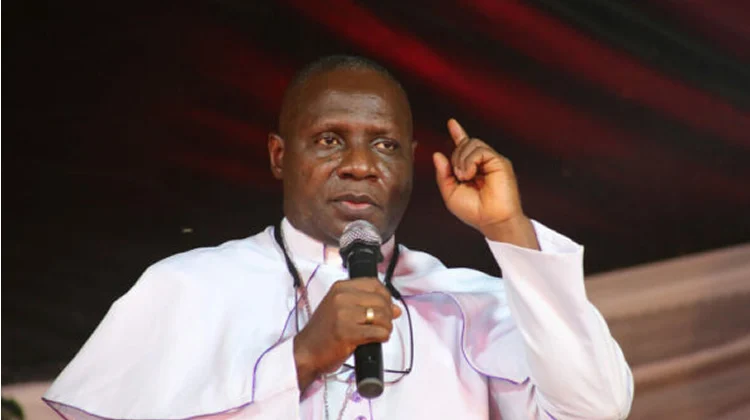
CAN@50: Okoh urges churches to uphold justice, democracy, religious freedom
Mr Okoh compared the Church’s responsibility to that of the biblical watchman in Ezekiel 33.
States
Nasarawa captures 1.9 million vulnerable residents in social register
The commissioner assured Nasarawa residents of the government’s commitment to their welfare.


