

WHO demands action as Nigeria adopts policy to strengthen cosmetics safety

The World Health Organisation has called for political and financial commitment from government counterparts at all levels to prioritise implementation of the policy as Nigeria adopts a national policy to strengthen cosmetics safety.
WHO, in a statement on Wednesday, lauded Nigeria for approving its first national policy on cosmetics safety and health after nearly two decades of stalled attempts.
According to the statement, the policy was launched at the 66th National Council on Health in Calabar and establishes a clear system to regulate the manufacture, importation, sale, use, and disposal of cosmetic products.
The new policy supports major government priorities. It aligns with the National Strategic Health Development Plan II, the National Chemical Safety Policy and the National Environmental Health Action Plan.
It also advances the Nigeria Health Sector Renewal Investment Initiative and strengthens the country’s commitments under the International Health Regulations and the Minamata.
By improving regulation and surveillance, the UN health agency stated that the policy would strengthen health security, protect consumers and support economic diversification.
A health worker explained that the product could have contained harmful chemicals.
In the Kura LGA, community members described how some traders repackage creams without labels.
One resident said a neighbour developed rashes after using a mixture bought at a weekly market.
“People buy what they can afford,” she said. “Most of us do not have access to formally regulated shops.”
At Sabon Gari market in Kano, an expectant mother, Gloria Okafor, learned during an antenatal visit that a cream she used to remove stretch marks might have contained heavy metals.
“I was careful with food and medicine during pregnancy,” Ms Okafor said. “I never imagined body cream could be a risk.”
It stated that these experiences reflected wider challenges: limited consumer awareness, informal distribution systems and economic pressures that make unregulated products common.
Recent national and global assessments highlight both the scale and the safety concerns within Nigeria’s cosmetics sector.
Nigeria’s cosmetics industry has grown into a dynamic and increasingly sophisticated sector, with a market valuation exceeding $7.8 billion.
Globally, the cosmetics market is valued at over $429.2 billion, presenting both economic opportunities and regulatory challenges, particularly in low- and middle-income countries such as Nigeria.
Since 2022, Nigeria has registered close to 9, 000 cosmetic products that meet national regulatory requirements under the oversight of the National Agency for Food and Drug Administration and Control, reflecting strengthened compliance efforts.
In Nigeria, a study conducted in Anambra State found lead contamination in 62 per cent of tested cosmetic products, with concentrations ranging from 0.10 to 42.12 mg/kg⁴ (exceeding the WHO permissible limit of 10 mg/kg).
Additional investigations in Ibadan and Lagos confirmed that cadmium, lead, and nickel levels in personal care products exceeded international safety limits.
These findings underscore the urgent need for strengthened surveillance, consumer awareness and enforcement to protect public health. WHO further stated that studies in Nigeria had found high levels of lead, cadmium and other harmful substances in some cosmetic products.
These chemicals can cause kidney problems, skin damage and complications during pregnancy.
Market surveillance at the Kurmi market in Kano Municipal LGA revealed widespread mislabelling and repackaging.
The National Agency for Food and Drug Administration and Control officer, Audu Tanimu, said, “Some products are intentionally labelled to avoid suspicion, but laboratory testing shows restricted substances. Enforcement efforts are ongoing, yet informal supply chains continue to complicate traceability.”
(NAN)

We have recently deactivated our website's comment provider in favour of other channels of distribution and commentary. We encourage you to join the conversation on our stories via our Facebook, Twitter and other social media pages.

More from Peoples Gazette

States
Independence: NBA urges Nigerians to expect better future
The NBA said that ordinary Nigerians should be deriving benefit from the subsidy removal rather than hardship.

Agriculture
FG tasks ECOWAS on leveraging financing strategies for agroecology
The federal government has urged stakeholders in the agriculture and finance sectors in the West Africa region to leverage financing strategies to enhance agroecology practices

Politics
Katsina youths pledge to deliver over 2 million votes to Atiku
“Katsina State is Atiku’s political base because it is his second home.”
Africa
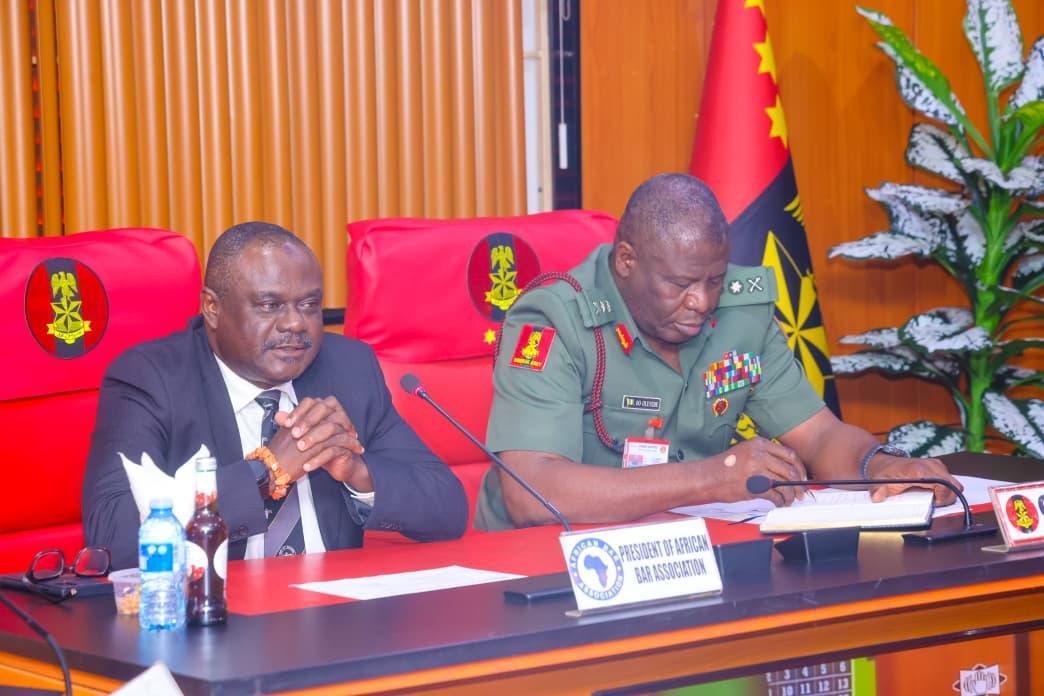
Africa bar association president advises lawyers to defend justice, freedom
Mr Mark reaffirmed that AfBA would continue to stand as a generational ally of the National Conference of Black Lawyers.

NationWide
NAF clarifies casualties in crashed aircraft, appreciates public support
Mr Ejodame said the NAF remains actively engaged with the bereaved families.

NationWide
Group hails FG for backtracking on ban of solar panel importation
Mr Terungwa commended the Minister of Innovation, Science and Technology, Kingsley Udeh, for supporting a gradual transition to domestic production.

Heading 3
UNICEF expresses sympathy for children, families as earthquake rocks Panama
UNICEF said it was ready to support the Government of Panama’s response if needed.

NationWide
IG deploys new spokespersons to commands, formations
Mr Disu charged the officers to uphold professionalism, accuracy and responsiveness in the discharge of their duties.

States
EFCC secures conviction of Lagos fraudster for laundering N132 million
The commission said Justice Osiagor ordered Mr Pelumi to undertake seven days of community service based on the sentencing.


