

WHO regrets U.S. withdrawal, says decision makes world less safe
The World Health Organisation (WHO) has expressed regrets over the United States’ notification of withdrawal from the organisation, saying the decision makes “the world less safe”.
WHO, in a statement, acknowledged several significant contributions of the U.S. to the organisation since its founding.
The U.S. formally withdrew from the WHO on Thursday, making good on an executive order that President Donald Trump issued on January 20, 2025, his first day in office.
“As a founding member of the World Health Organisation (WHO), the United States of America has contributed significantly to many of WHO’s greatest achievements,” WHO said.
These include “the eradication of smallpox, and progress against many other public health threats including polio, HIV, Ebola, influenza, tuberculosis, malaria, neglected tropical diseases, antimicrobial resistance, food safety and more”.
“WHO, therefore, regrets the United States’ notification of withdrawal from WHO – a decision that makes both the United States and the world less safe.
“The notification of withdrawal raises issues that will be considered by the WHO Executive Board at its regular meeting starting on 2 February and by the World Health Assembly at its annual meeting in May 2026.”
WHO said it takes note of statements from the government of the United States that say WHO has “trashed and tarnished” and insulted it, and compromised its independence.
“The reverse is true,” the UN global health agency declared.
‘As we do with every Member State, WHO has always sought to engage with the United States in good faith, with full respect for its sovereignty,” WHO stressed.
In its statements, the United States cited as one of the reasons for its decision, “WHOs’ failures during the COVID-19 pandemic”.
The failure, the U.S. noted, included “obstructing the timely and accurate sharing of critical information” and that WHO “concealed those failures”.
“While no organisation or government got everything right, WHO stands by its response to this unprecedented global health crisis.
“Throughout the pandemic, WHO acted quickly, shared all information it had rapidly and transparently with the world, and advised Member States on the basis of the best available evidence.”
WHO said it recommended the use of masks, vaccines and physical distancing, but at no stage recommended mask mandates, vaccine mandates or lockdowns.
The global health body said it supported sovereign governments to make decisions they believed were in the best interests of their people, but the decisions were theirs.
“Immediately after receiving the first reports of a cluster of cases of “pneumonia of unknown cause” in Wuhan, China on 31 December 2019, WHO asked China for more information and activated its emergency incident management system.
“By the time the first death was reported from China on 11 January 2020, WHO had already alerted the world through formal channels, public statements and social media, convened global experts, and published comprehensive guidance for countries on how to protect their populations and health systems.
“When the WHO Director-General declared COVID-19 a public health emergency of international concern under the International Health Regulations on 30 January 2020 – the highest level of alarm under international health law – outside of China there were fewer than 100 reported cases, and no reported deaths.”
WHO said in the first weeks and months of the pandemic, the director-general urged all countries repeatedly to take immediate action to protect their populations.
The global health agency said it warned that “the window of opportunity is closing”, adding “this is not a drill” and describing COVID-19 as “public enemy number one”.
Accordingly, it said in response to the multiple reviews of the COVID-19 pandemic, including of WHO’s performance, WHO has taken steps to strengthen its own work.
These steps, WHO stressed, included to support countries to bolster their own pandemic preparedness and response capacities.
“The systems we developed and managed before, during and after the emergency phase of the pandemic, and which run 24/7, have contributed to keeping all countries safe, including the United States.”
The United States also said in its statements that WHO has “pursued a politicized, bureaucratic agenda driven by nations hostile to American interests”
“This is untrue,” the world health body counters.
“As a specialized agency of the United Nations, governed by 194 Member States, WHO has always been and remains impartial and exists to serve all countries, with respect for their sovereignty, and without fear or favour.”
WHO appreciates the support and continued engagement of all its Member States, which continue to work within the framework of WHO to pursue solutions to the world’s biggest health threats, both communicable and noncommunicable.
Most notably, WHO Member States in 2025 adopted the WHO Pandemic Agreement, which once ratified will become a landmark instrument of international law to keep the world safer from future pandemics.
Member States are now negotiating an annex to the WHO Pandemic Agreement, the Pathogen Access and Benefit Sharing system.
If adopted, this will promote rapid detection and sharing of pathogens with pandemic potential, and equitable and timely access to vaccines, therapeutics and diagnostics.
The global health body said it hoped that in the future, the United States would return to active participation in WHO.
“WHO remains steadfastly committed to working with all countries in pursuit of its core mission and constitutional mandate: the highest attainable standard of health as a fundamental right for all people.”
(NAN)

We have recently deactivated our website's comment provider in favour of other channels of distribution and commentary. We encourage you to join the conversation on our stories via our Facebook, Twitter and other social media pages.

More from Peoples Gazette

States
Independence: NBA urges Nigerians to expect better future
The NBA said that ordinary Nigerians should be deriving benefit from the subsidy removal rather than hardship.

Agriculture
FG tasks ECOWAS on leveraging financing strategies for agroecology
The federal government has urged stakeholders in the agriculture and finance sectors in the West Africa region to leverage financing strategies to enhance agroecology practices

Politics
Katsina youths pledge to deliver over 2 million votes to Atiku
“Katsina State is Atiku’s political base because it is his second home.”
Africa
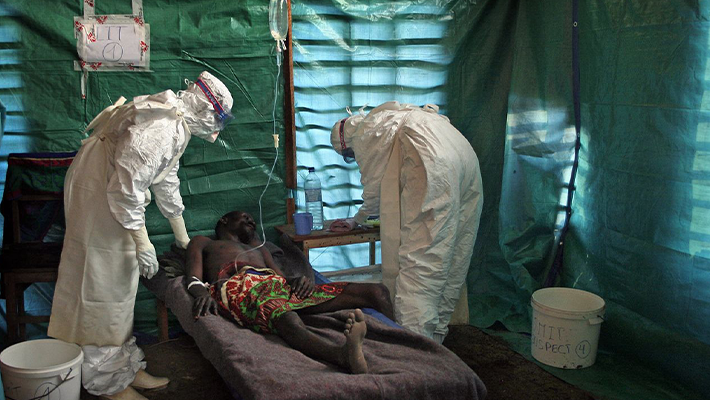
Ebola deaths hit 4,242 as cases rise to 8,787 in DR Congo: WHO
As of October 7, the outbreak had recorded 8,787 cases, 4,242 confirmed deaths and 2,292 recoveries.

World
Oyedele leads Nigeria delegation to IMF annual meeting
The meetings, scheduled for October 12 to October 18, will be attended by delegations from more than 190 countries.

States
Niger Delta group endorses Tinubu for second term, demands 25% oil derivation
Mr Udoh said Nigeria’s history was intertwined with oil exploration in the Niger Delta.
Politics
2027: Makinde vows to tackle insecurity, poverty through reforms
Mr Makinde said power-sharing under his administration would not favour any particular part of the country.
States
NDC urges calm over omission of Kano governorship candidate from INEC list
The party said that Mr Abdussalam-Gwarzo had fulfilled all the requirements for the election.
States
Ododo urges Kogi Christian leaders to promote unity, peace
The governor commended CAN for 50 years of faith, worship, unity and service to humanity.


