

Why Bola Tinubu’s political savagery is different

There is a growing argument in Nigeria’s public life that Bola Ahmed Tinubu represents not merely another strong-willed political actor in a long line of dominant figures, but a distinct and troubling departure from the democratic ethos that has, however imperfectly, guided the country’s post-military evolution, and this argument rests not on rhetoric or partisan dislike, but on a pattern of conduct that reveals a consistent preference for control over consent, influence over institutional independence, and political victory over democratic legitimacy.
Nigeria’s democratic history is far from pristine, and no serious observer would romanticise the administrations of Olusegun Obasanjo, Umaru Musa Yar’Adua, or even Muhammadu Buhari as unblemished custodians of democratic ideals, but within their imperfections there remained a recognisable boundary between ambition and the outright instrumentalisation of the democratic process itself, a boundary that appears increasingly eroded under Tinubu’s political philosophy, where the structures of democracy are treated less as ends in themselves and more as tools to be bent, stretched, and in some cases overridden in pursuit of power consolidation.
The most immediate and visible instance of this disposition lies in the circumstances surrounding the 2023 presidential election, where widespread concerns about electoral transparency, technological failure, and procedural opacity were not met with a statesmanlike openness to scrutiny but with a hardened insistence on finality, as though the mere declaration of victory extinguished the democratic obligation to persuade, reassure, and unify a divided electorate, and while contested elections are not new in Nigeria, the posture adopted in the aftermath, marked by a refusal to meaningfully engage public doubt, signalled a deeper indifference to the participatory spirit that underpins democratic legitimacy.
This pattern extends beyond electoral politics into the realm of governance itself, where the centralisation of power has become a defining feature of the current administration, not only in the accumulation of influence within the executive but in the subtle weakening of countervailing institutions, as seen in the handling of the Nigerian National Assembly, whose leadership emergence bore the imprint of executive preference rather than legislative independence, thereby raising fundamental questions about the autonomy of a body constitutionally designed to act as a check on presidential authority.
The events in Rivers State further illuminate this tendency, where federal intervention in a subnational political dispute appeared less like a neutral effort to preserve order and more like a calculated move to reshape local power dynamics in favour of allies, blurring the line between governance and political engineering, and reinforcing the perception that federal might is being deployed not as an impartial guarantor of stability but as an instrument of partisan advantage.
Control over the political party system has also taken on an intensity that distinguishes Tinubu from many of his predecessors, whose influence within their parties, though often considerable, did not consistently translate into the kind of top-down orchestration that now characterises internal party processes, where dissent is marginalised, consensus is manufactured, and loyalty is elevated above deliberation, thereby hollowing out the democratic culture within parties that serve as the foundational vehicles of representation in any functioning democracy. More troubling still is a development without precedent in our party political history: an incumbent president actively stoking divisions within opposition ranks, deploying fifth columnists to foment discord and weaken them from within.
The civic space, which ought to function as the breathing room of democratic life, has not been spared this tightening grip, as voices of opposition, whether in the media, civil society, or grassroots movements, encounter an environment increasingly defined by suspicion, regulatory pressure, and at times overt hostility, a climate that discourages robust debate and fosters self-censorship, thereby impoverishing the very discourse that democracy depends upon for its vitality and renewal.
Comparisons with earlier eras reveal a crucial distinction that strengthens the claim of Tinubu’s singularity in this regard, for even during moments of democratic strain under leaders like Obasanjo, whose third-term ambitions rightly provoked national resistance, or Buhari, whose military past cast a long shadow over his civilian presidency, there remained a visible contestation between power and principle, a tension that allowed institutions, public opinion, and political actors to push back in meaningful ways, whereas the current moment appears characterised by a more seamless fusion of authority and compliance, in which resistance is not only resisted but structurally pre-empted.
One must also consider the ideological framing that accompanies this mode of governance, a framing that often privileges stability over freedom, order over pluralism, and efficiency over accountability, as though democracy were a luxury to be managed rather than a principle to be upheld, and while every government must balance competing demands, the persistent elevation of control as the primary organising value risks transforming democracy into a procedural shell devoid of its substantive core.
The implications of this trajectory are profound, because democracy does not collapse only through dramatic ruptures such as coups or constitutional suspensions, but can also erode gradually through the steady accumulation of practices that weaken institutions, narrow civic space, and normalise the concentration of power, a process that is often more insidious precisely because it operates within the formal boundaries of legality while subverting the spirit of democratic governance.
It is important to acknowledge that Tinubu’s defenders would argue that his actions reflect political realism rather than anti-democratic intent, that the complexities of governing a diverse and often fractious nation like Nigeria require a firm hand, and that the pursuit of reform sometimes demands difficult choices that may appear illiberal in the short term, but such arguments, while not without merit, cannot obscure the cumulative effect of a governing style that consistently tilts the balance away from participation and towards control, nor can they justify the steady recalibration of democratic norms in favour of executive dominance.
Nigeria stands at a delicate juncture where the resilience of its democratic institutions is being tested not by overt rejection but by subtle redefinition, and the question that must be asked with urgency and clarity is whether the country is witnessing the emergence of a political order in which democracy is maintained in form but hollowed out in substance, an order in which elections occur but choice is constrained, in which institutions exist but independence is compromised, and in which power is exercised with a confidence that brooks little dissent.
To frame Tinubu as uniquely anti-democratic in Nigeria’s history is not to deny the flaws of those who came before him, but to recognise a qualitative shift in the relationship between power and principle, a shift that demands careful scrutiny and, where necessary, principled resistance, because the health of a democracy is measured not only by the conduct of its leaders but by the willingness of its citizens to defend the values that sustain it, and history will judge this moment not by the victories won or the alliances forged, but by whether the democratic spirit that has survived so many trials can endure this new and singular drift.
Abdul Mahmud, a human rights attorney in Abuja, writes weekly for The Gazette

We have recently deactivated our website's comment provider in favour of other channels of distribution and commentary. We encourage you to join the conversation on our stories via our Facebook, Twitter and other social media pages.

More from Peoples Gazette

States
Independence: NBA urges Nigerians to expect better future
The NBA said that ordinary Nigerians should be deriving benefit from the subsidy removal rather than hardship.

Agriculture
FG tasks ECOWAS on leveraging financing strategies for agroecology
The federal government has urged stakeholders in the agriculture and finance sectors in the West Africa region to leverage financing strategies to enhance agroecology practices

Politics
Katsina youths pledge to deliver over 2 million votes to Atiku
“Katsina State is Atiku’s political base because it is his second home.”
World
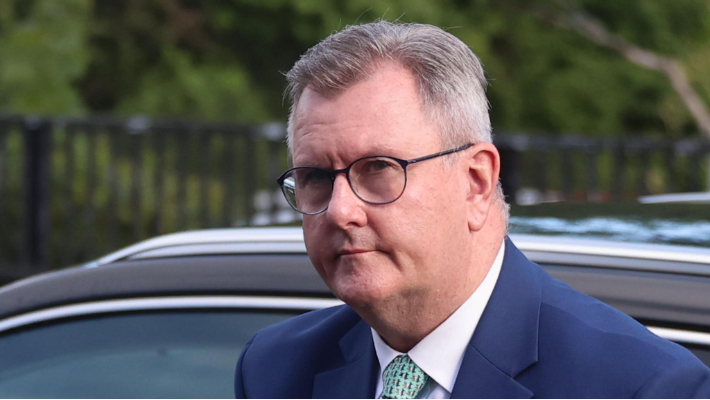
UK court sentences Irish lawmaker Jeffrey Donaldson to 15 years in prison for raping children
One of the women described the rape as “the worst moment of her life”.

Africa
Kenya announces second Ebola case, downplays wider spread
The ministry said the victim had been in contact with 128 people.
States
Bauchi govt restates commitment to girls education
The commissioner enjoined parents to support their children, especially girls, to complete their education.

Heading 4
Presidency to send State Police Bill to National Assembly in two weeks
He described the proposed legislation as the most consequential bill of Mr Tinubu’s administration.
States
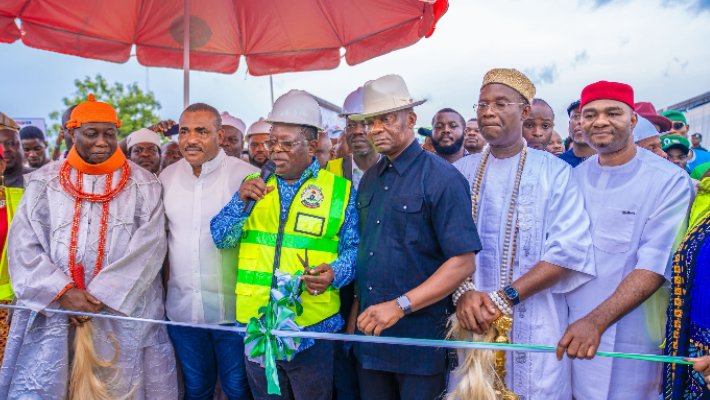
FG reopens First Niger Bridge after 38 days
Mr Umahi said the intervention reflected President Bola Tinubu’s commitment to maintaining critical infrastructure.

Health
Group urges lawmakers to strengthen oversight on nutrition funding
The programme manager said accountability in nutrition financing has been lacking over the years.


