

Women unjustly arrested, incarcerated without legal representation over abortions in Senegal, documentary reveals

A comprehensive documentary has revealed how several women in Senegal are being unjustly arrested, prosecuted and incarcerated for engaging in abortions regardless of the circumstances.
The documentary, which was produced by Afya na Haki (Ahaki), an Uganda-based non-profit organisation focused on advancing sexual and reproductive health and rights in Africa, in partnership with the African Institute for Investigative Journalism and Litigating Reproductive Justice in Africa, probed into abortion-related prosecutions in the country, highlighting the broader realities confronting women under Senegalese restrictive abortion laws.
The investigation, led by AIIJ executive director Solomon Serwanjja, came amid ongoing efforts to document reproductive rights violations across the African continent and push for genuine legal reforms, including those required by the Maputo Protocol which Senegal had ratified.
The documentary, which featured victims who shared their stories and stakeholders who offered their perspectives on the development, revealed that huge number of women were unjustly arrested and incarcerated in the country despite that many were victims of rape, incest and unwanted pregnancies.
It showed that while Senegal had ratified the Maputo Protocol, its national laws still largely prohibited abortion, creating a conflict between its international commitment and domestic legislation.
The documentary stated, “Dakar is a city that seamlessly blends tradition and modernity. The people of Senegal are warm and welcoming with a love for life that is infectious. But underneath this hassel and basel, Senegal is caving in silence. Thousands of women have resorted to unsafe abortions every year, risking their lives and some never make it out alive.
“Many are victims of rape, incest and unwanted pregnancies while others [battle] a lack of access to sexuality education. Many of these women ended up in jail, usually arrested in hospitals trying to seek medical care after securing unsafe abortion, often in desperation and in secrecy.”
One of the victims featured in the investigation and simply identified as Hajr, an ex-detainee arrested from the hospital where she had gone to seek medical post-abortion care, chronicled her harrowing experiences in prison without support from friends or family members.
“I was in a relationship with the man I love very much, my boyfriend. By divine decree I became pregnant. Unfortunately, we didn’t want to keep the child because none of us were ready and we decided to terminate it,” she stated. “It was a very difficult for me in the cell because I was abandoned by my family and they no longer considered me. And that same year, I lost my father. I didn’t want to talk about that frankly.”
Citing prison insider report, the documentary further revealed that abortion-related charges in the country accounted for 23% of women behind bars, noting that abortion was completely banned in Senegal except in cases when the pregnant woman’s life was at risk.
“This must be approved by a panel of three doctors, a process that is rarely successful,” it added.
According to the documentary, medical workers, in many reported cases of abortion, called the police or later executed the arrest, stating that they, however, got arrested for aiding illegal abortion if they failed to report the case.
“If the medical worker doesn’t report the case to the police, he or she faces arrest for aiding an illegal abortion,” it said.
A medical practitioner, identified as Dr Ahmed in the documentary, also narrated his ordeals after serving prison sentence for aiding illegal abortion at a government hospital.
Emphasising the urgent need for laws that allow women to make reproductive choices on abortions, Mr Ahmed stated, “I will stop to help people who talk about pregnancy or something. And I was also afraid to see a woman with pregnancy or something like that. I won’t talk about that. I stay [in prison] for five months. I’ll have depression. It is really painful. I think we need laws that give choice to women.”
The medical expert, however, revealed that “spontaneous abortions” occurred as life-threatening cases where it was difficult for medical experts to look away in order to protect the woman and medical worker from legal consequences.
The investigation further showed that while Senegal’s national assembly in 2024 met to discuss a bill that would guarantee legal access to medical abortions in cases such as rape and incest, the proposed legislation faced significant opposition from conservatives, religious groups and a section of the legislators in the country.
Abibatou Samb, a human rights lawyer featured in the documentary as one of the people in the background advocating abortion reforms in the country, decried the social, religious and other factors deepening opposition to abortions.
Ms Samb stated, “Our society opposes abortion because of what we call anti-abortion activists, people who argue that social, religious and other reasons, abortion will never be legitimised in this country. And that is why our fight is confined to the framework of Mapoto Protocol.
“We aren’t asking for abortion to be legitimised or legalised in its entirety. That is not what we are saying. We are saying that in specific cases where a person becomes pregnant as a result of rape or incest, they should be given the permission within the perimeters or conditions the law may define the right to express one’s opinion and decide whether or not to continue this pregnancy that they didn’t want.”
Noting that several women had been arrested and jailed without legal representation, the legal practitioner added many of them ended up as vulnerable persons recovering from trauma left to defend themselves entirely on their own.
“Imagine if this person has been raped or victim of incest for years at the hands of relatives, they appear in courts because they dared to terminate the pregnancy and find themselves having to defend themselves entirely on their own. It is a catastrophe,” she stated.
Madame Mammy, another advocate featured in the documentary as as one of the vocal voices in the movement for the decriminalisation of abortion laws in the country, described Senegalese judicial system as very slow in treating abortion-related cases.
She further highlighted the paucity of magistrates who would attend to such cases, accusing judges of intentionally refusing to take on cases to deter others.
“The judicial system is very slow because there are many cases and fewer judges. There are many lawyers but there aren’t many magistrates. This makes the system slow. And on top of that, there is another fact: they seem to enjoy, for example, not dealing with these cases to deter others. We realise that these judges are deliberately refusing to take on these cases,” Ms Mammy said.
Also, the execute director of UN AIDS, Winnie Byanyima, who was also interviewed in the documentary, decried the human consequences of restrictive abortion laws in the country.
Citing religion as one of the factors fueling the crisis, Ms Byanyima also insisted that abortions should be allowed in certain circumstances.
“It is this religiosity that is killing our children. In the name of God, our girls are dying. What is that? We should be able to allow abortion in certain circumstances. So you need to look at the data and find the solution. And the solution doesn’t have to comply to the edicts of religious men,” the expert stated.

We have recently deactivated our website's comment provider in favour of other channels of distribution and commentary. We encourage you to join the conversation on our stories via our Facebook, Twitter and other social media pages.

More from Peoples Gazette

States
Independence: NBA urges Nigerians to expect better future
The NBA said that ordinary Nigerians should be deriving benefit from the subsidy removal rather than hardship.

Agriculture
FG tasks ECOWAS on leveraging financing strategies for agroecology
The federal government has urged stakeholders in the agriculture and finance sectors in the West Africa region to leverage financing strategies to enhance agroecology practices

Politics
Katsina youths pledge to deliver over 2 million votes to Atiku
“Katsina State is Atiku’s political base because it is his second home.”

Heading 4
My administration delivered 10,623 homes in seven years: Sanwo-Olu
The governor said his administration remained committed to improving access to homeownership.
Heading 2
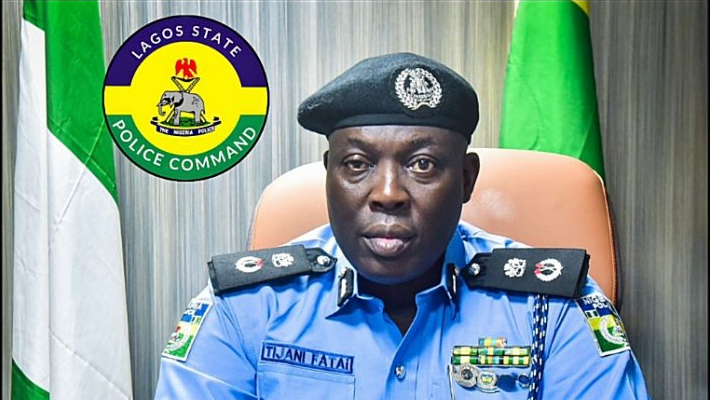
Lagos police detain four officers over harassment of young man in Ikorodu
Mr Fatai had also ordered the disbandment of the tactical team.
States
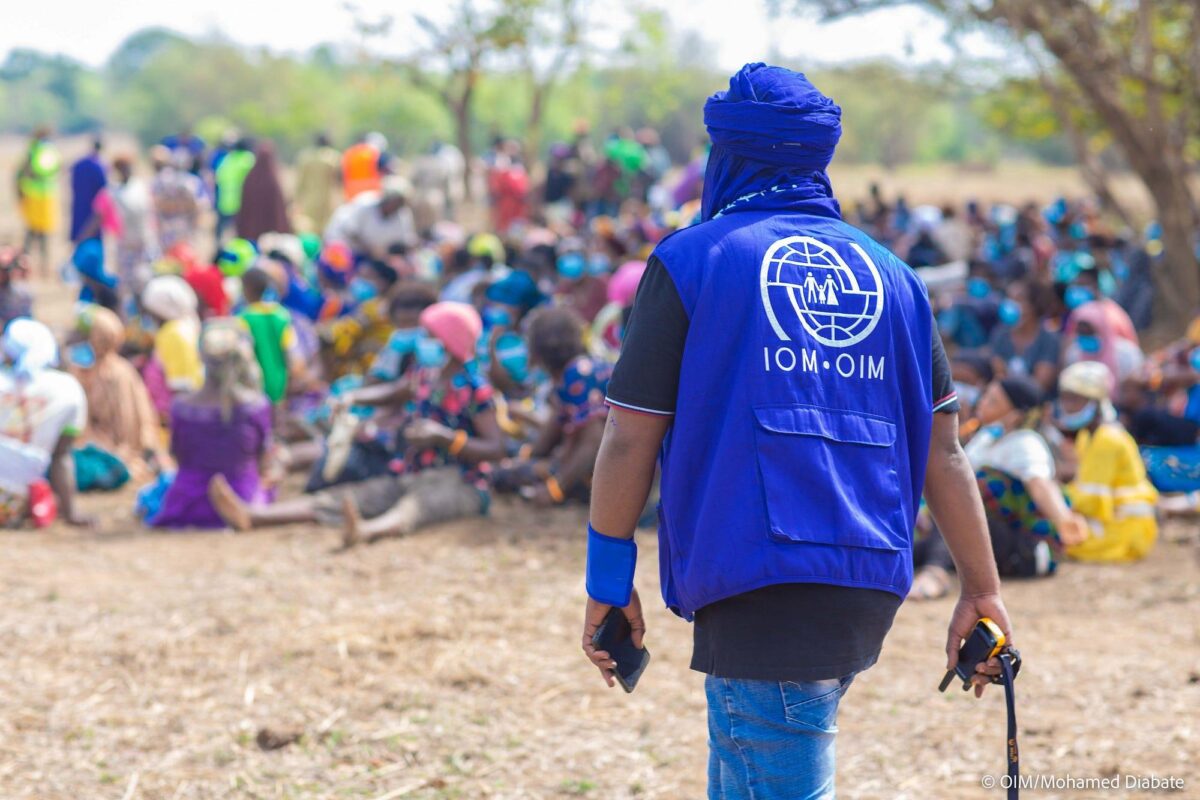
AHIP, IOM train 50 stakeholders on safe migration in Kano
The director called for intensified public awareness campaigns to discourage irregular migration.

Sport
Nigeria beat defending champions North Korea 3-1 to reach Women’s U-17 World Cup knockout round
Oluwakemisola Adegbuyi opened the scoring for Nigeria 15 minutes into the match.
Education
Edo assembly moves to harmonise 39 education laws
Mr Okogbe said the reform would introduce merit-driven incentives and grants for public schools.

Heading 4
State Police: 24 state assemblies approve constitutional amendment
Mr Gbajabiamila said the approval provided constitutional backing for the policing framework.


