

ECOWAS meets to approve Lagos-Abidjan Highway design
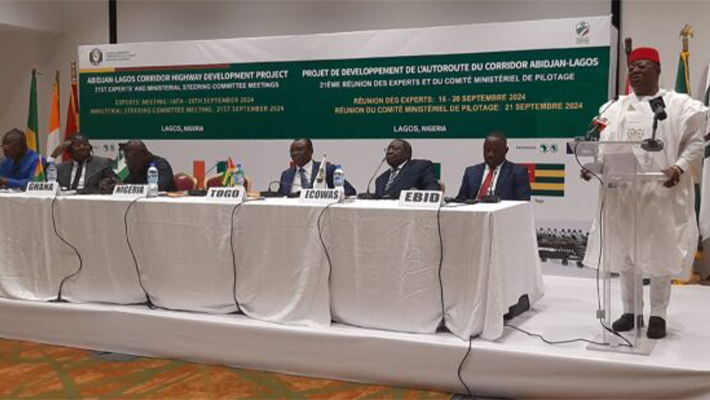
Heads of ECOWAS member states met on Saturday to finalise and approve the design of the Lagos-Abidjan corridor highway development project, which is preparatory to initiating the procurement process at its next meeting.
The meeting in Lagos, chaired by Nigeria’s Works Minister Dave Umahi, discussed the project, which is expected to cost $15 billion and deepen regional economic integration.
The project is currently in its study phase, indicating that detailed research, planning, and design are ongoing.
Highlighting the history and progress of the Lagos-Abidjan highway development project, Mr Umahi mentioned that the project, initiated in 2013, had received significant funding support from the African Development Bank.
He noted that the current meeting aimed to finalise and approve the project’s design, as it was nearing a crucial stage where concrete steps towards implementation could be taken.
“The design of the project, ESIA design, conceptualisation, and funding mechanisms have been on in the past 11 years.
“As of today, we are going to listen to the committee of experts in terms of the design, and so we believe that we will finalise and approve the design today, and then we set the goal for procurement, probably in our next meeting,’’ he said.
On his part, Ghana’s Minister of Roads and Highways, Francis Boakye, emphasised the importance of infrastructure, particularly roads, in driving socio-economic development.
Mr Boakye emphasised the significance of the Lagos-Abidjan highway project in promoting economic integration within West Africa.
Amede Kouakou, Minister of Equipment and Road Maintenance of Cote d’Ivoire said he, along with the other ministers involved in the Lagos-Abidjan highway development project, were committed to making accelerated progress with the project.
He specifically spoke of his intention to take deliberate steps to ensure that the project became a reality for the citizens of Cote d’Ivoire and Nigeria.
The Lagos-Abidjan Corridor Highway, scheduled to begin in 2025, is part of the greater Dakar-Lagos Corridor and one of the flagship priority development programmes of ECOWAS.
The about 1068 kilometres project will cover five ECOWAS member countries: Côte d’Ivoire, Ghana, Togo, Benin Republic, and Nigeria. It will traverse eight border towns (four country-pair land borders), beginning from Eric Moore and ending in Abidjan.
The African Development Bank financed the project.
(NAN)

We have recently deactivated our website's comment provider in favour of other channels of distribution and commentary. We encourage you to join the conversation on our stories via our Facebook, Twitter and other social media pages.

More from Peoples Gazette

Agriculture
FG tasks ECOWAS on leveraging financing strategies for agroecology
The federal government has urged stakeholders in the agriculture and finance sectors in the West Africa region to leverage financing strategies to enhance agroecology practices

Politics
Katsina youths pledge to deliver over 2 million votes to Atiku
“Katsina State is Atiku’s political base because it is his second home.”
States
Navy rescues two kidnap victims, recovers stolen engines in Akwa Ibom
The commander urged owners of the recovered outboard engines to provide proof of ownership in order to reclaim their property.
States
NEMA donates relief materials to Ebonyi flood victims
The governor described the recurring flood disasters in parts of the state as devastating.

Heading 4
Trump administration revokes over 250,000 visas of foreigners over crimes, immigration violations
The State Department spokesperson said the U.S. was carrying out rigorous visa vetting on a scale never seen before.
Africa
Fresh clashes in Somalia leave children dead, others injured
The fresh clashes began on Monday.
NationWide
CIoD seeks stronger board leadership amid AI, economic shifts
Mr Nolas-Alausa said the new economy presented both opportunities and responsibilities.
Heading 1
Tinubu extends 2025 budget implementation to December
The extension gives ministries, departments and agencies (MDAs) additional time to complete ongoing capital projects.


