

Security challenges obstructing prosperity in Sahel: Sultan
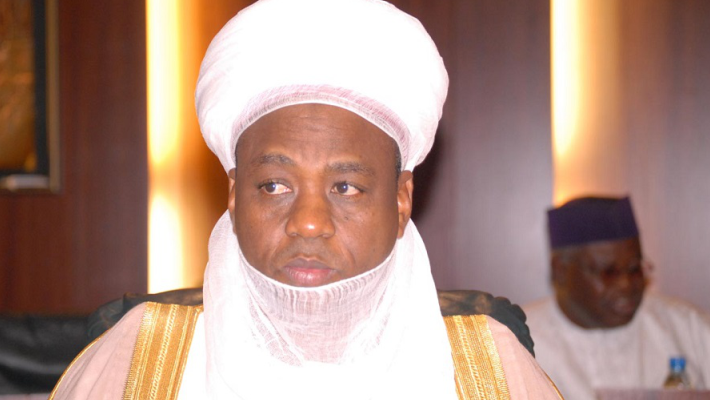
The Sultan of Sokoto, Sa’ad Abubakar, says that the deep-rooted environmental, political and security challenges are affecting the property and peace in the Sahel region.
Mr Abubakar stated this in Abuja on Thursday at the first News Agency of Nigeria International Lecture.
Represented by the Emir of Gumi, retired Justice Lawal Hassan, the Sultan said that the region was blessed with abundant human resources, offering tremendous potential for rapid economic growth.
He described the Sahel as the vast semi-arid region of Africa, separating the Sahara Desert to the North and tropical Savannah to the South, representing a land of opportunities and challenges.
“With its abundant mineral resources like lithium, cobalt and uranium, among many others, the Sahel could be described as the richest part of the globe. It is expected to be populated by 1.5 billion people by the year 2050 and has one of the largest, youngest populations in the world.
“Although it has abundant human and natural resources that offer tremendous potential for rapid economic growth. There are deep-rooted challenges – environmental, political and security, that are affecting the prosperity and peace of the Sahel,” he said.
Mr Abubakar said that to address some of the challenges, the United Nations has developed a unique support plan targeting 10 countries to scale up efforts to accelerate prosperity and sustainable peace in the region.
He identified the 10 countries as Burkina Faso, Cameroon, Chad, the Gambia, Haiti, Mauritania, Mali, Niger, Nigeria and Senegal.
The Sultan said that the support was built around six priority areas: Cross-border cooperation, prevention and sustainable peace, peace-to-growth, climate action, renewable energy and renewable energy.
He explained that the overarching goal of the UN Support Plan for the Sahel was to scale up efforts to accelerate shared prosperity and lasting peace in the Sahel countries and the regions at large.
He said this would be done by implementing priorities to achieve the 2030 Agenda for Sustainable Development and the African Union Agenda 2030.
“The support plan highlights the enormous opportunities in the Sahel and its vast assets in natural resources, energy, tourism and culture. It is aimed at mobilising public resources and tutoring target investments in the 10 countries in support of ongoing efforts,” he added.
According to him, the macroeconomic conditions in the Sahel have been steadier and stronger than the continental average over the past decade.
The Sultan said that the regional support plan for the Sahel would be inaugurated in Gwane during a high-level meeting of the Sahel and the 31st summit of the African Union in Mauritania’s capital, Nouakchott.
He said the inauguration, followed by the creation and deployment of the G5 Sahel Joint Force and the United Nations Integrated Strategy for the Sahel, would bring tangible progress to the region.
He noted that while these efforts may be good and commendable, one important aspect of finding peace and building the economy of the Sahel has not been given the attention it deserves. He identified the aspect as the historical, cultural, and religious connections between the peoples of the Sahel.
“A lot of the social integration that took place over the centuries was driven by the religious factors of the previous age, which leveraged the existing trade routes and created new ones while also creating new towns and cities, centres of commerce and centres of life.
“Over the last millennium, these movements have created an interesting mix of relationships. A good understanding of this phenomenon can provide a deeper appreciation of the factors that control some of these economies.
“It will also provide a stronger foundation in building the Sahel of the future and can put to use the rich human and material resources for the greater benefit of humanity,” he said.
(NAN)

We have recently deactivated our website's comment provider in favour of other channels of distribution and commentary. We encourage you to join the conversation on our stories via our Facebook, Twitter and other social media pages.

More from Peoples Gazette

Agriculture
FG tasks ECOWAS on leveraging financing strategies for agroecology
The federal government has urged stakeholders in the agriculture and finance sectors in the West Africa region to leverage financing strategies to enhance agroecology practices

Politics
Katsina youths pledge to deliver over 2 million votes to Atiku
“Katsina State is Atiku’s political base because it is his second home.”

States
Navy rescues two kidnap victims, recovers stolen engines in Akwa Ibom
The commander urged owners of the recovered outboard engines to provide proof of ownership in order to reclaim their property.

States
NEMA donates relief materials to Ebonyi flood victims
The governor described the recurring flood disasters in parts of the state as devastating.

Heading 4
Trump administration revokes over 250,000 visas of foreigners over crimes, immigration violations
The State Department spokesperson said the U.S. was carrying out rigorous visa vetting on a scale never seen before.
Africa
Fresh clashes in Somalia leave children dead, others injured
The fresh clashes began on Monday.

NationWide
CIoD seeks stronger board leadership amid AI, economic shifts
Mr Nolas-Alausa said the new economy presented both opportunities and responsibilities.
Heading 1
Tinubu extends 2025 budget implementation to December
The extension gives ministries, departments and agencies (MDAs) additional time to complete ongoing capital projects.


