

Daily Trust’s blunder on Samoa Agreement bolsters need for rigorous journalism in Tinubu era

On October 2, 2024, Daily Trust newspaper came out with a long overdue public apology to the Federal Government for its erroneous July 4, 2024, reporting on the Samoa Agreement. It was a needful closure to a touchy controversy. It is a commendable gesture on part of the Media Trust management. It is not everyone that has the humility to admit wrongdoing. This has now settled the matter and brought to rubbles the scornful allegations contained in the story under reference.
The watery lead story of July 4, 2024, alleged that the Samoa Agreement, signed by the Federal Government (among other nations that constitute the Organisation of African, Caribbean and Pacific States, also known as OACPS) with the European Union (EU) contained clauses that promote LGBTQ rights. The story linked it to an imaginary $150 billion in benefits to make it more salacious. Astonishingly, there is nowhere in the story evidence provided to support both claims. There couldn’t have been, as neither LGBTQ (or anything close to it) nor $150 billion was mentioned anywhere in the bulky multilateral document.
In its apology, Daily Trust said it agreed wholly with the verdict passed by the independent panel constituted by the Nigerian Media Complaint Commission (NMCC). The panel’s report released on September 23, 2024, following interrogation of the Federal Government’s complaint, was unequivocal. “The NMCC finds that the 403-page Samoa Agreement does not contain any clause that compels underdeveloped and developing nations to support the agitations by the Lesbian, Gay, Bisexual, Transgender, and Queer (LGBTQ) community for recognition as a condition for getting financial and other supports from advanced nations. Indeed, there is no reference whatsoever in the agreement to the issue of LGBTQ.”
I was appalled by the story first as a professional, before anything else. My social media post on the day it was published harped on its lack of the rudimentary journalistic requirement, viz. evidence. It was a comment I could have made even if I were not in government. Frankly, it is still a wonder how that story passed the crucible of the Trust newsroom, where I had worked and knew the editorial rigour.
Expectedly, the story whipped up tempers. Tongues were set wagging, mostly in one direction and, because the story came from a medium trusted for its journalism, everyone –except for discerning professionals–took it to be the gospel truth. Fortunately, or not, the story came out on Thursday. For its socio-religious sensitivity, it instantly became the main topic of discussion everywhere, especially in the Muslim North. Our dear imams were enraged. I don’t blame them because, again, the story came from Trust!
Some opposition figures followed the fire with more tinder as if the anger wasn’t enough. They mobilised some religious leaders overnight to come out hard on the government. The next day, most of the imams went to the minbar writhing angrily, armed only with the wrong information. They poured out invectives at a government they supported but which was now “courting calamity greater than the economic hardship” on its people, as one of them put it. President Tinubu, the administration and all of us working with it were anathematised for “selling out the country to promoters of LGBTQ”. There was nothing the government couldn’t do for money, it was said. The congregants left the mosques angrier.
In the ensuing days, professionals and media organisations, some of whom were known to be very critical of the current administration, came out to fault the reporting as lacking merit. Those who gave outright verdicts against the Daily Trust story either through fact-checks or analyses include the BBC, PREMIUM TIMES, The Punch, Prof Farooq Kperogi, a Daily Trust columnist – Dr Suleiman A. Suleiman, the Nigerian Bar Association (NBA), among others. The expectation was for a clear and immediate retraction, as it was clear that the paper got it wrong. Buoyed by the emotional sermons and partisan support from some quarters, the paper held on despite acknowledging “lapses in our reporting”.
In the wake of the controversy, we went through great pains trying to explain why there was no wolf around the Samoa Agreement, as the drafters of the Daily Trust story wanted Nigerians to believe. I asked: In what ways had the agreement altered provisions of the Nigerian laws on LGBTQ? What are the practical implications that indicate support? I got accursed rather than answers. It was painful to see almost everyone, especially up North, turn their back on reason, choosing to go with the contorted story that failed to quote even a line from the agreement to support its claims.
Exasperating as it was, I don’t blame the clergy and the larger public for the harsh judgment. The blame lies squarely on the doorstep of Trust. And this is the purpose of this post-mortem piece. Journalistic powers are akin to those of a soldier with a gun. Releasing the trigger in the wrong direction could kill or maim the innocent, and no amount of apology or even reprimand of the culprit could cure the loss suffered by the innocent.
This is why the old principle that says “if you’re in doubt, leave it out” is evergreen for journalism practice. As professionals, we know pretty well that rebuttal or retraction can never attain the mileage of the original. There are still multitudes out there that will not change opinions formed from the first story.
It is for this reason that responsible journalism is non-negotiable because, as the great old Philip L. Graham, publisher of The Washington Post, once said, “Journalism is the first rough draft of history.” That rough draft often has a way of sticking even if subsequent events invalidate its premise.
Yes, accountability journalism is a sine qua non for healthy democracy. However, as the legal maxim goes, he who comes to equity must come with clean hands. Accountability journalism is not a byword for stone-throwing because when all you do is throw stones, you end up causing more harm than good. We must, at all times, ensure the sanctity of truth, fairness, and public good. As the celebrated American war reporter Edward R. Murrow said, “To be credible, we must be truthful.”
As close with the bon mot from the grand Sardauna, Sir Ahmadu Bello, while admonishing the founding team of the New Nigerian Newspapers, “Tell the truth about us, tell us the truth about others”. We’d like to ask for no more.
The author is a senior special assistant to President Bola Tinubu on print media.

We have recently deactivated our website's comment provider in favour of other channels of distribution and commentary. We encourage you to join the conversation on our stories via our Facebook, Twitter and other social media pages.

More from Peoples Gazette

States
Independence: NBA urges Nigerians to expect better future
The NBA said that ordinary Nigerians should be deriving benefit from the subsidy removal rather than hardship.

Agriculture
FG tasks ECOWAS on leveraging financing strategies for agroecology
The federal government has urged stakeholders in the agriculture and finance sectors in the West Africa region to leverage financing strategies to enhance agroecology practices

Politics
Katsina youths pledge to deliver over 2 million votes to Atiku
“Katsina State is Atiku’s political base because it is his second home.”
NationWide
Historians link constructive opposition to Nigeria’s democratic development
Ms Kwaghe said the opposition was necessary to ensure governing parties remained accountable and committed to doing what was right.

NationWide
Nigeria First Policy cut locally assembled vehicle prices to N35 million: FG
Mr Adedokun said the policy had moved beyond statements to a legislative and institutional framework.

Africa
UNHCR warns nearly four million displaced across Central Sahel as crisis deepens
UNHCR said the crisis is forcing more families to flee, eroding livelihoods and limiting opportunities for displaced people to rebuild their lives.
Africa
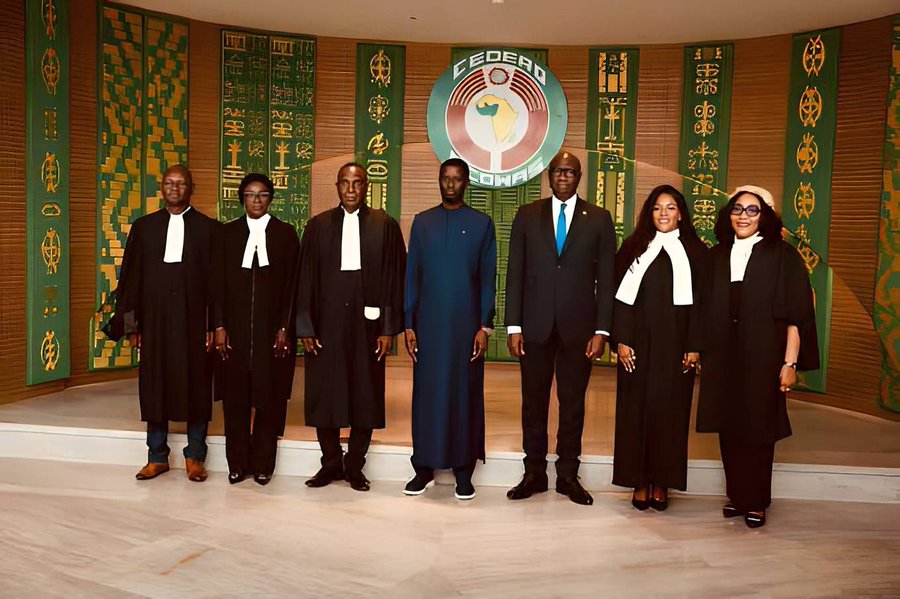
ECOWAS swears in five judges for non-renewable four-year term
Mr Faye enjoined the new judges to be impartial in their administration of justice.
Politics
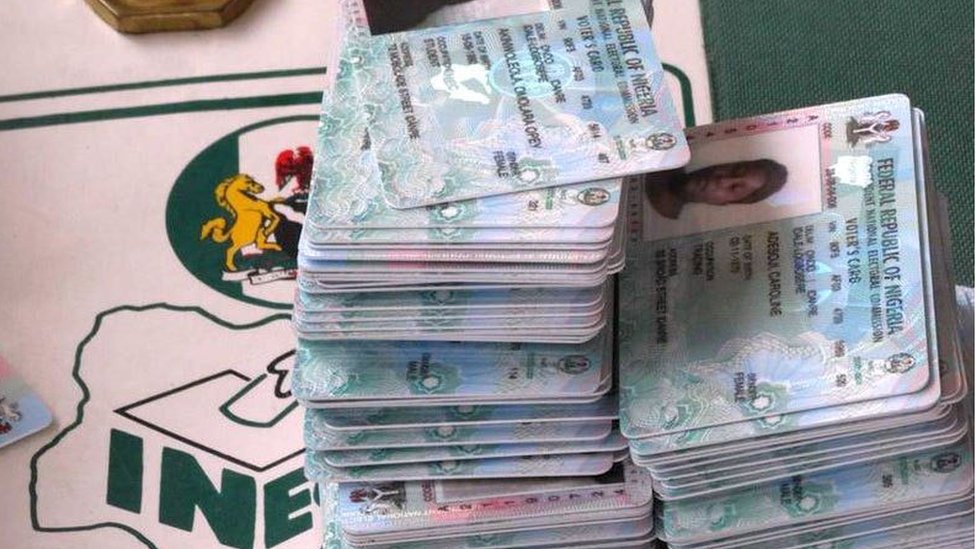
INEC commences distribution of PVCs in Bayelsa
Mr Shaka said the cards are for voters who registered or applied to transfer their voting location in the first phase of the CVR exercise.

States
UNFPA trains Bauchi journalists on reproductive health, GBV reporting
Mr Rufai urged participants to improve their communication skills and deepen their understanding of UNFPA programmes.


