

Okaba, INC leader, identifies oil sector challenges
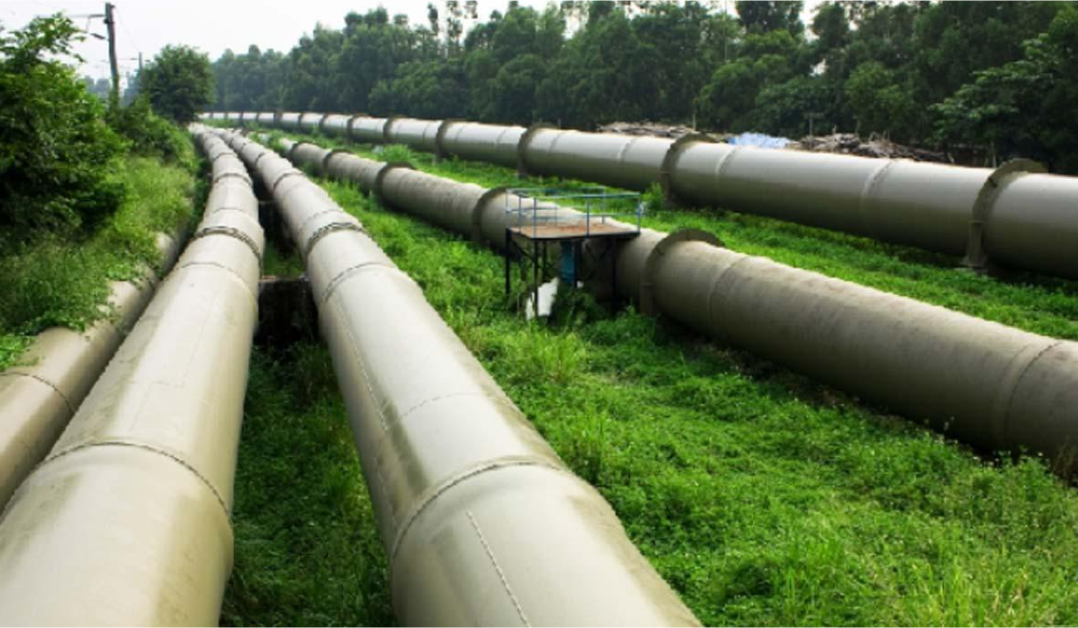
Benjamin Okaba, global president of the Ijaw National Congress, says the main challenge facing the nation’s oil industry is poor execution rather than a dearth of policies.
Mr Okaba said this in a paper he presented at the GbaramatuVoice 10th Anniversary Lecture and Night of Honour, held on Wednesday in Abuja.
The paper was titled ‘Gaps and Silence in Nigeria’s Oil and Gas Economy: Appraisal of Resource Control, Security and Media Dynamics’.
He said that the Niger Delta’s ecological and social crises required more community-focused reforms in line with the Petroleum Industry Act.
He also said it required prioritisation of domestic industrialisation over export rents and funding of advocacy journalism to make silence unsustainable.
According to him, as Nigeria targets 2.5 million bpd (barrels per day) production, bridging these gaps is essential to transform the “curse of oil” into an equitable energy future.
“We must take very seriously the fact that monumental gaps and silences abound everywhere in this country of ours; from education, healthcare delivery services, and agriculture, among others.
‘’This is due mainly to unaddressed constitutional infractions, executive rascality, legislative and judicial compromises, systemic corruption and mass indiscipline,’’ he said.
Mr Okaba said this had left many citizens frustrated and disenchanted, thereby making retrogressive reactions attractive.
“We must all rise to the occasion and, in synergy, be decisive in our resolve to individually and collectively reset our nationhood and restore our national pride, prosperity and dignity,” he urged.
He urged the media to continue to highlight the challenges faced by Niger Delta communities.
“The media is truly a weapon of justice; to every politician and policymaker, govern as if your legacy depends on justice in the creeks. The Niger Delta is not a victim. We are the moral compass of Nigeria. Let the creeks speak. Let Nigeria listen. And let the world bear witness,’’ he said.
Mr Okaba also said that the Niger Delta could no longer expect approval from institutions that had failed to meet its expectations.
“The Niger Delta can no longer linger in expectation of validation from institutions that have wilfully chosen blindness to our suffering and deafness to our truth.
“Our wounds are not invisible. Our cries are not faint. And our humanity is not negotiable. The time has come to transcend mere exposure and embrace authentic empowerment.
“The time for quiet endurance of indignity is also over. The Niger Delta has a right to its own destiny,” he said.
(NAN)

We have recently deactivated our website's comment provider in favour of other channels of distribution and commentary. We encourage you to join the conversation on our stories via our Facebook, Twitter and other social media pages.

More from Peoples Gazette

Agriculture
FG tasks ECOWAS on leveraging financing strategies for agroecology
The federal government has urged stakeholders in the agriculture and finance sectors in the West Africa region to leverage financing strategies to enhance agroecology practices

Politics
Katsina youths pledge to deliver over 2 million votes to Atiku
“Katsina State is Atiku’s political base because it is his second home.”
States
Navy rescues two kidnap victims, recovers stolen engines in Akwa Ibom
The commander urged owners of the recovered outboard engines to provide proof of ownership in order to reclaim their property.
States
NEMA donates relief materials to Ebonyi flood victims
The governor described the recurring flood disasters in parts of the state as devastating.

Heading 4
Trump administration revokes over 250,000 visas of foreigners over crimes, immigration violations
The State Department spokesperson said the U.S. was carrying out rigorous visa vetting on a scale never seen before.
Africa
Fresh clashes in Somalia leave children dead, others injured
The fresh clashes began on Monday.
NationWide
CIoD seeks stronger board leadership amid AI, economic shifts
Mr Nolas-Alausa said the new economy presented both opportunities and responsibilities.
Heading 1
Tinubu extends 2025 budget implementation to December
The extension gives ministries, departments and agencies (MDAs) additional time to complete ongoing capital projects.


