

Africa sits on $29.5 trillion in minerals yet imports steel, fertiliser, aluminium

Africa holds some of the world’s most valuable mineral resources, with deposits estimated at $29.5 trillion, roughly 20 per cent of global mine-site value.
Yet despite this vast endowment, the continent continues to import many of the industrial goods its minerals are meant to produce.
This is according to a new report by the Africa Finance Corporation (AFC), titled “Compendium of Africa’s Strategic Minerals,” launched on Monday at the Mining Indaba in Cape Town.
The report argues that the problem is not a lack of resources but Africa’s failure to convert raw minerals into finished products such as steel, aluminium and fertilisers.
About $8.6 trillion worth of Africa’s minerals remain undeveloped, this figure is equivalent to more than twice the continent’s annual economic output.
“Africa hosts one of the world’s most diversified and strategically significant mineral endowments, with an estimated US$29.5 trillion in mine-site value – approximately 20% of the global total. Of this, US$8.6 trillion remains undeveloped, equivalent to roughly 2.5 times the continent’s annual GDP.
“Yet Africa captures only a fraction of the value embedded in this resource base. The binding constraint is not geology, but conversion. The capacity to translate mineral wealth into productive assets, infrastructure, industrial capacity, regional value chains, and competitive manufacturing platforms,” it said.
Exporting value
Africa’s minerals are mostly exported in raw form, while processing and manufacturing take place elsewhere. Once minerals are refined, their value rises sharply.
The report estimates that Africa’s $2.8 trillion in iron ore at the mine gate could translate into $25.4 trillion in steel if processed locally. Likewise, $874 billion in bauxite could be worth up to $15.4 trillion when smelted into aluminium.
Despite this potential, most of these gains are said to be realised outside the continent.
Pays twice
The report highlights a trade structure that leaves Africa at a disadvantage. Minerals are typically exported on a Free on Board basis, meaning African producers pay to move raw materials from mines to ports.
Finished goods are then imported on a Cost, Insurance and Freight basis, with African buyers paying again for shipping, insurance and risk premiums.
In effect, Africa pays once to export raw minerals and again to import finished products made from those same resources.
“Africa typically exports minerals on a Free on Board basis – absorbing inland transport, logistics, and port handling costs, while importing finished goods on a Cost, Insurance, and Freight basis, paying again for shipping, insurance, and risk premiums. The result is perverse: Africa effectively pays twice – first to move raw materials out, and then to bring finished products back in – subsidising global value chains while retaining only a marginal share of the value they generate.”
Broken Infrastructure
According to the AFC, this outcome is driven by weak infrastructure and poor coordination rather than geology. Mineral deposits, reliable power supply, transport networks and industrial demand rarely exist in the same place.
Where processing plants do exist, many struggle with high electricity costs, unreliable power, or weak demand.
Steel provides a clear example. In South Africa, steel capacity has been reduced due to power costs and weak domestic demand, even as other African countries import steel for roads, housing and rail projects.
Demand exists, but it is scattered across borders and procurement systems, preventing production at scale.
China-driven demand
Because Africa processes so few minerals locally, demand for many of its resources depends heavily on foreign markets, particularly China. When Chinese steel production slows, African mines feel the impact almost immediately.
The report an instance in 2024 when production was temporarily halted at Gabon’s Moanda manganese mine, not because Africa lacked infrastructure needs, but due to weaker demand from China.
Similar pressures affect cobalt and nickel, where global oversupply has reduced prices despite Africa’s long-term development needs.
The decline in domestic steelmaking also affects related minerals such as manganese, chromium and vanadium, which are used in steel production.
As steelmaking weakens, demand for these minerals falls, tying entire value chains to external demand cycles rather than Africa’s own growth.
The report warns that this exposes African economies to global shocks while limiting job creation and industrial development at home.
Gold stands out as a rare case where African countries are retaining more value.
The report notes that gold can be quickly converted into foreign reserves and helped countries such as Ghana rebuild external buffers and reduce smuggling through formal purchasing systems.
Africa’s official gold reserves have risen steadily over the past decade, showing that targeted policy reforms can improve value retention when institutions are aligned.

We have recently deactivated our website's comment provider in favour of other channels of distribution and commentary. We encourage you to join the conversation on our stories via our Facebook, Twitter and other social media pages.

More from Peoples Gazette

States
Independence: NBA urges Nigerians to expect better future
The NBA said that ordinary Nigerians should be deriving benefit from the subsidy removal rather than hardship.

Agriculture
FG tasks ECOWAS on leveraging financing strategies for agroecology
The federal government has urged stakeholders in the agriculture and finance sectors in the West Africa region to leverage financing strategies to enhance agroecology practices

Politics
Katsina youths pledge to deliver over 2 million votes to Atiku
“Katsina State is Atiku’s political base because it is his second home.”

States
Aircraft Crash: NAF intensifies search, recovery efforts
Mr Aneke assured the public that appropriate updates would continue to be provided as the operation progresses.
NationWide
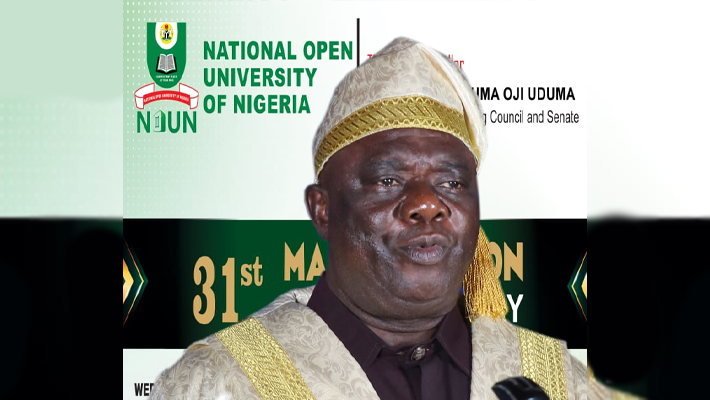
NOUN matriculates 23,885 students as VC says distance learning future of higher education
Mr Uduma said the university remained committed to widening access while maintaining academic standards.

Heading 4
Slovakia opens new visa appointment portal for Nigerian students, others from November
Foreign students and researchers are not required to register themselves in RegVIS portal.

Heading 1
Cyprus blacklists six Nigerians over public security concerns
The government did not immediately disclose the specific allegations against each of the individuals.
States
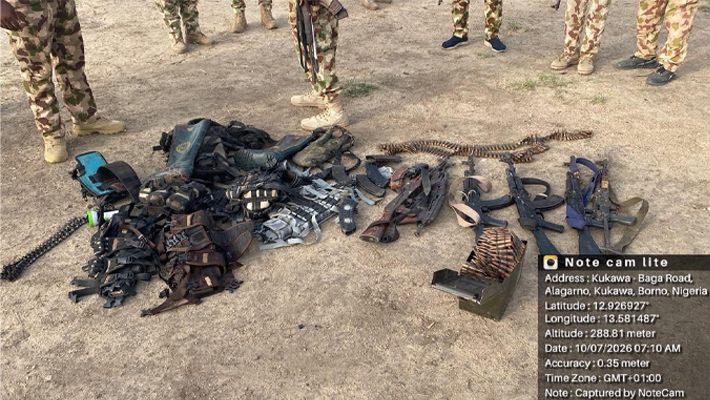
25 terrorists killed as troops repel ISWAP attacks in Borno
Mr Goni noted that some soldiers paid the supreme sacrifice during the encounter.

Hot news Home top
Man nabbed while allegedly sitting FCTA promotion exam for his father
The suspect confessed that his father asked him to sit the exam on his behalf.


