

Africa’s share in $950 billion animation boom

The global animation market is projected to reach $492.14 billion in 2026 and to a staggering $953.31 billion by 2035. Driven by an insatiable streaming appetite, real-time gaming engines, and mobile consumption, this cinematic gold rush is no longer confined to Hollywood or Tokyo. Today, it has arrived at Africa’s doorstep. Historically pushed to the margins of global entertainment, African animators are driving a cultural and economic awakening.
The animation and creative ecosystem in Africa is projected to reach $15.71 billion in 2025, demonstrating that local market traction matches international curiosity. High-profile international breakthroughs like Disney’s landmark pan-African anthology Kizazi Moto: Generation Fire, the futuristic Nigerian series Iwájú, and YouNeek Studios’ highly anticipated Iyanu on HBO Max prove that global gatekeepers are actively investing in African content.
However, celebrating these initial entry-level breakthroughs is not enough. If African animators ever want to establish themselves as enduring global heavyweights rather than a passing token trend, they must study the economic mechanics of the global animation boom and aggressively adapt their creative and commercial strategies. To do that successfully, here are five things African animators should consider if they want to share in this $950 billion animation boom.
Own the IP, or risk economic outsourcing
The most uncompromising lesson of the current animation boom is that wealth belongs to those who own the intellectual property (IP), not those who provide the manual labour. For decades, emerging hubs across Asia have built robust creative economies by serving as low-cost outsourcing hubs for North American studios, which command roughly 35 per cent of the total industry market share. While taking on service work provides vital short-term cash flow to local production houses, it traps local creatives at the bottom of the economic value chain.
African studios must aggressively shift their mindset from producing standalone, one-off short films to architecting expansive, multi-season franchises. Consider South Africa’s Triggerfish Animation Studios, which successfully turned titles like Khumba and Adventures in Zambezia into global commodities, selling over a million theatre tickets in China alone. True financial scale requires building comprehensive, interactive ecosystems where a single IP branches out into consumer merchandise, comic books, video games, and sequential licensing deals.
To prevent permanently signing away their futures to foreign streaming conglomerates, African creators must actively master regional and international copyright law. Utilising free, targeted educational resources such as the World Intellectual Property Organisation’s CLIP (Creators Learn IP) platform ensures that local studios learn how to commercialise, license, and defend their ideas rather than permanently renting them out to international buyers.
Balancing cultural flavour with global legibility
Global audiences do not want cultural odorlessness: a clean, sterilised visual style stripped of its native identity to fit a safe, generic Western structure. On the contrary, hyper-localised stories that require a deep history degree or highly specific regional knowledge to understand will fail to travel across international borders. The sweet spot of the global animation boom lies in balancing distinct, authentic cultural markers with universal human emotions.
Uganda’s A Kalabanda Ate My Homework serves as a perfect textbook example. By taking a localised creature myth and framing it around a universally relatable problem, the creators earned widespread acclaim at international film festivals. Similarly, Nigeria’s Anthill Studios, led by Niyi Akinmolayan, has continually pushed the envelope by infusing local folklore and authentic Nigerian urban realities into high-quality animated formats.
Africa’s competitive advantage lies in its vast, untapped repository of oral history, mythology, and contemporary urban narratives. The continent’s creative sector currently generates $4.2 billion annually, but it is projected to reach $20 billion as infrastructure catches up with our storytelling power. Creatives must embed distinct regional markers, such as Nigerian pidgin voice acting or authentic Zulu architectural backdrops, into their visual design, while executing plots centred on universal themes like family, ambition, betrayal, and self-discovery.
Navigating infrastructure deficit via decentralised pipelines
African animators face severe systemic roadblocks. Erratic power grids, limited physical studio infrastructure, and the prohibitive cost of high-end computing hardware can make traditional production pipelines incredibly difficult to sustain. However, the global animation industry’s massive pivot toward real-time virtual production and cloud-native rendering stacks offers a democratized workaround. Physical borders are fast becoming obsolete.
African studios must embrace remote, decentralised pipelines to scale production capacity without needing massive upfront capital. The pan-African animated series My Better World proved the validity of this borderless model by seamlessly coordinating more than 100 remote producers across seven different African nations to deliver 55 episodes.
By migrating workflows to modern real-time rendering engines like Unreal Engine and utilising remote cloud computing, local creators can bypass the need for expensive localised hardware. This significantly lowers the financial barrier to entry and helps African studios facing systemic roadblocks on the continent keep pace with rigorous international delivery schedules.
Animating complex and mature themes
An outdated assumption in several emerging markets is that animation is exclusively a medium for children’s programming. The modern global landscape completely refutes this. The explosion of adult-targeted animated series across global streaming services proves that animation is an incredibly powerful vehicle for mature, deeply layered human storytelling.
Renowned African filmmakers like Kenya’s Ng’endo Mukii have masterfully illustrated this through animated shorts that confront heavy, complex social realities such as colourism, migration, and skin bleaching. Animation offers an abstract flexibility that live-action filmmaking cannot match. It creates a tactical psychological distance, allowing audiences to engage deeply with challenging political, historical, or cultural narratives without immediately becoming defensive.
African creators can leverage this to explore complex sociopolitical satires, historical epics of ancient kingdoms, or gritty African futurism. Shifting focus to target adult, teen, and young-adult demographics unlocks highly lucrative, chronically underserved global and local markets.
Shift from self-taught to corporate academies
The foundation of Africa’s animation industry was built on the backs of intensely resourceful, self-taught pioneers who mastered complex software through free online tutorials. But while raw hustle can launch an industry, it cannot scale it to meet global demand. To properly compete against well-funded production powerhouses in North America, Europe, and Asia, Africa must urgently move from self-taught to establish structured, corporate training ecosystems.
We must see a coordinated push toward creating specialised, industry-led academies and professional certifications. Modelling programs after globally recognised institutions like South Africa’s The Animation School will build reliable talent pipelines of specialised storyboard artists, technical directors, animators, and certified riggers. Standardising creative curricula against international frameworks, such as the Toon Boom Centre of Excellence guidelines, ensures our local workforce can step into any high-end global production pipeline from day one.
By 2030, Africa’s creative economy is projected to account for up to 10% of global creative goods exports, creating over 20 million new jobs for the continent’s young demographic. The global animation boom is creating massive wealth. Will African creatives remain content just watching it from the sidelines, or will they be intentional in building the infrastructure, protecting their intellectual property, and claiming their rightful share of the pie?
Anietie Udoh is the divisional director of marketing at Marketing Edge Publications. Write him at anietie@marketingedge.com.ng

We have recently deactivated our website's comment provider in favour of other channels of distribution and commentary. We encourage you to join the conversation on our stories via our Facebook, Twitter and other social media pages.

More from Peoples Gazette

States
Independence: NBA urges Nigerians to expect better future
The NBA said that ordinary Nigerians should be deriving benefit from the subsidy removal rather than hardship.

Agriculture
FG tasks ECOWAS on leveraging financing strategies for agroecology
The federal government has urged stakeholders in the agriculture and finance sectors in the West Africa region to leverage financing strategies to enhance agroecology practices

Politics
Katsina youths pledge to deliver over 2 million votes to Atiku
“Katsina State is Atiku’s political base because it is his second home.”
Heading 5
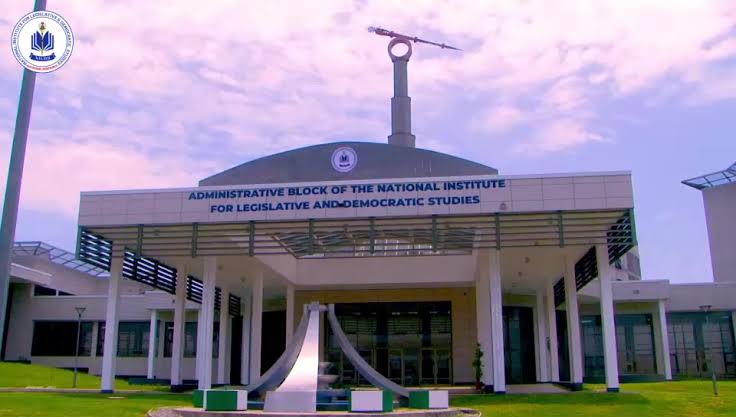
NILDS seeks stronger role for women in governance
According to the DG, democracy in Nigeria has come to stay and requires collective commitment.

Lagos
Lagos recruits 45 personnel to boost enforcement on Lekki-Epe corridor
Mr Osiyemi noted that the corridor had staffing challenges that slowed down operations.
Heading 2
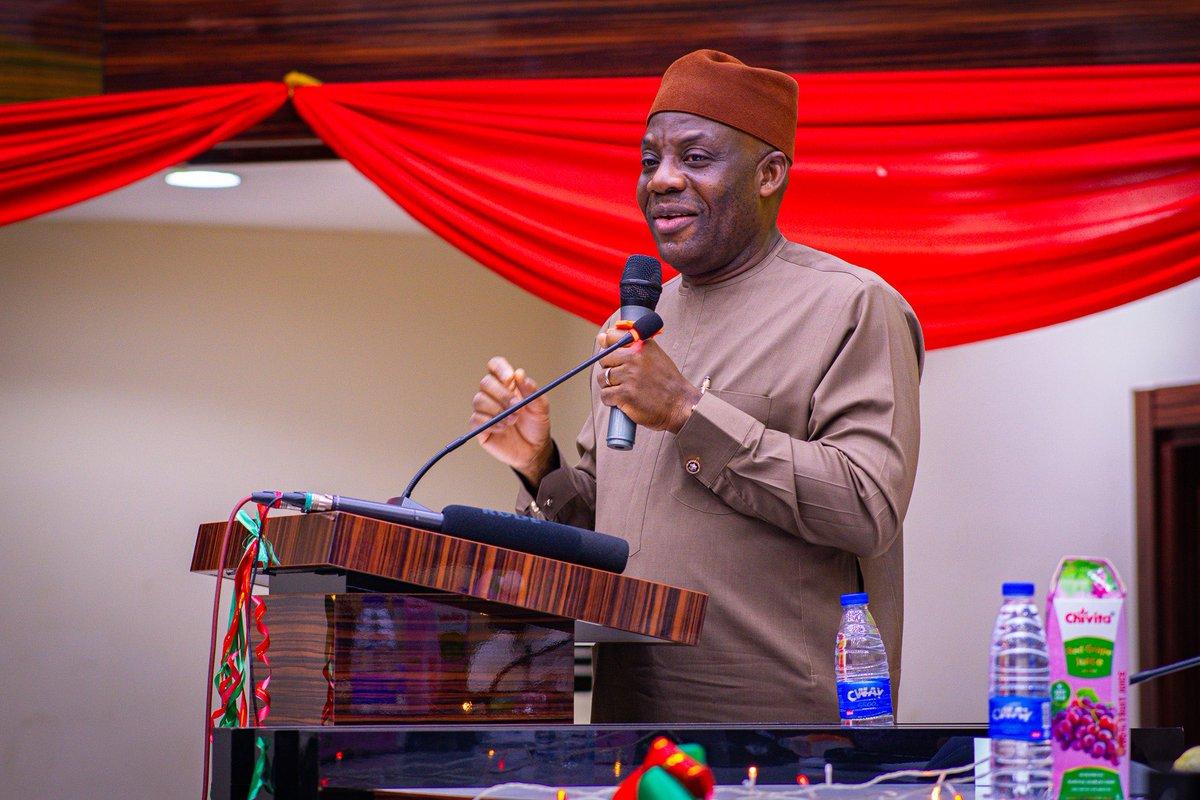
Education minister inaugurates Nigeria’s first robotic surgery academy
Mr Alausa said the initiative would expand advanced medical training.
Health
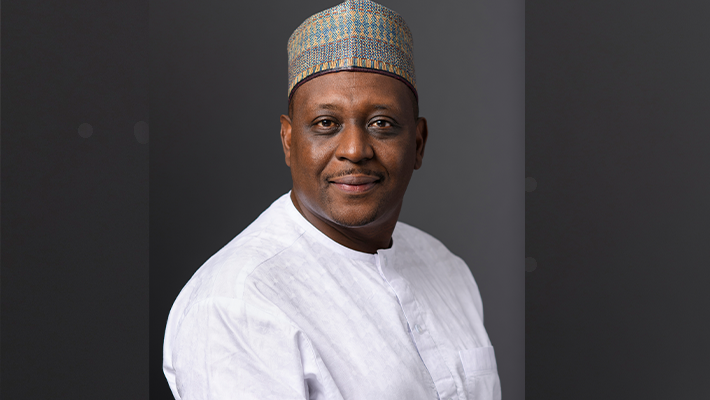
Pate warns politicians against politicising Ebola case
Mr Pate said health is a unifying issue that transcends political, ethnic and religious affiliations.
Economy
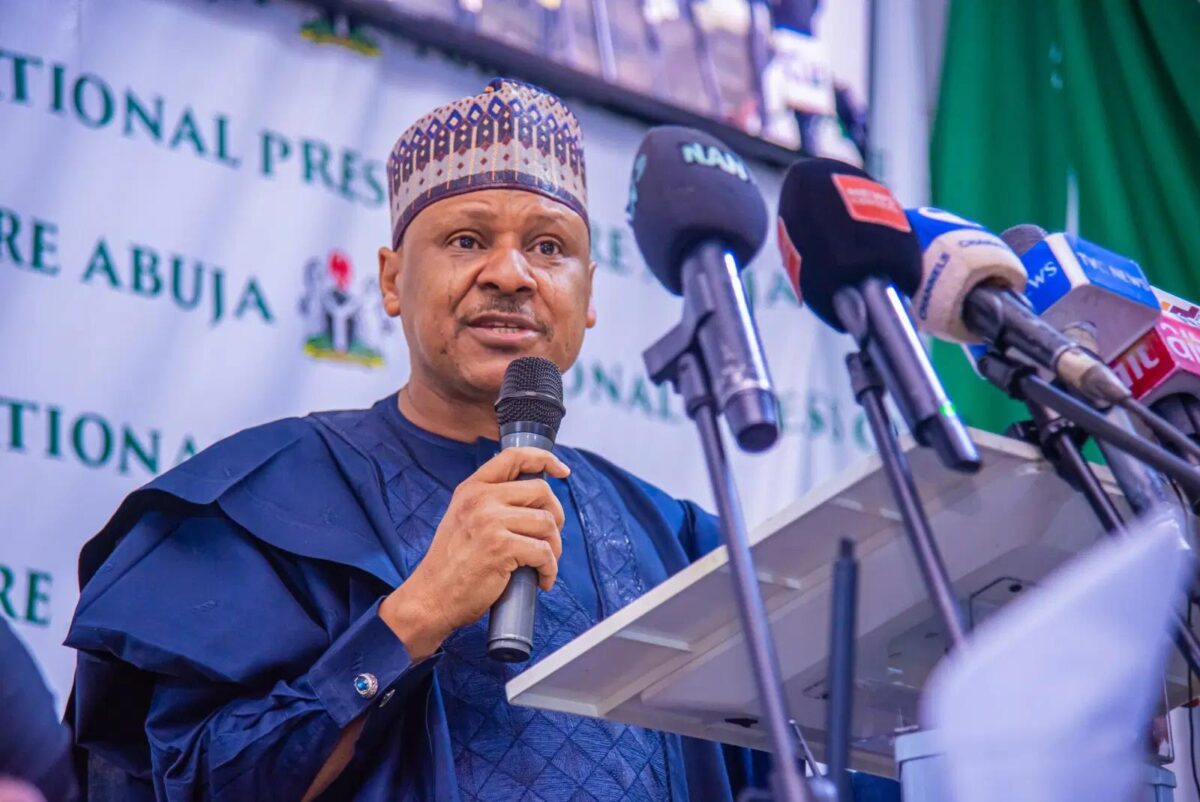
Tinubu’s economic reforms paving way for prosperity: Minister
The minister explained that the reforms were deliberate and courageous, aimed at addressing longstanding structural weaknesses.

Health
Kaduna expands last-mile health supply project to 1,000 facilities
Ms Isyaku said four zonal warehouses in Ikara, Sabon Gari, Zaria and Kafanchan, established under the project, were operational.


