

AU appoints Pantami as ASRIC co-chair despite records of supporting Taliban, Al-Qaeda, religious extremists in Nigeria

The African Scientific Research and Innovation Council (ASRIC), under the African Union (AU), has appointed Nigeria’s former minister of communications, Ali Pantami, as its co-chairman.
With his new appointment, Mr Pantami will play a major role in formulating and developing the 4th Industrial Revolution Policy and Strategy for the 54 countries in the continent.
Mr Pantami, who served as a minister between 2019 and 2023, was notorious for preaching ethno-religious violence and was an open sympathiser of terrorist groups.
Before he was appointed minister, Mr Pantami had served as director-general of the National Information Technology Development Agency (NITDA) from September 26, 2016 to August 20, 2019.
As NITDA boss, Mr Pantami pioneered launching of the National Centre of Artificial Intelligence and Robotics (NCAIR), which he commissioned when he became minister.
Another ASRIC co-chair is Anicia Nicola Peter from the National Commission on Research, Science and Technology in Namibia, who doubles as an adjunct Research Professor at the University of Namibia.
Other academics and policymakers on the council include Khaleed Ghedira from Tunisia, Maha Grima from Morocco, Mongi Nouira, and Munir Frija.
The former Nigerian communications minister had denounced any allegiance to Boko Haram but expressed support for the global extremist groups — the Taliban and Al-Qaeda.
“This jihad is an obligation for every single believer, especially in Nigeria,’’ Mr Pantami said in one of his vicious preachings in the 2000s. “Oh God, give victory to the Taliban and to al-Qaeda (Allahumma’ nṣur Ṭālibān wa-tanẓīm al Qā‘ida).”
Mr Pantami’s call to Jihad and unalloyed support for murderous groups portray him as a dyed-in-the-wool Islamic fundamentalist. Yet, then-President Muhammadu Buhari appointed Mr Pantami as communications minister to control the country’s massive data and telephone infrastructure and other sensitive details of national intelligence.
The minister had claimed on Twitter that his lectures “against the doctrines and all other evil people (terrorists) have been available for over 15 years, including debates that endangered my life against many criminals in Nigeria.”
But he failed to acknowledge that he is an avowed supporter of the Taliban and Al-Qaeda, as revealed in a 2019 academic document ‘Debating Boko Haram’.
Mr Pantami invited Muslims, especially “Ahlus Sunna” (Salafis), to be sceptical of politicians and religious leaders calling for peace and understanding but retaliate with Jihad.
“This jihad is an obligation for every single believer, especially in Nigeria (hādhā jihād farḍ ‘ayn ‘ala kull Muslim wa-khuṣūṣan fī Nījīriyā),” he added.
Andrea Brigaglia, an African expert at Naples University in Italy, translated Mr Pantami’s comments. Nigerian scholar Musa Ibrahim of the University of Florida in the United States contributed to the paper that explored the onset of Boko Haram in Nigeria.
Top journal publisher academia.edu published the research in March 2019, several months before Mr Buhari tapped Mr Pantami as a minister. Mr Pantami’s violent preachings, which he rendered in Hausa and Arabic throughout the late 1990s and early to mid-2000s, had gone largely unreported in the Nigerian mainstream media.
The document detailed how Mr Pantami offered himself as a volunteer to mobilise the Hisba police of the North, requesting to be appointed as the “commander” (kwamanda) of a militia (ready to travel to Yelwa Shendam) to fight in defence of the Muslims.
The speech, which is about 20 minutes long, concluded with the prayer, “Oh God, give victory to the Taliban and to al-Qaeda (Allahumma’ nṣur Ṭālibān wa-tanẓīm alQā‘ida).”
In a second speech, delivered in 2006, Mr Pantami offered his public condolences for the death of the leader of Al-Qaeda in Iraq, al-Zarqawi.

We have recently deactivated our website's comment provider in favour of other channels of distribution and commentary. We encourage you to join the conversation on our stories via our Facebook, Twitter and other social media pages.

More from Peoples Gazette

States
Independence: NBA urges Nigerians to expect better future
The NBA said that ordinary Nigerians should be deriving benefit from the subsidy removal rather than hardship.

Agriculture
FG tasks ECOWAS on leveraging financing strategies for agroecology
The federal government has urged stakeholders in the agriculture and finance sectors in the West Africa region to leverage financing strategies to enhance agroecology practices

Politics
Katsina youths pledge to deliver over 2 million votes to Atiku
“Katsina State is Atiku’s political base because it is his second home.”

Economy
NBRDA, EHCON explore biogas solution to abattoir waste challenge
Nigeria’s abattoir waste could become a source of renewable energy under a new partnership between two agencies seeking better environmental management, authorities have said.

Economy
Liberia launches 2026 offshore licensing round, offering 15 blocks to investors
Qualified companies are invited to negotiate offshore exploration opportunities, with submissions closing April 15, 2027.
World
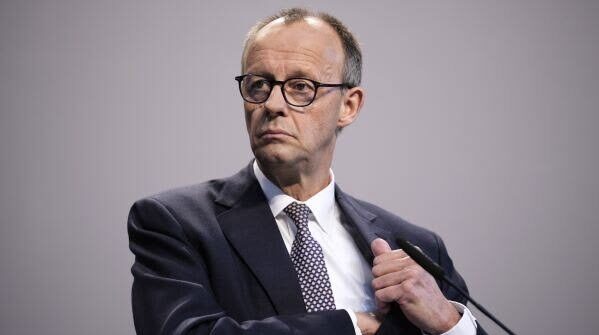
EU Summit: Merz demands increased funds for Ukraine
German Chancellor Friedrich Merz called for increased financial support for Ukraine as EU leaders convened for a summit in Brussels.

Economy
Uganda reaffirms commitment on refinery completion by 2030
Uganda has reaffirmed its commitment to complete its domestic refinery by 2030, noting that commercial oil production will precede it.
Health
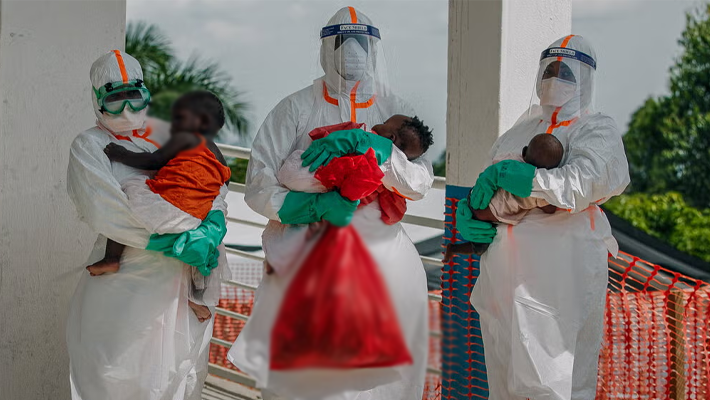
Children at highest risk of death in DR Congo Ebola outbreak, says MSF
Médecins Sans Frontières has raised an alarm over rising Ebola cases in DR Congo, saying the youngest children face the highest risk of death.
Economy
Africa needs $125 billion refining investment from 2026 to 2050: OPEC
OPEC says Africa needs a minimum of $125 billion in refining investment between now and 2050 to fund current and future projects.


