

Why Trump’s trial doesn’t make America special

Donald Trump consolidated his record in demagoguery when he became the first former U.S. president ever to be criminally indicted and arraigned in a Manhattan court on April 4.
He was the first U.S. president to complain about an election he won and also the first to openly express support for the body-slamming of a reporter. He has the distinction of introducing “shithole countries” into the presidential lexicon. And on top of this improbable political career, Trump is also the first U.S. president to be impeached twice.
With 34 counts of criminal conduct hanging around his neck, mostly charges of fraudulent bookkeeping, it appears that the days of Trump’s improbable political infamy are far from over.
Others have come close. According to a report by TIME, President Ulysses S. Grant was technically the first U.S. president to be arrested for speeding on a horse and buggy in 1872.
Richard Nixon came very close too. He was forced to resign after the outbreak of Watergate but before he could face potential criminal prosecution, his successor, Gerald Ford, pardoned him.
Bill Clinton also came quite close. He was impeached but was later acquitted, and escaped criminal charges by the seams of his pants, after negotiating for penance in civil damages.
But Trump, the very epitome of improbability, trumps them all. He is on the verge of outdoing even his own record in demagoguery, yet it is only fair to presume him innocent as he gets his day in court.
As prosecutors negotiated details of Trump’s arraignment with his lawyers, whether or not he would be handcuffed, mugshot, fingerprinted and so on, I kept wondering what would have happened if this surreal drama was playing out in an African country – any African country.
Of course, the process in the U.S., so far, has been widely praised as the triumph of strong institutions, the model that developing democracies around the world should aspire to. That’s a fair point, even though the trial of former President Jacob Zuma in South Africa, though under different circumstances, was also a significant moment.
Perhaps, it might be useful to inspect this playbook of American exceptionalism a little more. Let’s assume, for example, that on the eve of the 2019 general elections in Nigeria, the government of President Muhammadu Buhari pressed charges against the leader of the opposition Peoples Democratic Party (PDP), Atiku Abubakar.
The smouldering embers from the spectacular row in 2003 between Abubakar (then the vice-president and his boss, President Olusegun Obasanjo) was a big deal then.
The details of that dispute, involving large amounts of public funds, were so messy that if Buhari wanted to embark on a fishing expedition, the government might have found grounds to bring charges.
And indeed, as if in some form of rehearsal, close associates of Abubakar were questioned, briefly detained and released without charges. Also, whether or not Atiku could travel to the U.S. on account of speculations that the FBI had a warrant of arrest against him in respect of a business transaction with U.S. Congressman, Mr Williams Jefferson, trended in the runup to the 2019 elections.
It would have taken extraordinary nerve for the government under Buhari to formally bring charges against Abubakar, his main rival and leading opposition candidate on the eve of the elections. And even if Buhari’s government succeeded in doing so, it would have been interesting to hear what the U.S. and other Western countries would have said.
Would they have praised Nigeria as a good example in upholding the rule of law or would such a step have been deemed fraught and politically motivated, especially in light of the pending elections?
I have nothing but contempt for Trump’s politics and style and would be pleased to pave him a road of thorns as he attempts to return to the White House. His presidency was a disaster.
But fair is fair. It is difficult to imagine that the prosecution would come up with this raft of charges against him – and press them in court now – if he was not interested in running again in the 2024 elections.
Those who think Nigeria’s scenario cited is far-fetched may wish to consider what is shaping up in Senegal, Nigeria’s western neighbour. In that country President Macky Sall who has been in power since 2012, has nearly perfected plans to run for a third term in next year’s presidential election in breach of the Constitution. To give the impression that the race against himself would still not be an easy one, however, he is also planning to create his own opposition candidate.
He has slammed the main opposition leader, Ousmane Sonko, with charges of criminal libel and is determined to produce enough distractions to tie him up in court ahead of the polls.
It may be convenient to argue that Sall is neither Biden, nor Ousmane, Trump. In any case, French-speaking West Africa has been more susceptible to instability and unconstitutional changes in government often triggered by flawed elections.
Yet, it depends on who is making the argument. In the eyes of millions of Trump supporters, there’s hardly a difference between a Sall who fiddles with the Constitution to secure an illegal third term and a Biden on whose watch Trump is facing criminal charges even when President Biden’s private garage is littered with dozens of classified documents shipped off from the White House when he was vice-president.
How is the rule of law served when the Department of Justice sleepwalks over dozens of classified documents found in Biden’s garage from the Obama era, while Trump, the leading opposition candidate, is hobbled by criminal charges on the eve of the next general elections?
Unlike obstructionist Trump, Biden has said he would cooperate fully with the Department of Justice. Still, it would be interesting to know how tons of classified documents got to his private think-tank at a time when he had no legal basis to move them out of the White House.
If this were happening in an African country, would the U.S. and its western allies accept that the incumbent has nothing to do with the trial of the leading opposition candidate; that it is simply the law taking its course?
When matters get to a head in Senegal as may well be the case before the 2024 presidential election, would the U.S. or France have the courage to call out Sall – or perhaps the increasingly authoritarian Sierra Leonean President Julius Maada Bio – for mounting road blocks in the way of opposition candidates?
It’s easy to yield to the seduction of American exceptionalism. Yet, apart from well-documented, but carefully preserved dark secrets of U.S. waywardness, we have seen, especially in the last 10 years, that the U.S. is not the undimming beacon that it often pretends to be.
The elections that brought Biden to office were marred by allegations of programmatic flaws. The U.S. must therefore be held to the same standards that it holds the rest of the world.
The trial of Trump on the eve of an election in which he would potentially be running against an incumbent who himself is not exactly smelling of roses, is interesting. It would give the world a good opportunity to see if America practises what it preaches.
Who knows? The improbable Trump may well take demagoguery into the Guinness Book of Records by becoming the first U.S. president to overcome criminal trial and defeat an incumbent. And even if he doesn’t, he would still have set the record as the first U.S. president who went down trying.
Ishiekwene is Editor-in-Chief of LEADERSHIP

We have recently deactivated our website's comment provider in favour of other channels of distribution and commentary. We encourage you to join the conversation on our stories via our Facebook, Twitter and other social media pages.

More from Peoples Gazette

States
Independence: NBA urges Nigerians to expect better future
The NBA said that ordinary Nigerians should be deriving benefit from the subsidy removal rather than hardship.

Agriculture
FG tasks ECOWAS on leveraging financing strategies for agroecology
The federal government has urged stakeholders in the agriculture and finance sectors in the West Africa region to leverage financing strategies to enhance agroecology practices

Politics
Katsina youths pledge to deliver over 2 million votes to Atiku
“Katsina State is Atiku’s political base because it is his second home.”
World
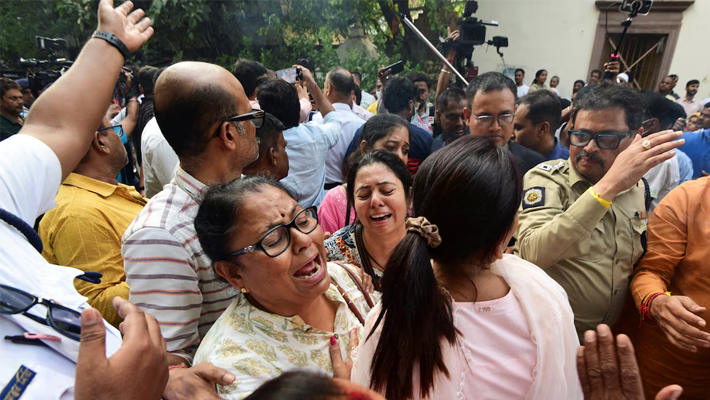
17 killed in stampede at India’s Durga Puja festival
West Bengal’s chief minister Suvendhu Adhikari confirmed a seven-year-old girl was among the people who died in the stampede.
States
Lagos task force nabs dismissed operative for impersonation, extortion
Mr Akerele said the suspect was detained at Oshodi bus stop after a viral video of his apprehension circulated.
![Fuel queue at NNPC filling station [Credit: ThankGod Sabastine/Peoples Gazette]](https://gazettengr.com/wp-content/uploads/Screenshot_20230320-070535_WhatsAppBusiness.jpg)
Politics
APC woman leader defends Tinubu’s 30-day petrol discount
The women’s leader added that the government had distinguished the initiative from the former subsidy regime.
States
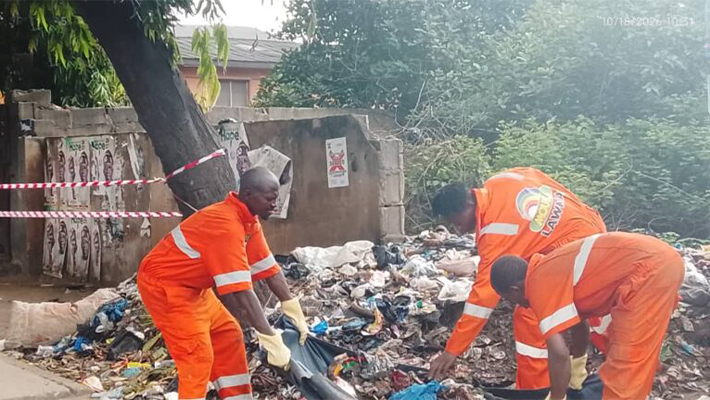
LAWMA deploys 25 trucks to clear waste in Oshodi
Mr Suleiman said the deployment involved 25 trucks, supported by a working floor that could accommodate four at a time.
States
Alleged cultists celebrate at Rivers police outpost they renovated; CP sanctions DPO
The police commissioner has ordered a full investigation to establish the circumstances surrounding the incident.
States
Lagos water network serves only 1.03% of 20 million residents: LWC
Mr Anifowoshe said the corporation had an installed water production capacity of about 210 million gallons per day (MGD).


