

CBN targets reduction of cash outside banks to 40%
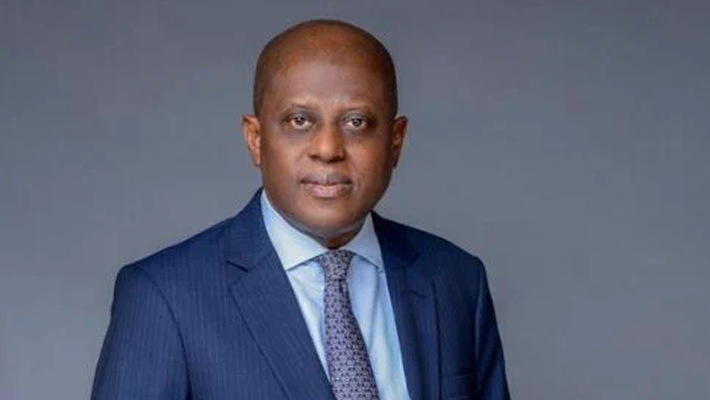
The Governor of the Central Bank of Nigeria (CBN), Olayemi Cardoso, says he wants the share of cash held outside the banking system to fall from the current 90 per cent to less than 40 per cent by 2028, as the country pushes for a more digital and inclusive financial system.
Speaking on Monday in Abuja at the launch of the Nigeria Payments System Vision 2028 (PSV 2028), Mr Cardoso said, “cash should no longer be king,” and called for wider adoption of digital payments, stronger fraud protection, and greater financial inclusion.
The comments came as the CBN unveiled a new strategy to strengthen Nigeria’s payments infrastructure, improve financial access, and position the country to capitalise on growing digital commerce across Africa and beyond.
Mr Cardoso’s remarks offered a glimpse of what Nigeria’s payments landscape could look like if the new vision is successfully implemented over the next three years.
According to the latest figures released by the CBN in its money and credit statistics, currency in circulation stood at N5.65 trillion in April, while N5.08 trillion was held outside the banking system.
The figures mean that about N90 out of every N100 in physical cash currently circulates outside banks.
“I would like to see a situation where we will reduce cash outside the banking system, and the people in NPD will be very happy about that because of the transmission mechanism to less than 40% of money in circulation,” Mr Cardoso said.
The CBN governor noted that such a move would strengthen confidence in digital payments and improve the effectiveness of monetary policy.
Cashless Push
Mr Cardoso expressed concern about the continued preference for cash in parts of the economy despite rapid growth in electronic payments.
He recalled watching a programme during the Sallah holiday in which many traders declined card payments, describing the experience as disappointing.
“I don’t blame them. It’s us I blame. We need to do a lot more work to build trust and to ensure that people have no doubt that they are dealing with a strong and reliable payments system,” he said.
The CBN governor said payment reforms must ultimately improve the lives of ordinary Nigerians rather than merely boost transaction volumes or institutional performance.
The issue of cash outside banks has become increasingly important as the CBN seeks to improve the effectiveness of its policy measures to control inflation and stabilise the economy.
Inclusion Drive
Mr Cardoso also outlined an ambitious vision for financial inclusion.
According to him, Nigeria should aim for 95 per cent financial inclusion by 2028, up from the current level of about 74 per cent.
Data from Enhancing Financial Innovation and Access (EFInA) shows that financial inclusion increased from 68 per cent in 2020 to 74 per cent in 2023, driven largely by the growth of mobile money, fintech services and other non-bank financial channels.
“In 2023, a very large number of Nigerian adults had access to financial services. Under Vision 2028, I would like to see this reaching 95% inclusion.
“That means 50 million more market women, farmers, and young people will have a bank account or wallet in their name with their name and BVN protecting them,” he said.
He said achieving that goal would bring millions more market women, farmers, small business owners and young Nigerians into the formal financial system through bank accounts and digital wallets.
Trust and Innovation
The CBN governor also set out targets to improve trust and innovation in Nigeria’s payments ecosystem.
He said fraud losses should fall to less than 0.001 per cent of all transactions by 2028, supported by stronger Bank Verification Number (BVN) integration and the deployment of artificial intelligence tools to detect suspicious activities.
“By 2028, we must commit to cutting fraud losses to less than 0.001% of all transactions. With NIMS, BVN linkage, and AI fraud detection, people’s money must be safer in the digital system than under their mattress. A payment system is only as strong as the trust people have in it,” he said.
Mr Cardoso added that Nigeria’s growing open banking framework could help drive the next wave of financial innovation.
According to him, more than 100 licensed application programming interfaces (APIs) are already available, and he expressed optimism that Nigerian entrepreneurs could build globally competitive fintech businesses over the coming years.
CBN PSV 2028
The CBN launched the Payments System Vision 2028 as part of broader efforts to modernise the country’s financial infrastructure and deepen participation in the digital economy.
The strategy seeks to improve payment efficiency, strengthen resilience, support innovation, expand financial inclusion and deepen integration with regional and global payment systems.
Mr Cardoso said efficient payment systems could help businesses reach new markets, lower transaction costs, improve transparency and support economic growth.
“As the federal government of Nigeria builds roads, schools and hospitals, we must also build the invisible roads that move money,” he said.
Describing the initiative as a shared responsibility, the governor urged banks, fintech firms, regulators, technology providers and development partners to work together to ensure its success.
“Vision 2028 is not a government project. It is a Nigerian project,” he said.
Explaining the rationale behind the new strategy, the Director of Payments System Policy at the CBN, Musa Jimoh, said Nigeria’s payments ecosystem had changed dramatically since the launch of the country’s first payments roadmap in 2007.
According to him, the earlier strategy helped drive the adoption of electronic payments, agent banking and financial inclusion by tackling high banking costs, limited access to financial services and strict account-opening requirements that excluded millions of Nigerians.
However, he said advances in technology, changing consumer expectations and the rapid growth of digital financial services had created the need for a new roadmap.
According to him, the strategy is designed to deepen financial inclusion, improve efficiency, strengthen trust in digital payments and enhance Nigeria’s competitiveness in the global digital economy.
“Today, we are here to lay down another three-year strategy that will deepen financial services, make our payment system more efficient, make us more globally competitive and make people comfortable and trust financial services,” Mr Jimoh said.

We have recently deactivated our website's comment provider in favour of other channels of distribution and commentary. We encourage you to join the conversation on our stories via our Facebook, Twitter and other social media pages.

More from Peoples Gazette

States
Independence: NBA urges Nigerians to expect better future
The NBA said that ordinary Nigerians should be deriving benefit from the subsidy removal rather than hardship.

Agriculture
FG tasks ECOWAS on leveraging financing strategies for agroecology
The federal government has urged stakeholders in the agriculture and finance sectors in the West Africa region to leverage financing strategies to enhance agroecology practices

Politics
Katsina youths pledge to deliver over 2 million votes to Atiku
“Katsina State is Atiku’s political base because it is his second home.”

Abuja
Man nabbed while allegedly sitting FCTA promotion exam for his father
The suspect confessed that his father asked him to sit the exam on his behalf.

Africa
BAL unveils six refurbished basketball courts in Nigeria, Senegal, Côte d’Ivoire
Mr Fall said the projects demonstrated the league’s commitment to community investments across Africa.

World
Trump says Islam driving protests in France to take over
“What’s happening in France is nothing less than out of control mass migration,” Mr Trump said.
World
Saudi Arabia changes family visa rules for foreign skilled workers
The new visa application rules allow eligible family members to include spouses, sons below 25 years and unmarried daughters.

World
UK Royal Mail to cut 2,500 jobs in 2027
The UK Royal Mail said the job cuts would come largely from voluntary resignations and redundancies.
World
AGESI commends ISO, UNDP, SVI for launch of ISO/UNDP 53001
AGESI described the launch as a defining moment for global sustainability practice and a breakthrough for institutions seeking credible pathways for SDG alignment.


