

Chidi Odinkalu: James Omotosho: A judge and his a la carte law

One month after President Bola Ahmed Tinubu proclaimed a state of emergency over Rivers State last March, on 18 April 2025, former Rivers State Governor, Minister of the Federal Capital Territory, and Life Member of the Body of Benchers, Nyesom Wike, held one of his beverage-powered media encounters in Abuja, during which he proclaimed with characteristic exuberance that his successor as governor, Siminalayi Fubara, “should thank Mr President” for the emergency proclamation.
On 22 October, 2025, this line officially made it into Nigerian jurisprudence when James Omotosho, a judge of the Federal High Court of Nigeria, decided in suit no FHC/PH/CS/53/2025 that the plaintiff “should be grateful” that the president proclaimed the emergency over Rivers State. The messenger through whom these words have now officially become law in Nigeria offers important insights into what has become the fate of judicial office in the country.
When he terminated the emergency rule in Rivers State in September 2025, President Tinubu took time to acknowledge “over 40 cases in the courts in Abuja, Port Harcourt, and Yenagoa” filed to challenge the declaration, noting with a touch of presidential menace that “some cases are still pending in the courts as of today.” On 22 April, James Omotosho decided one of those pending cases.
The plaintiff in the case was Samuel Amatonjie, who describes himself as a resident and registered voter in Rivers State, as well as a member of the Nigerian Bar Association, (NBA). That means he is also a lawyer. The six defendants in the case included the president of Nigeria, the president of the Senate, the speaker of the House of Representatives, the attorney general of the federation, the National Assembly, and the sole administrator of the emergency rule.
Although he filed the case at the Port Harcourt Division of the Federal High Court, Mr Amatonjie’s case travelled inexplicably to Abuja where it inexorably ended up in the court of James Omotosho, a judge whose fixation with all matters in which Nyesom Wike has even the most tangential of interests has become plainly pathological. Some context is essential here.
In October 2023, a mere five months after the end of Mr Wike’s tenure as governor of Rivers State, the State House of Assembly, the site of an early attempt to remove the governor, suffered a conveniently-timed fire incident. It became evident that the relationship between Mr Wike and Siminalayi Fubara, his hand-picked successor, was hopelessly fractured. In the wake of that, the state legislature splintered into two factions, respectively loyal to the incumbent governor and to his predecessor.
On 6 November 2023, the faction loyal to the governor headed to the Federal High Court in Port Harcourt, the state capital, seeking judicial legitimation of its claims to being in lawful control of the parliamentary gavel. They applied in proceedings intended to be heard without the other parties present (ex-parte) for an order to restrain the other faction from interfering with their conduct of legislative duties. Delivering her ruling the following day in suit no. FHC/PH/CS/240/2023, Phoebe Ayua, the presiding judge, declined this application; required that all sides be put on notice for a full hearing; and ordered that the parties “should not take any step concerning the subject matter, since the matter is already before this court.”
Three weeks later, on 29 November 2023, while this order remained undischarged, Martin Amaewhule, the speaker of the faction in the State House of Assembly loyal to Mr Wike and, himself a named defendant in the proceedings before Justice Phoebe Ayua, filed suit no. FHC/ABJ/CS/1613/2023 before the same Federal High Court in Abuja on the same subject matter. Like the previous suit, Amaewhule sought judicial legitimation of a factional claim to control of the Rivers State legislature, asking the court to restrain federal authorities and institutions as well as the governor of Rivers State from exerting financial or other pressures on them and ensuring release to them of all federal allocations standing to the credit of the Rivers State House of Assembly.
As with the previous suit in Port Harcourt, the plaintiffs in the case before the Federal High Court invited the judge in Abuja to grant them these reliefs without hearing the named defendants. The following day, on 30 November, James Omotosho, the judge who presided over the proceedings in Abuja, ruled swiftly and, unlike his colleague in the Port Harcourt case, promptly granted all the reliefs sought without hearing any other person.
This was not the first time that James Omotosho would portray himself as a fully subscribed, judicial Man Friday, granting curious orders deeply solicitous of the political interests of Mr Wike. In the month originally preceding the governorship election in 2019, he issued an order restraining the All Progressives Congress (APC), the main opposition party in Rivers State, from presenting any candidate in the governorship election, all but ensuring that the governorship election in the State was Mr Wike’s electoral non-event.
In February 2023, James Omotosho again issued another order restraining the Peoples Democratic Party (PDP)—who were not afforded a hearing—from taking disciplinary measures against Mr Wike on allegations of anti-party activities.
In January 2024, James Omotosho voided the Appropriations of Rivers State and issued a most remarkable of à la carte judicial orders restraining the state governor from “frustrating” the Amaewhule faction of the House of Assembly loyal to Mr Wike.
On the last day of October 2025, the same judge struck again in proceedings filed by Mr. Wike’s loyalists, granting them an à la carte order to invalidate the proposed national convention of the PDP by restraining the Independent National Electoral Commission (INEC) from attending or recognising it.
The sheer range of the magnetic forces that bind this judge with Mr Wike’s interests is well beyond the ordinary laws of both physics and of judicial administration. Those forces were on full advertisement in this judgment on the Samuel Amatonjie case. First, the judge held that he did not have jurisdiction over the subject matter. Next, he held that Mr Amatonjie lacked the standing to bring the case anyway. Indeed, the judge held that the case was so void that “the originating process ought not to have been accepted for filing, let alone wasting the precious time of the court.”
The case ought to have ended there. But the judge would not be assuaged and his judgment, enthusiastically supported with the authority of Wikipedia, swiftly descended into farce.
Turning to the requirement for the National Assembly to approve emergency rule by a joint resolution of two-thirds majority, the James Omotosho ruled that “nowhere in section 305 of the Constitution is there any specific method” for reaching this resolution and, therefore, that “if the National Assembly in their discretion decide to use voice votes in approving the proclamation, they are within their constitutional powers to do the same.” The man has his unique Omotosho version of the Constitution.
Having held that he lacked jurisdiction and the claimant lacked standing to bring the case, James Omotosho, however, “dismissed” the case. But he reserved his best for last, rounding off with an audacious act of judicial malpractice by imposing costs of N9 million on the plaintiff in favour of respondents, each of whom was sued in institutional capacity.
The only thing more bizarre than the jurisprudence or the orders that emanate from the court of James Omotosho is the predictability with which all cases affecting the political interests of Mr Wike at the Federal High Court improbably end up on his docket. That is a matter of à la carte law which can only be explained by the troika of Mr Wike, his favourite judge, and the current chief judge of the Federal High Court.
190 years ago, when he wrote the classic, Democracy in America, Alexis de Tocqueville decided to devote a chapter to “judicial power”, which he described as “a political power of the first order.” In the court of James Omotosho, de Tocqueville finds his proof as well as the falsification of his thesis. The ends may be political but can that also be said of the means by which they are procured?
A lawyer and a teacher, Odinkalu can be reached at chidi.odinkalu@tufts.edu

We have recently deactivated our website's comment provider in favour of other channels of distribution and commentary. We encourage you to join the conversation on our stories via our Facebook, Twitter and other social media pages.

More from Peoples Gazette

States
Independence: NBA urges Nigerians to expect better future
The NBA said that ordinary Nigerians should be deriving benefit from the subsidy removal rather than hardship.

Agriculture
FG tasks ECOWAS on leveraging financing strategies for agroecology
The federal government has urged stakeholders in the agriculture and finance sectors in the West Africa region to leverage financing strategies to enhance agroecology practices

Politics
Katsina youths pledge to deliver over 2 million votes to Atiku
“Katsina State is Atiku’s political base because it is his second home.”
Sport
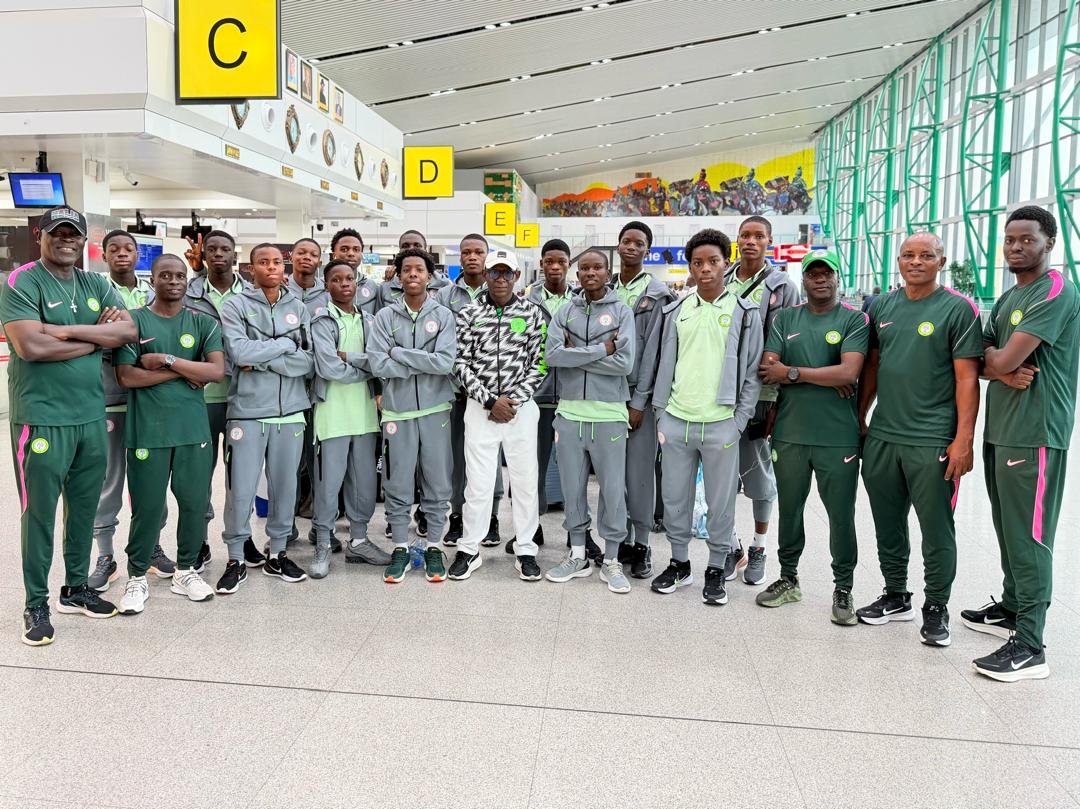
Nigeria’s Future Eagles arrive in Azerbaijan for inaugural FIFA U-15 World Cup
Nigeria’s Future Eagles arrived in Azerbaijan on Thursday, ahead of the first edition of the FIFA Under-15 World Cup and Festival, holding from October 22 to 31.
Economy
Businesses seek easier Nigeria-China payments as Cardoso meets investors
Business leaders operating between Nigeria and China have called for more efficient cross-border payments and stronger banking ties.
Rights
EU’s Sakharov Prize awarded to International Criminal Court
The European Union has awarded its 2026 Sakharov Prize for Freedom of Thought to the International Criminal Court (ICC).

Politics
Gov Alia inaugurates Tinubu’s door-to-door campaign funded by Tompolo
Mr Alia inaugurated President Bola Tinubu’s Door-to-Door Movement campaign ahead of the 2027 elections, donating 25 vehicles to support its activities.
Africa
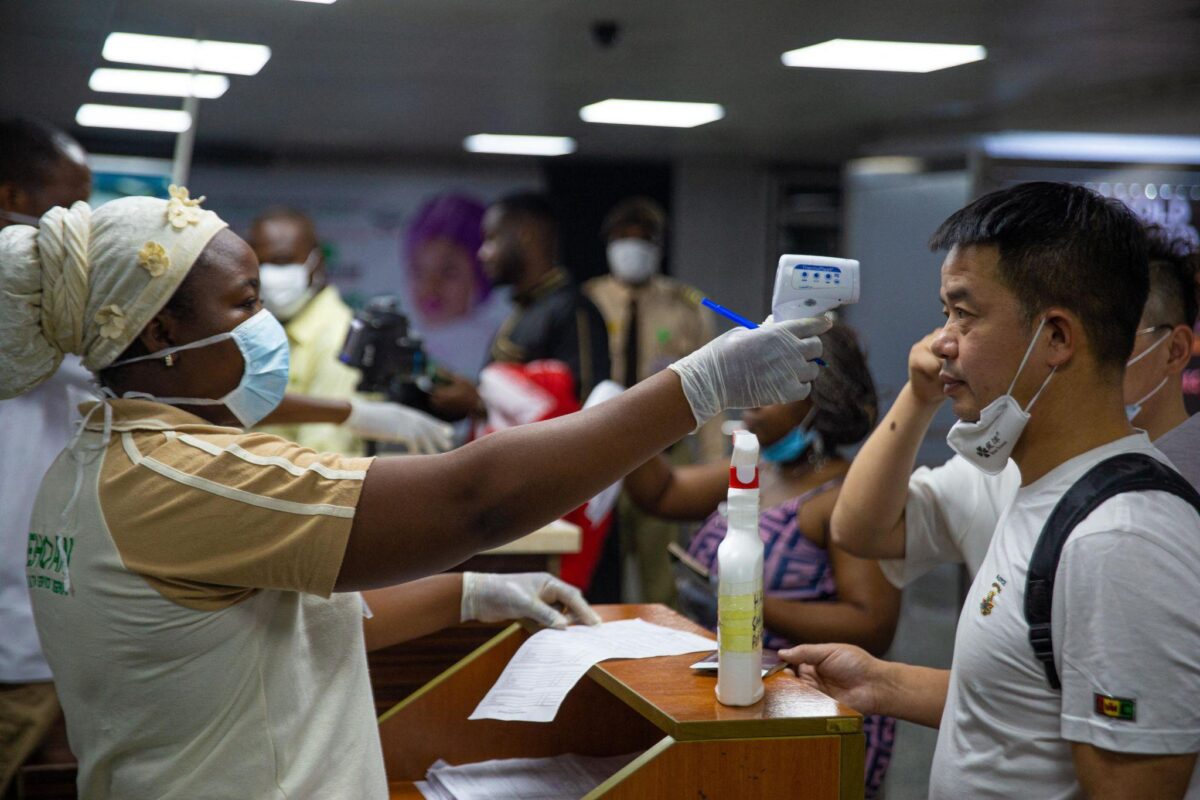
Nigeria: WHO investigators pursue all leads to assess risk of Ebola spread
Nigeria is the fifth country this year after DRC, France, Uganda, and Kenya to confirm the presence of Ebola disease caused by the Bundibugyo virus.

States
Nigeria’s floods killed 245 people, displaced over 200,000, says NEMA
NEMA said flooding affected 673,350 people across 134 local government areas in 28 states, displacing 214,997 and killing 245 as of October 20.


