

ECOWAS calls for coordinated, data-driven approach to end malaria in West Africa
Health leaders in West Africa have called for a unified, multi-sectoral, and data-driven approach to malaria elimination.
They said that fragmented interventions and inefficient use of resources continue to slow progress against the disease.
The call was made on Monday at the ongoing 27th Ordinary Session of the Assembly of Health Ministers of the Economic Community of West African States (ECOWAS) in Freetown, Sierra Leone.
Stakeholders at the high-level meeting described malaria as the leading cause of death in the region.
They said that despite decades of interventions, the disease persists due to disjointed strategies and weak coordination across sectors.
Austin Demby, minister of health and sanitation in Sierra Leone, said that eliminating malaria would require collective regional action.
Mr Demby said that it would also require stronger political commitment and the integration of key pillars of response, including financing, vector control, vaccination, diagnostics, treatment, and community engagement.
According to him, past efforts have often been undermined by fragmented discussions and implementation.
“Financing, insecticide resistance, vaccine deployment, and treatment strategies are handled in isolation rather than as interconnected components of a single response framework.
“For us to succeed, we must bring all the issues together, financing, vectors, vaccines, diagnostics, treatment, and societal engagement. This is an all-of-government and all-of-society effort,” he said.
He stressed the importance of collaboration across critical government ministries, including finance, environment, water and sanitation, gender, and communication, noting that malaria elimination goes beyond the health sector.
He also underscored the need for stronger regional solidarity, noting that countries such as the United States, India, and Libya have successfully eliminated malaria through coordinated national efforts.
“Those countries had malaria and eliminated it. The question is: can we do the same in West Africa? The answer lies in working together and acting collectively,” he said.
A major highlight of the discussions was the renewed focus on domestic resource mobilisation as a cornerstone of health sovereignty.
The director-general of WAHO, Melchior Athanase Aïssi, said that while external funding remains important, countries must increasingly look inward to finance their malaria programmes sustainably.
Mr Aïssi, however, said that increasing funding alone would not guarantee success, stressing the need for efficiency in the use of available resources.
“There are resources, but we must use them better.
“Even as we mobilise domestic funding, we must prioritise efficiency and ensure that every investment delivers measurable impact,” he said.
The meeting also spotlighted the critical role of data in driving effective malaria interventions.
Mr Aïssi called for the adoption of real-time, data-driven systems that would enable countries to track progress, identify gaps, and adjust strategies promptly.
“With near real-time data, we can know what is working, scale it up, and stop interventions that are not delivering results. This is how limited resources can go further” he said.
He said that improved data use would not only enhance programme efficiency but also strengthen accountability and transparency across countries.
He called for the establishment of stronger regional accountability mechanisms to ensure that commitments made at the ministerial level translate into concrete actions at the country level.
He also hinted at ongoing discussions around innovative financing options, including the possibility of regional funding mechanisms to support malaria elimination efforts.
He recalled previous commitments such as the “Abuja Declaration,” urging governments to honour and strengthen such frameworks to boost health sector funding.
The meeting is expected to produce actionable resolutions aimed at accelerating malaria elimination across the ECOWAS region, with emphasis on coordination, efficiency, and measurable results.
As deliberations continue, stakeholders expressed optimism that with sustained political will, integrated strategies, and effective use of data, West Africa can significantly reduce and ultimately eliminate malaria.
The 26th Assembly prioritised a people-centred approach to healthcare, adopting a Regional Community Health Policy to fast-track Universal Health Coverage.
It also advanced a regional strategy on Lassa fever, alongside renewed calls for local vaccine production, pooled procurement, and sustainable domestic financing to reduce dependence on external donors.
Ministers approved the annual report of WAHO, recognising progress in regional health security, and endorsed future dialogue on malaria elimination as a key agenda item.
The meeting brought together health ministers, experts, and partners across West Africa, supported by a prior technical workshop held in May 2025.
(NAN)

We have recently deactivated our website's comment provider in favour of other channels of distribution and commentary. We encourage you to join the conversation on our stories via our Facebook, Twitter and other social media pages.

More from Peoples Gazette

Agriculture
FG tasks ECOWAS on leveraging financing strategies for agroecology
The federal government has urged stakeholders in the agriculture and finance sectors in the West Africa region to leverage financing strategies to enhance agroecology practices

Politics
Katsina youths pledge to deliver over 2 million votes to Atiku
“Katsina State is Atiku’s political base because it is his second home.”
World
India launches research centre for space observations
The foundation stone has been laid in Assam, a north-eastern state of India, for an advanced radar research complex for the Indian Space Research Organisation.

Politics
Oborevwori approves new salary structure for state-owned tertiary institutions
Governor Sheriff Oborevwori on Tuesday announced a new salary structure for academic and non-academic staff at the four state-owned universities and other tertiary institutions.

States
Suspected Boko Haram terrorists, 11 others surrendered in Yobe: Military
Troops of Hadin Kai have arrested four suspected Boko Haram terrorists following a night ambush in Yobe, alongside the surrender of 11 terrorists.
Anti-Corruption
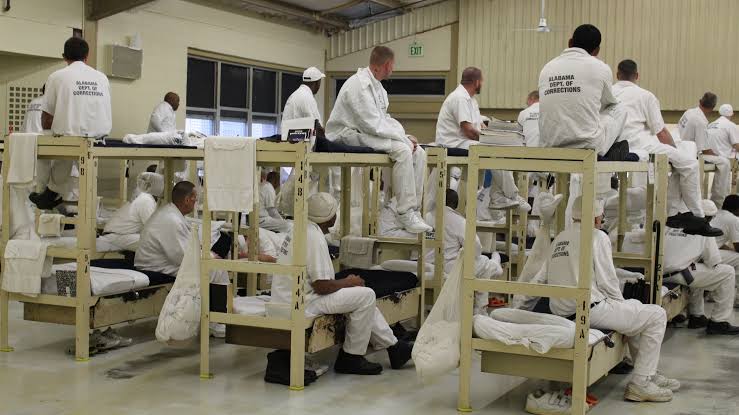
U.S. government official Lennie Miller sentenced to prison for bribery
This followed his January guilty plea to conspiring with Christopher Brackins and James Tillman, owners of general construction companies.

Economy
Nigeria ranks bottom in Africa as only 12% approve of Tinubu’s electricity performance: Report
Only one in eight Nigerians, or 12 per cent, gave Mr Tinubu pass marks for his government’s performance on electricity.
Heading 1
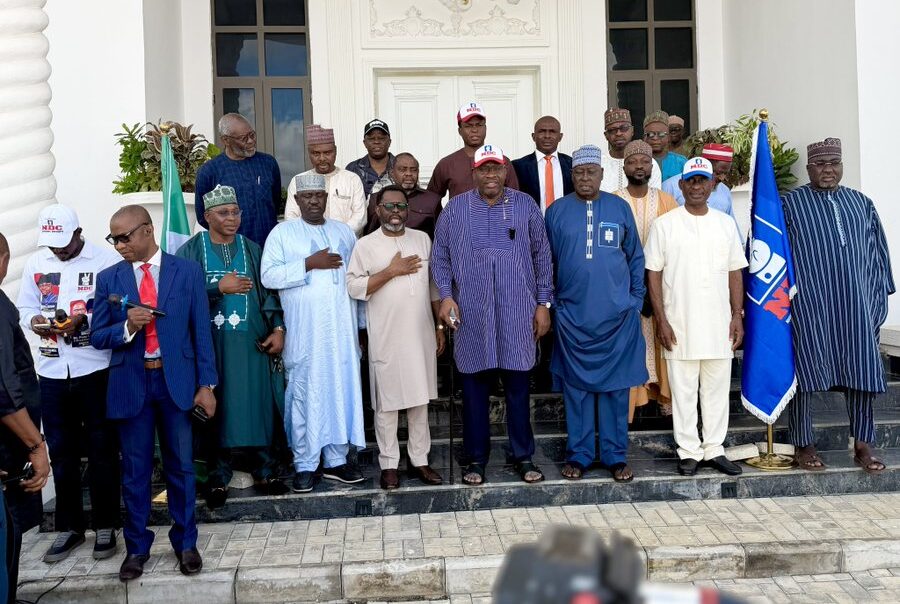
Obi Campaign Crisis: ‘Unheard of, nonsensical’, NDC leader Dickson blasts OK Movement
“Never in the history of the world have support groups set up a presidential campaign council. It’s unheard of and nonsensical,” said Seriake Dickson.


