

European countries move to establish deportation hubs outside EU for irregular migrants

The European Union member states have agreed on a new migration policy to expedite the return of irregular migrants and to allow return hubs to be established in third countries.
The deal reached on Monday by EU countries and the European Parliament is part of the bloc’s crackdown on irregular migration and marks a significant step toward tougher rules.
Only 29 per cent of irregular migrants leave European countries, according to official figures.
“This is a really very important step in making sure that we have control over what is happening in the EU; over who comes but also who has to leave the EU,” the Home Affairs Commissioner Magnus Brunner told reporters after the deliberation.
The deportation hubs will be established after an agreement has been reached with non-EU countries.
“The next step is working more on migration diplomacy, together with third countries,” Mr Brunner said, without specifically mentioning any of the partnering countries.
Under the new policy, return hubs can serve as locations where individuals are expected to stay or as transit bases—a shift from the current rule, which requires migrants to be returned to their country of origin or to any other country to which they have a proven connection.
The rules will not apply to unaccompanied minors, though families with children will be affected.
Some member countries have begun negotiations with potential partners to implement the proposal put forward by the European Commission in 2025.
In March, Germany, the Netherlands, Austria, Denmark, and Greece teamed up on the initiative.
Meanwhile, Italy already has two centres in Albania that accommodate at least 100 migrants.
Also, irregular migrants awaiting deportation can be detained for longer than six months, up to two years, with a possible extension of another six months under the new rule. For individuals considered to pose security risks, their detention period may be extended indefinitely.
Entry bans have also been increased from five to 10 years, while those considered a security risk may get a lifetime ban.
The rule also removes the automatic suspension of deportations during ongoing legal proceedings, allowing courts to decide on a case-by-case basis whether removal should be stopped.
Most of the provisions will take effect 12 months after the rules become legally binding.
However, Eleonora Celoria from Asgi, an Italian association of legal experts, told Euronews that the provision was “vague” and “opens the doors to home raids.”
Similarly, Mélissa Camara, a member of the European Parliament from the Greens/EFA group, dismissed the agreement as “shameful,” adding, “The legal arsenal serving a xenophobic ideology is now complete.”

We have recently deactivated our website's comment provider in favour of other channels of distribution and commentary. We encourage you to join the conversation on our stories via our Facebook, Twitter and other social media pages.

More from Peoples Gazette

States
Independence: NBA urges Nigerians to expect better future
The NBA said that ordinary Nigerians should be deriving benefit from the subsidy removal rather than hardship.

Agriculture
FG tasks ECOWAS on leveraging financing strategies for agroecology
The federal government has urged stakeholders in the agriculture and finance sectors in the West Africa region to leverage financing strategies to enhance agroecology practices

Politics
Katsina youths pledge to deliver over 2 million votes to Atiku
“Katsina State is Atiku’s political base because it is his second home.”

Hot news Home top
63-year-old Duane ‘Keffe D’ Davis sentenced to 40 years for murder of Tupac
Shakur was killed in a drive-by shooting in Las Vegas while he visited the city to see a Mike Tyson boxing bout.

States
Troops nab four suspected gunrunners in Plateau
The Nigerian Army said on Tuesday that the operation also led to the recovery of locally fabricated firearms and ammunition.
Heading 1
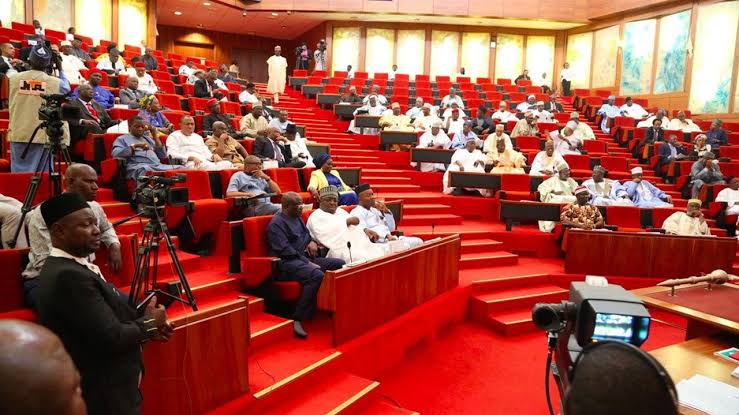
Bill to decriminalise attempted suicide passes second reading at Senate
Leading the debate on the bill, Mr Ekpenyong said Nigeria’s existing laws presented conflicting approaches to attempted suicide.

Lagos
Funding major challenge impeding Lagos development: Hamzat
Mr Hamzat said Lagos had developed the structures and capacity to implement its development plans but required sustainable funding.

Uncategorized
FG pays academic, non-teaching allowances to tertiary institution staff
The minister said the unveiling marked a significant milestone in the government’s efforts to improve staff welfare.
States
Gov. Oyebanji sacks heads of agencies, technical advisers
The governor, however, noted that a few appointments had been retained given the nature of the officials’ assignments.


