

FG seeks support to scale up water testing kits

The federal government on Wednesday appealed to development partners to support the large-scale production and distribution of hydrogen sulphide (H₂S) vials used for water quality testing across the country.
Director of water quality control and sanitation at the Federal Ministry of Water Resources and Sanitation, Elizabeth Ugoh, made the appeal during the quarterly meeting of the National Core Group on Water Quality in Abuja.
She explained that H₂S vials, which were used to detect bacterial contamination, particularly from faecal matter, had already been piloted in UNICEF-supported states with promising results.
Ms Ugoh said the ministry had planned a comprehensive needs assessment to guide national scale-up, but efforts have been limited by inadequate funding.
“We were advised to intensify awareness and demand creation, but many states cited lack of funding as a major constraint. In January, we could only produce enough kits for four or five states,” she noted.
While ministry laboratories had the capacity for production, Ms Ugoh stressed that expanding operations without external support remained difficult.
She noted that most vials currently used in community-based water monitoring were supplied by UNICEF, raising concerns about sustainability after a broader national rollout.
She called for strategic partnerships and highlighted the potential role of the ministry’s public-private partnership (PPP) unit in mobilising support.
Also speaking at the meeting, Bolu Onabolu of the Network of Female Professionals in WASH pointed to poor sewage management as a key factor contributing to rising nitrate levels in water sources.
She recommended reviewing the technical guidelines of the National Water Resources Institute to address safe containment systems, especially in areas with high water tables.
Ms Onabolu called for enhanced collaboration with the National Task Group on Sanitation, better enforcement from Environmental Health Officers and Town Planners, and stronger public awareness of the health risks of improper faecal waste disposal.
“Many households make cost-based decisions without realising the groundwater contamination risks. We need a coordinated communication strategy to drive behaviour change,” she said.
Ibe Chinedu of the FCT Water Board urged the inclusion of private water producers in stakeholder dialogues.
He raised concerns about low pH levels in several bottled water brands, attributed to reverse osmosis treatment, and called for clear regulations on remineralisation.
He also cited contamination risks from illegal pipe connections, poor consumer practices, and seasonal factors affecting water quality.
Presenting findings from a national water quality assessment, Chief Scientific Officer at the ministry, Babalola Emmanuel, revealed high levels of contamination across several states.
He listed excessive concentrations of fluoride, ammonia, cyanide, cadmium, lead, arsenic, mercury, and nitrate, with nitrate detected at 156 sites in 17 states.
He said a validation exercise would be carried out using representative sampling, and a technical report would be developed ahead of wider stakeholder engagement.
In an interview, Sanitation and Hygiene Coordinator at WaterAid, , Obinna Ogbodo, said that ensuring water quality was vital to public health and sustainable development.
He said climate change was already worsening water contamination and limiting access to safe drinking water in many areas.
Mr Ogbodo added that WaterAid was working with government institutions and local partners to strengthen water safety plans, improve hygiene behaviour change, and support climate-resilient WASH infrastructure.
He said the organisation was also contributing to national policy dialogue and building local WASH capacity to ensure inclusive access to water and sanitation, particularly for marginalised communities.
The meeting brought together representatives from federal and state governments, development agencies, NGOs, and water quality experts.
(NAN)

We have recently deactivated our website's comment provider in favour of other channels of distribution and commentary. We encourage you to join the conversation on our stories via our Facebook, Twitter and other social media pages.

More from Peoples Gazette

States
Independence: NBA urges Nigerians to expect better future
The NBA said that ordinary Nigerians should be deriving benefit from the subsidy removal rather than hardship.

Agriculture
FG tasks ECOWAS on leveraging financing strategies for agroecology
The federal government has urged stakeholders in the agriculture and finance sectors in the West Africa region to leverage financing strategies to enhance agroecology practices

Politics
Katsina youths pledge to deliver over 2 million votes to Atiku
“Katsina State is Atiku’s political base because it is his second home.”
States
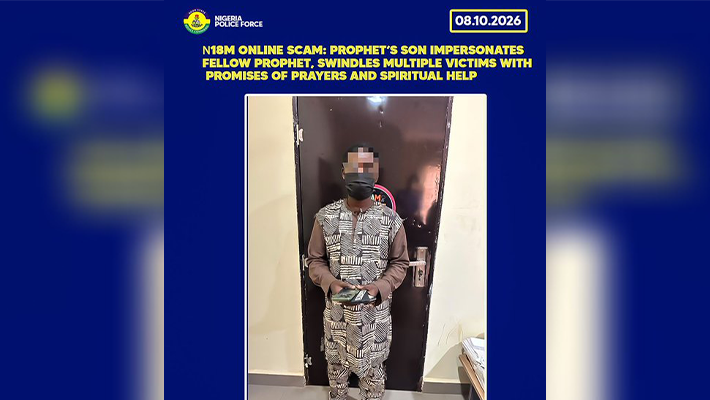
Police apprehend Ogun man for N18 million Facebook fraud, impersonating ‘prophet’
The police command in Ogun has arrested a suspect, Adewale Ogoemi Arojah, for impersonating a cleric on Facebook and defrauding people of millions of naira.

States
Outage: TCN announces two-day power maintenance in Ogun communities
The Transmission Company of Nigeria has announced a two-day preventive maintenance exercise at the Ijebu-Ode Transmission Substation in Ogun.

Politics
Kano governor reconciles Barau, Bichi ahead of 2027 elections
Governor Abba Yusuf has reconciled Deputy Senate President Barau Jibrin and House of Representatives member Abubakar Bichi ahead of the 2027 elections.
Health
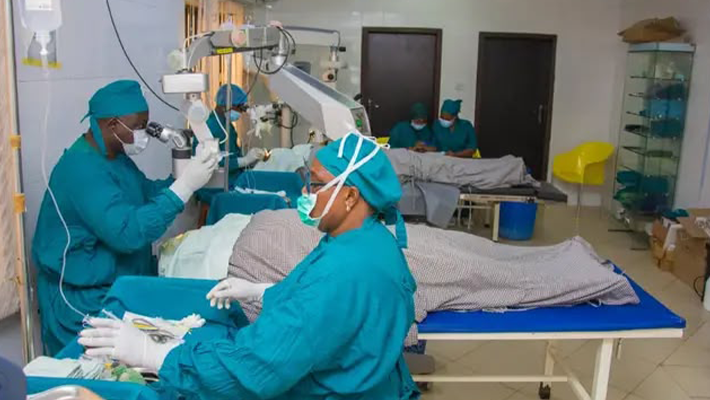
World Sight Day: Kaduna govt targets 1,000 residents for eye treatment
The Kaduna government says it has targeted 1,000 vision-impaired persons for free eye care services.

Economy
Nigeria, Africa lose $74 billion yearly to unfair credit ratings: UN
UN says inaccurate, context-poor sovereign credit ratings are estimated to cost African countries about $74.5 billion annually through excessive borrowing costs and lost financing.

World
Texas inmate dies after receiving same lethal drug as Christa Pike
Ms Pike remains alive albeit in critical condition as her lawyers said she suffered pneumonia, blood clot and inability to eat.


