

Financial fragility is defining reality of Nigerian journalism: Report

A new practitioner intelligence report drawing on responses from working journalists across 17 Nigerian media organisations has found that financial fragility is not a background condition in Nigerian journalism but its primary operating reality, shaping what gets covered, how it gets covered, and whether the people doing the covering can build sustainable careers.
The finding is among five in The Future of Media & PR Collaboration in Nigeria, a report published today by Carpe Diem Solutions Limited, a Lagos-based strategic communications agency, in observance of World Press Freedom Day 2026.
The report is grounded in structured responses from journalists and media practitioners across print, digital, broadcast, and independent platforms, including Peoples Gazette, The Guardian Nigeria, PUNCH Newspapers, BusinessDay Media, Nigerian Tribune, the News Agency of Nigeria, Technext, The Cable, Afrocritik, and TRT World.
These responses were combined with the latest global data on press freedom, institutional trust, AI adoption in newsrooms, and media economics.
The picture that emerges is sobering. The Reporters Without Borders (RSF) 2026 World Press Freedom Index ranks Nigeria 112th out of 180 countries, still in the “difficult” category despite a ten-place improvement on the previous year. Globally, 160 out of 180 countries are contending with financially unstable media outlets.
Nigeria’s 84% rate of citizens worried about distinguishing real from fake news online is the highest among all countries surveyed in the Reuters Institute Digital News Report 2025. And the income-based trust gap in Nigerian media has reached 26 points, an all-time high that has doubled since 2022, according to the Edelman Trust Barometer 2026.
Journalists who responded to the survey spoke candidly about the pressures defining their work: editorial compromise, the quiet weight of self-censorship, and the structural conditions that make independent reporting difficult to sustain. For digital-first and independent outlets, these pressures are particularly acute.
Social media has restructured how news reaches audiences, with Nigeria’s 107 million internet users representing one of the largest potential readerships on the continent, but that scale has not translated into media sustainability. Platforms captured the attention. The economics of that attention have not flowed back to the newsrooms producing the content.
The report also examines the growing adoption of AI tools in Nigerian newsrooms. The majority of practitioners surveyed use AI for research, editing, transcription, and writing assistance, yet the ethical frameworks governing this adoption remain largely absent. Journalists raised persistent concerns about the erosion of originality and the risk that AI-generated content could accelerate the spread of disinformation in an environment where trust is already fragile. Globally, only 12% of audiences are comfortable with news produced entirely by AI.
Regarding the relationship between the media and the communications industry, the report found that journalists want a fundamental shift from transactional engagement to structural partnership: earlier involvement in story development, pitches that demonstrate genuine understanding of their beat, transparency about sponsored content, and relationships built before either side needs something from the other.
Speaking on the report, Founder and CEO of Carpe Diem Solutions, Edward Israel-Ayide, said, “The journalists represented in this report are doing serious work under conditions that most of the industries they cover would not tolerate for themselves. Financial instability, self-censorship, and the erosion of trust are not abstract policy concerns. They are the day-to-day reality for the people whose reporting shapes public understanding. We produced this report because we believe the communications industry has a responsibility to understand those conditions honestly, not just benefit from the access that journalism provides.”

We have recently deactivated our website's comment provider in favour of other channels of distribution and commentary. We encourage you to join the conversation on our stories via our Facebook, Twitter and other social media pages.

More from Peoples Gazette

States
Independence: NBA urges Nigerians to expect better future
The NBA said that ordinary Nigerians should be deriving benefit from the subsidy removal rather than hardship.

Agriculture
FG tasks ECOWAS on leveraging financing strategies for agroecology
The federal government has urged stakeholders in the agriculture and finance sectors in the West Africa region to leverage financing strategies to enhance agroecology practices

Politics
Katsina youths pledge to deliver over 2 million votes to Atiku
“Katsina State is Atiku’s political base because it is his second home.”

NationWide
NCoS establishes non-custodial directorates in 36 states, FCT
The RoLAC initiative is funded by the European Union and implemented by International IDEA.

Heading 4
Abducted corps members regain freedom after days in captivity
The victims were abducted on Thursday.

States
Edo govt. unveils committee to strengthen inter-governmental collaboration
She said the committee would strengthen coordination among the various arms and tiers of government.

States
Cross River plans modern abattoirs, more investment in livestock
The governor’s aide said Cross River’s 2026 budget made provisions for modern abattoirs.
Africa
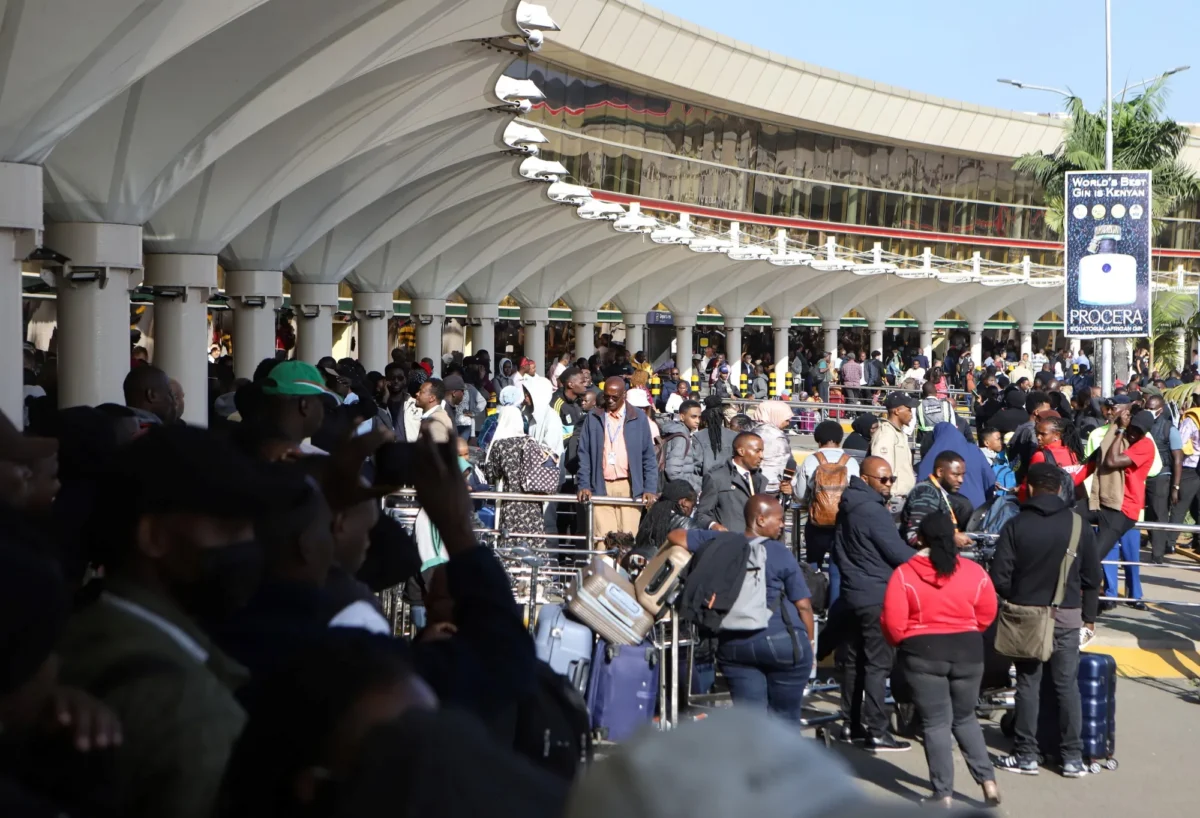
Ebola: Kenya intensifies screening of travellers from DRC, Tanzania, eight other African countries
Mr Duale clarified that the country was not experiencing an Ebola virus outbreak.

World
WHO releases first global guidelines on child obesity amid increasing cases
The WHO acknowledged that treatment cannot reverse the rise in obesity by itself: systemic changes.


