

FMC Ebute Metta pays N20 million monthly but gets only three hours of daily power supply: Medical Director

Adedamola Dada, the outgoing medical director of the Federal Medical Centre, Ebute Metta, said the hospital had been paying a N20 million monthly electricity bill for just three hours of daily public power supply.
According to him, the extraordinary expense has led to the consumption of 80,000 litres of diesel monthly to ensure an uninterrupted power supply in the facility to maintain critical health care services.
Mr Dada disclosed this at a media parley to highlight the hospital’s achievements and challenges.
He said the hospital generated 95 per cent of its power in the past seven years to ensure uninterrupted supply to keep the facility running and meet the health needs of its patients.
The medical director, who noted that the development had impacted the hospital financially, said power was very essential for the smooth running of any functional health facility.
“We are the only federal public hospital that receives a two-to-three-hour supply of public power, but we provide 24-hour power because we are automated and can’t function without power.
“When we wanted to switch our service to automated, a lot of people asked if it would be attainable because of the epileptic power supply in the country.
”We didn’t allow that to limit us; we factored in a power delivery mechanism and generated 22 hours of power supply on our own over the last seven years.
“Though this development has eaten deep into the hospital’s finances, it is very essential for our service,” he said.
He added that the quality of care in the hospital had attracted more patients and public recognition over the years.
Mr Dada said the Health Facilities Monitoring and Accreditation Agency (HEFEMAA), in 2022, declared the hospital the most standard and compliant hospital in Lagos State.
According to him, the most recent is the Bureau of Public Service Reform under the presidency, declaring the hospital as one of the trailblazers in using ICT in the public health sector, among others.
(NAN)

We have recently deactivated our website's comment provider in favour of other channels of distribution and commentary. We encourage you to join the conversation on our stories via our Facebook, Twitter and other social media pages.

More from Peoples Gazette

States
Independence: NBA urges Nigerians to expect better future
The NBA said that ordinary Nigerians should be deriving benefit from the subsidy removal rather than hardship.

Agriculture
FG tasks ECOWAS on leveraging financing strategies for agroecology
The federal government has urged stakeholders in the agriculture and finance sectors in the West Africa region to leverage financing strategies to enhance agroecology practices

Politics
Katsina youths pledge to deliver over 2 million votes to Atiku
“Katsina State is Atiku’s political base because it is his second home.”

Sport
2027 AFCON Qualifier: Guinea-Bissau beat Madagascar, extend lead over Nigeria in Group L
Guinea-Bissau now have 10 points, Nigeria seven points, while Madagascar and Tanzania have two points each.
Africa
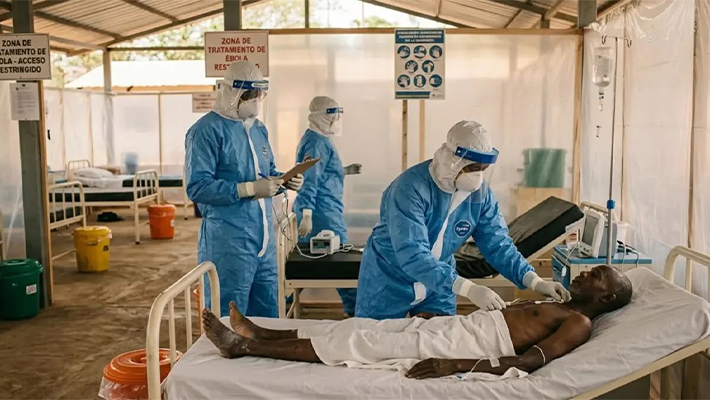
WHO raises concern over rising Bundibugyo Ebola deaths, insecurity in DR Congo
Mr Ghebreyesus said the outbreak, declared six months ago, had spread across 67 health zones in eight provinces in the DR Congo.

Africa
Afreximbank urges industries to boost intra-African trade as alternative to China in global markets
“As global markets look to diversify production beyond China, Africa must position itself as a natural partner of choice,” Mr Maayergi said.

World
Russell Brand faces probe over prison message to supporters
Mr Brand was convicted at Southwark Crown Court of one count of rape and three counts of sexual assault.

Politics
Tinubu admits cost-of-living crisis after APC dismissed widespread hunger claims
According to Mr Tinubu, the 2027 election is about the country’s future and direction.

World
WHO pushes for stronger vaccination, screening, treatment to eliminate cervical cancer
WHO said that expanding HPV vaccination, improving screening access, and ensuring timely treatment are critical to protecting women.


