

Lagos residents raise concerns over unsafe fufu preparation, preservation
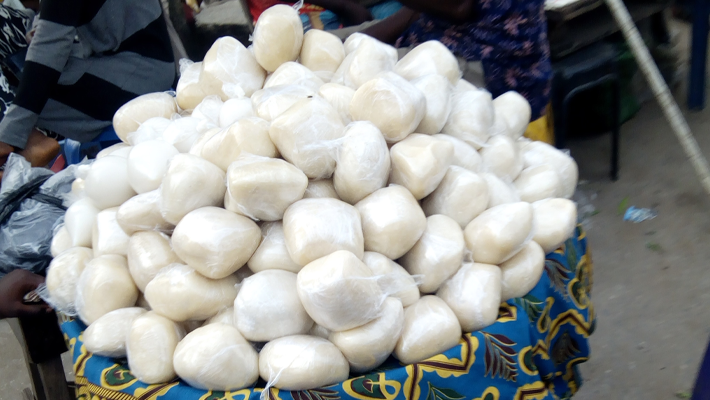
Some residents in Lagos State have raised concerns about suspected unsafe fufu preparation and preservation.
They expressed their concerns in separate interviews on Sunday in Lagos.
Fufu, also known as akpu or santana in Nigeria, is a local staple made from fermented cassava.
The cassava is peeled, soaked for days to ferment and remove toxins, blended, strained and cooked into a smooth dough.
Ready-to-eat portions of fufu previously sold at N1,000 for 13 balls are now sold at the same price in smaller portions.
Some consumers have gradually stopped eating fufu made in Lagos because of concerns about its preparation, preservation, and possible food poisoning.
A resident of Ajegunle, Omena Udonwa, said her past experiences with fufu preparation had led her family to start making it themselves.
Ms Udonwa said she was dissatisfied with the way some producers processed the staple.
“I saw a piece of rubber inside a fufu I bought recently and, if not for my vigilance, I would have consumed it.
“I once saw a producer who used detergent to wash the cassava and saw nothing wrong with what they did,” Ms Udonwa said.
A Costain resident, Adedayo Falade, said he loved fufu because it gave him the energy to engage in hard labour without getting tired easily.
Mr Falade, however, expressed displeasure over the preparation methods used by some producers, saying they produced foul-smelling, sticky fufu.
“I rarely eat fufu now. Some fufu stays for days and even weeks on sale without patronage due to poor preparation methods.
“Despite my love for fufu, I would rather source it from outside Lagos because I no longer trust how it is prepared here.
“Some processors in Lagos are just greedy for extra gain, so they can boycott good practices just to sell the product,” Mr Falade said.
Another resident of Agege, Anuoluwapo Ayeni, said some fufu processors could be trusted, but consumers needed to be careful about where they bought the staple.
“Fufu is a good meal, but I urge Lagosians to be careful where they purchase their fufu.
“It will be beneficial to know how the fufu you consume is sourced and prepared to avoid health challenges in the future.
“We still have good processors, but they are few. Everyone should be sure of what they consume,” Ms Ayeni said.
However, a fufu processor at Santana International, White Sand, Oyingbo, Hope Aniekan, described the stages involved in processing and storing the staple.
She said the cassava was first peeled and thoroughly washed with clean water before being soaked for about two days.
She explained that the soaked cassava was taken to a mill for grinding, then filtered to remove unwanted particles.
According to her, after 30 minutes, they placed the resulting paste in a sack, covered it with plantain leaves, and weighted it with a heavy stone.
“We adopt the traditional procedures in processing our fufu here. Our fufu can be trusted, and our customers can attest to it.
“We only make use of salt in our fufu as a means of preservation to prevent the infestation of maggots.
“No other harmful additives are in our fufu, but I can only speak for myself. I don’t know how others process theirs.
“We have heard rumours of some unscrupulous processors adding harmful substances to quickly ferment their fufu,” she said.
Another resident and trader of the staple, simply known as Mama Chinonso, at Costain, said she used a warmer to preserve her fufu.
She said the method could keep the fufu fresh for three days during warm weather and up to one week during cold weather.
“I don’t add anything to preserve my fufu for long. When I am supplied, I simply keep it in my warmer to maintain its freshness.
“In warm weather, the fufu can last for three days and still be edible, but in cold weather, it can last up to a week.
“My family and I eat from it, so I won’t sell what I cannot eat,” she said.
(NAN)

We have recently deactivated our website's comment provider in favour of other channels of distribution and commentary. We encourage you to join the conversation on our stories via our Facebook, Twitter and other social media pages.

More from Peoples Gazette

States
Independence: NBA urges Nigerians to expect better future
The NBA said that ordinary Nigerians should be deriving benefit from the subsidy removal rather than hardship.

Agriculture
FG tasks ECOWAS on leveraging financing strategies for agroecology
The federal government has urged stakeholders in the agriculture and finance sectors in the West Africa region to leverage financing strategies to enhance agroecology practices

Politics
Katsina youths pledge to deliver over 2 million votes to Atiku
“Katsina State is Atiku’s political base because it is his second home.”

Heading 1
Obi took advantage of Nigerians’ frustrations in 2023, can’t win 2027 presidential poll: APC
The All Progressives Congress has dismissed the chances of Nigeria Democratic Congress 2027 presidential candidate Peter Obi in the forthcoming election.
World
China advocates global cooperation to modernise traditional medicine
China has called for stronger international cooperation, technological innovation and equitable access to traditional medicine to address emerging global health challenges.

Economy
Nigeria records 93% rise in AI micro-credential enrolments, 113% increase in critical thinking: Report
Enrolment in AI micro-credentials in Nigeria rose by 93 per cent in 2026, while enrolment in critical thinking certification surged by 113 per cent.

Opinion
Abdul Mahmud: The president who loves us too much to campaign
A leader confident in his record should ordinarily welcome the campaign trail, where he can explain what he has achieved and answer questions about what remains unfinished.

Rights
Overcrowding in Nigeria’s prisons hinders rehabilitation of inmates
NCoS says prison congestion and inadequate funding hinder effective rehabilitation and reintegration of inmates.

Politics
Five things Nigerians like about Tinubu and why he’ll struggle to defeat Atiku, Obi
Mr Tinubu appears to have cultivated a coterie of loyalists and supporters across party lines, mentoring and raising several other politicians from within and outside his camp.


