

Nigeria launches geospatial database to aid credible housing, population census
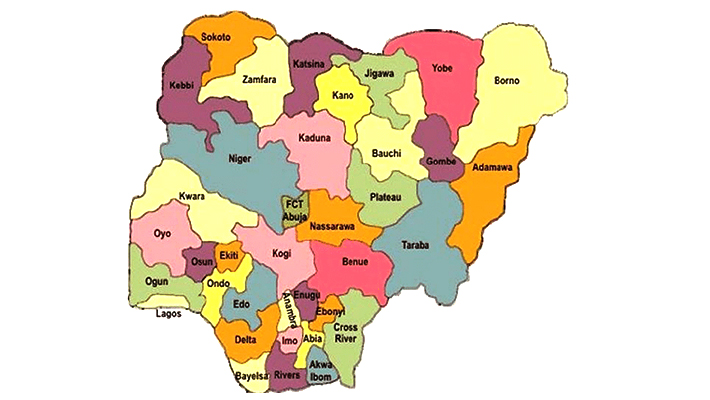
Nigeria has rolled out a geospatial database as part of preparations for its upcoming national population and housing census, aiming to produce accurate, technology-driven and verifiable population data.
The initiative was unveiled on Thursday in Abuja at a high-level stakeholders engagement.
Muriel Mafico, the resident representative of the United Nations Population Fund (UNFPA), said the project marked the commencement of an 18-month initiative to modernise Nigeria’s population data systems and strengthen national geospatial and population data systems.
Represented by deputy representative Koesson Kuawu, Ms Mafico said that population and housing census data are fundamental to effective governance, economic planning, national development, and informed decision-making.
She said that Nigeria’s ability to plan and deliver on its development goals depends significantly on the availability of credible, timely, and disaggregated population data.
“However, since the last population and housing census was conducted in 2006, Nigeria has undergone significant demographic, social, and economic changes.
“The current reliance on outdated population estimates undermines evidence-based planning and hampers the effective implementation of national and global development programmes.”
According to her, updated census data is critical for informing national planning and the government’s Renewed Hope Agenda, as well as for assessing progress towards achieving goals such as the Sustainable Development Goals and the Africa Agenda 2063.
Ms Mafico added that the fund had deployed technical support, including advisory services, the development of a census project document, and the updating of Nigeria’s geospatial database in line with the requirements of the 2030 census round.
The NPC Chairman, Aminu Yusuf, represented by the Delta State Commissioner, Blessing Brume-Ataguba, said census planning must rely on accurate and integrated spatial data systems.
“As Nigeria prepares for the next population and housing census, our planning must draw on current, spatially precise, integrated, and operationally useful data systems.
“This initiative seeks to strengthen Nigeria’s national geospatial database to aid census preparation, evidence-based planning, and broader development goals.”
According to him, a modern geospatial database is more than a technical asset; it is a core part of the national planning architecture.
He said that when well-developed and responsibly applied, it supports census operations alongside health planning, education delivery, infrastructure targeting, disaster preparedness, agricultural strategy, local governance, and other public priorities.
“Let me state clearly, this initiative neither substitutes for the census nor alters statutory responsibilities.
“It is a technical enhancement to equip the commission and national systems with better data infrastructure.”
The Statistician-General of the Federation, Adeyemi Adediran, said the project would strengthen Nigeria’s statistical system and support credible census outcomes.
Represented by Salihu Itopa, the director of information and communication technology at the National Bureau of Statistics, he said it strengthens the technical backbone required for a credible, inclusive, and future-oriented national population and housing census.
“The world has entered an era in which geospatial intelligence is central to governance, and countries are using spatial data to plan infrastructure, monitor population movements, manage natural resources, respond to emergencies, and design targeted social interventions.
“The quality of our population data determines the quality of our national surveys, which also determines the quality of our national statistics, and the quality of our national statistics determines the quality of our development decisions.”
The Director-General of the National Identity Management Commission (NIMC), Abisoye Coker-Odusote, emphasised the role of identity systems in strengthening the census’s credibility.
Mrs Coker-Odusote, who was represented by Mallam Sherrif Balogun, the deputy director of database, said as Nigeria prepares to conduct its first census in nearly two decades, the imperatives of accuracy, inclusivity, and credibility are more critical than ever.
“The integration of geospatial intelligence into census planning is therefore not only timely but essential to ensuring a robust and reliable national enumeration exercise.
“The National Identification Number (NIN) provides a unique and verifiable identity for every citizen and legal resident, and when harmonised with a comprehensive geospatial framework, it enhances the integrity of population data.”
In his keynote address, Dr Chris Nnanatu of WorldPop at the University of Southampton highlighted the importance of integrating multiple datasets for accurate planning and census execution.
“For us to be able to accurately identify how things are to be built across the general spatial landscape, we need other data sets.
“The project would ensure an updated database, strengthen national capacity and modernise census readiness.
“The goal is to strengthen Nigeria’s geospatial data infrastructure and produce a high-resolution policy-relevant sampling frame to support census planning, health programming and development activities.”
He added that integrating datasets and advancing artificial intelligence and machine learning technologies would strengthen Nigeria’s spatial data framework for census and long-term development planning.
(NAN)

We have recently deactivated our website's comment provider in favour of other channels of distribution and commentary. We encourage you to join the conversation on our stories via our Facebook, Twitter and other social media pages.

More from Peoples Gazette

Agriculture
FG tasks ECOWAS on leveraging financing strategies for agroecology
The federal government has urged stakeholders in the agriculture and finance sectors in the West Africa region to leverage financing strategies to enhance agroecology practices

Politics
Katsina youths pledge to deliver over 2 million votes to Atiku
“Katsina State is Atiku’s political base because it is his second home.”

States
Ex-NOSDRA director advises young civil servants on personal development
Mr Nkangwung stated, “This life is not about what you get now. Invest in yourself and be patient with God.”

Lagos
Group advocates coordinated conservation framework for Badagry’s heritage
Mr Ijinla said heritage conservation and tourism could complement each other when properly planned and managed.

World
British singer Ed Sheeran cries on stage over tour fallout
Mr Sheeran described the situation in the region as a “systemic injustice” in the West Bank.

Sport
NPFL: Pillars thrash Doma United 4-1 in Kano
Speaking after the match, Pillars coach, Daniel Ogunmodede, commended his players for their performance.

Sport
Fortune FA remain unbeaten as Idowu U-16 League records 19 goals
The victory lifted Heritage out of the relegation zone and boosted their hopes of turning around their campaign.

Agriculture
Kwara targets 1,000 cattle for artificial insemination Pub
The Director of TGB Farms, Ishola Peace, commended the government for extending the programme to the farmers.


