


Nigeria ranks 11th globally in mango production, targets top three

Garba Kangiwa, president of the National Association of Mango Producers, Processors and Marketers of Nigeria (NAMPPMAN), says Nigeria ranks 11th globally in mango production, yielding roughly one million metric tons annually.
Mr Kangiwa stated this during an interview on Monday in Abuja.
He said that despite the country’s high production volume, Nigeria trailed far behind global leaders such as India, which yields 26 million metric tons annually, as well as China, Indonesia, Mexico, and Egypt.
He, however, said that with targeted reforms, government backing, and modernised farming practices, the country had the capacity to break into the top three global mango-producing nations.
To achieve this, the NAMPPMAN president called on federal and state governments to actively support the mango subsector to unlock its full economic potential.
”The first thing we are looking for is cooperation from government at all levels.
“We need the government to understand that mango is a natural gold mine.
”Every part of the mango is useful, and boosting this sector will directly increase food security, nutrition, and employ millions of youth and women across the value chain,” he said.
Mr Kangiwa outlined specific areas where government intervention was urgently required, including land allocation, financial support, and the provision of high-yield seedlings.
He said that NAMPPMAN had set an initial target to plant at least 50 million high-quality, internationally acceptable mango trees, such as the Kent variety, across the country over the next few years.
He said the plan was to use modern tissue culture techniques instead of the outdated traditional grafting method.
”The government should incorporate mango cultivation into its national tree-planting programmes, provide land, and coordinate with agricultural institutions to propagate fast-growing, high-yield varieties.
“These will transform the production capacity of Nigeria’s mango industry within four years,” he said.
Mr Kangiwa also urged government agencies to help remove bureaucratic bottlenecks currently preventing smallholder farmers and processors from accessing critical agricultural loans and development funds.
Highlighting economic losses in the subsector, Mr Kangiwa said Nigerian mango farmers currently suffered 40 per cent to 50 per cent post-harvest losses due to poor storage, transport deficits, and lack of processing infrastructure.
He said that while a single exporter in Nigeria currently generated over N10 billion annually from mango exports, the lack of a centralised exporter database and limited processing capacity restricted broader national gains.
To address domestic demand and discourage importation of foreign mango products, Mr Kangiwa proposed the establishment of 12 to 14 processing plants across the six geopolitical zones and the Federal Capital Territory (FCT).
”We have the market, but our processing capacity is low.
”If we can establish at least two processing factories per geopolitical zone, we will saturate the domestic market with natural Nigerian mango products and then expand aggressively into international markets,” he said.
He said that value addition in the subsector extended beyond fresh fruit and juice, pointing out that mango waste could be converted into organic fertiliser, while seeds could be processed into industrial oil and body cosmetics.
Mr Kangiwa, an associate professor of haematology and blood transfusion with a passion for agriculture, pledged to overhaul NAMPPMAN’s structure during his four-year tenure.
”My key priorities include digitising farmer registration, mapping orchard locations and capacities across all states, conducting a national needs assessment survey, and strengthening market linkages for producers, processors, and exporters,” he said.
He called on members, private investors, and development partners to collaborate with the new executive council to reposition Nigeria’s mango subsector into a major driver of foreign exchange, job creation, and economic prosperity.
(NAN)

We have recently deactivated our website's comment provider in favour of other channels of distribution and commentary. We encourage you to join the conversation on our stories via our Facebook, Twitter and other social media pages.

More from Peoples Gazette

Agriculture
FG tasks ECOWAS on leveraging financing strategies for agroecology
The federal government has urged stakeholders in the agriculture and finance sectors in the West Africa region to leverage financing strategies to enhance agroecology practices

Politics
Katsina youths pledge to deliver over 2 million votes to Atiku
“Katsina State is Atiku’s political base because it is his second home.”

Health
Expert warns against squeezing, puncturing whitlow infections
She said whitlow could occur when bacteria entered through cuts or injuries around the fingernail.
Economy
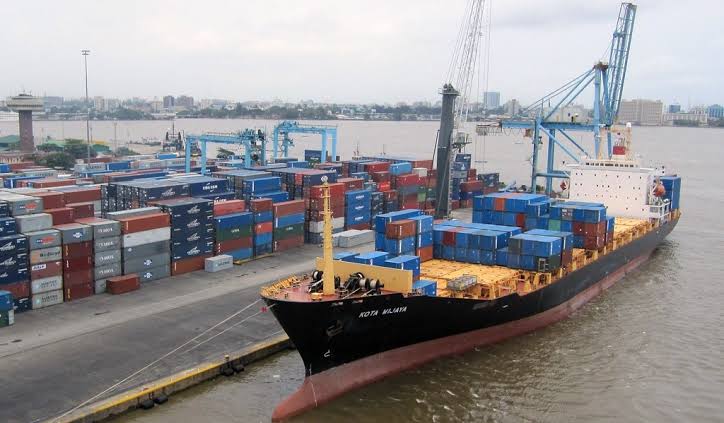
36 vessels expected at Lagos ports, NPA says
The NPA said the vessels are expected between August 10 and August 20.

Heading 2
Taiwan simulates drills, disrupts internet to prepare military for potential Chinese invasion
The simulation disrupted the internet for about 30 minutes leaving citizens digitally stranded to acquaint them with what to expect if China makes good on its threat.

States
UNESCO, Japan train Niger teachers, youths on flood mitigation
She said that the state was most affected due to its unique geographical characteristics.

Diaspora
Don’t let my sick daughter die in Nigeria, Nigerian woman in U.S. Army begs Trump to grant child visa
Ms Uzoamaka said all the paperwork and requirements have been completed but Mr Trump’s visa policy has hindered her daughter from travelling to the U.S.

Heading 4
Lassa fever cases hit 1,000, death toll rises to 237 in Nigeria
The agency said the figures represented a case fatality rate (CFR) of 23.7 per cent.


