

Nigeria records 244 cases of Lassa fever, 37 deaths in 16 states, FCT

The Nigeria Centre for Disease Control (NCDC) registered 244 confirmed cases of Lassa fever in 16 states and the FCT as at January 22.
Director-General, NCDC, Dr Ifedayo Adetifa, said on Monday in Abuja that the centre also recorded 37 deaths, as well as a case fatality rate of 15.1 per cent.
The Lassa fever infections were recorded in Ondo State (90), Edo (89), Bauchi (13), Taraba (10), Benue (9), Ebonyi (9), Nasarawa (7) and Plateau (5).
Others are Kogi (4), Anambra (2), Delta (1), Oyo (1), Adamawa (1), Enugu (1), Imo (1), and the FCT (1).
He said among five health workers confirmed infected in the line of duty, one of them died.
Mr Adetifa said the centre activated a national multi-sectorial Emergency Operations Centre (EOC) on January 20, to coordinate and strengthen ongoing response activities.
The centre is powered by officials of the NCDC and those of relevant ministries, departments, and agencies, other stakeholders and major partners.
“The outcome of the risk assessment placed Nigeria at a very high risk as increased transmission has been recorded compared to previous years, just as the number of states infected has risen.
“Healthcare workers have also been shown to be at increased risk of infection and death,’’ he said.
Mr Adetifa also said that the EOC would coordinate national response, especially across affected states to interrupt disease transmission, reduce impact by reduce sufferings and death.
He appealed to states of the federation to support the NCDC as lead agency in the development and implementation of evidence-driven outbreak response plans for their territories.
He said that prior to the activation of EOC, the NCDC had deployed national rapid response teams to hotspot states to support contact tracing, case management, risk communication and community engagement, among others.
It also developed a national Incident Action Plan to ensure coordinated response at all levels and planned the deployment of surge staff for Lassa fever case management to high-burden states.
He explained that healthcare workers at most risk were those who clean and disinfect contaminated surfaces, materials, and supplies without adequate protective gear.
Laboratory workers who handle blood samples of suspected Lassa fever patients without appropriate precautions, are also at high risk, he added.
“Most at risk for Lassa fever are persons who prepare and or handle bodies of deceased Lassa fever cases without appropriate precautions,’’ he stressed.
Mr Adetifa enjoined healthcare workers to always wear gloves and other protective equipment while handling patients or providing care to patients and their relatives.
“Healthcare providers should report all suspected cases of Lassa fever to their local government Disease Surveillance and Notification Officer for immediate access to healthcare.
“This is essential because early identification and treatment of cases appear to be more effective and can save lives,’’ he said.
Mr Adetifa enjoined Nigerians to always keep their environment clean; block all holes in residences to prevent access by rats and other rodents, cover dustbins and dispose of refuse properly.
“Communities should set up dump sites very far from their homes so as not to attract rats and other rodents just as foodstuffs should be kept in containers with tight-fitting lids.
“Avoid drying foodstuffs on roadsides where they will be at risk of contamination. Avoid bush burning which can lead to the displacement of rats from bushes to human dwellings.
“Practice good personal and hand hygiene by frequently washing hands with soap under running water or use of hand sanitisers when appropriate.
“Visit the nearest health facility if you notice any of the signs and symptoms associated with Lassa fever and avoid self-medication,’’ he advised.
Lassa fever is an acute viral haemorrhagic fever caused by the Lassa virus. The natural reservoir for the virus is the rat and other rodents.
The virus spreads through direct contact with urine, faeces, saliva, or blood of infected rats and contact with objects, household items and surfaces contaminated with the urine, faeces, saliva, or blood of infected rats.
Consumption of food or water contaminated with the urine, faeces, saliva, or blood of infected rats; person-to-person contact with blood, urine, faeces, and other body fluids of an infected person could also lead to infection.
Lassa fever initially presents like other commonplace illnesses accompanied by a fever such as malaria.
Other symptoms include headache, general body weakness, cough, nausea, vomiting, diarrhoea, muscle pains, chest pain, sore throat, and in severe cases, bleeding from ears, eyes, nose, mouth, and other body openings.
(NAN)

We have recently deactivated our website's comment provider in favour of other channels of distribution and commentary. We encourage you to join the conversation on our stories via our Facebook, Twitter and other social media pages.

More from Peoples Gazette

States
Independence: NBA urges Nigerians to expect better future
The NBA said that ordinary Nigerians should be deriving benefit from the subsidy removal rather than hardship.

Agriculture
FG tasks ECOWAS on leveraging financing strategies for agroecology
The federal government has urged stakeholders in the agriculture and finance sectors in the West Africa region to leverage financing strategies to enhance agroecology practices

Politics
Katsina youths pledge to deliver over 2 million votes to Atiku
“Katsina State is Atiku’s political base because it is his second home.”

Sport
Harry Kane wins 2026 Ballon d’Or after successful season with club, country
Kane netted 61 goals at club level in the 2025/26 season as Bayern Munich clinched the Bundesliga.
States
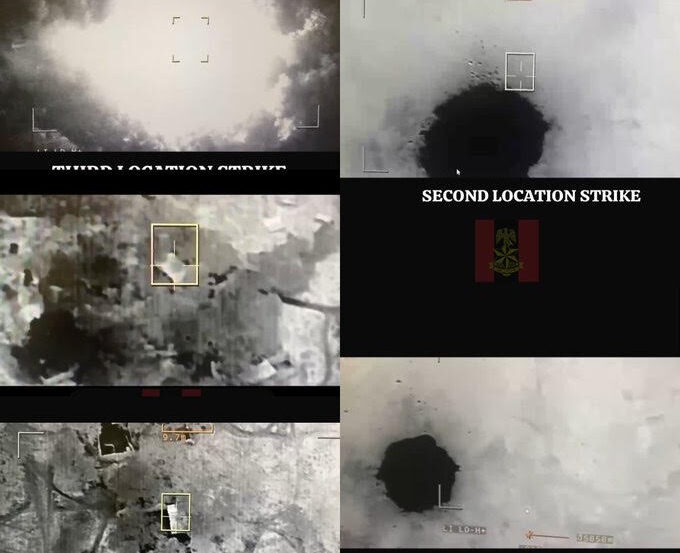
Troops kill 16 suspected ISWAP members in Borno
The statement said the operation was conducted using air and ground weapon systems.

States
Adamawa: Tompolo mobilises support for Tinubu’s 2027 re-election
He described Mr Tinubu as a courageous leader who prioritised the interests of Nigeria.

Heading 1
Trump offers $1 million reward to anyone reporting voter fraud
On Monday, 48 foreign nationals were charged with illegal voting and other election-related crimes.

Education
OAU resumes new academic session November 1
The school noted that registration for newly admitted students would begin on November 2.

Heading 5
Apple’s first foldable iPhone draws complaints over cracked screens
Apple released the iPhone Duo, its first foldable phone, earlier this year.


