

Nigeria: UNICEF seeks support to eradicate Neglected Tropical Diseases

UNICEF has sought the support of stakeholders in eliminating Neglected Tropical Diseases (NTDs) in Nigeria.
Monday Johnson, UNICEF Water, Sanitation and Hygiene (WASH) specialist, made the call in Lagos at a two-day media dialogue on ending open defecation in Nigeria and eradicating NTDs.
He said NTDs were a diverse group of conditions caused by various pathogens (including viruses, bacteria, parasites, fungi, and toxins) and associated with devastating health, social and economic consequences.
Referencing the Nigeria master plan for NTDs 2023 to 2027, Mr Johnson said that the country had the highest NTD burden in Africa, with more than 200 million people at risk of at least one of the diseases.
Mr Johnson, however, said WASH were critical in preventing and caring for all the 17 NTDs.
The UNICEF WASH expert noted that NTDs were associated with poverty and prevalent in areas that have poor sanitation, inadequate or no safe water sources and substandard housing conditions.
Mr Johnson said NTDs and poor access to WASH contributed to a vicious cycle of poverty and disease, adding that NTDs could lead to catastrophic health expenditure and reduced economic productivity.
He said the goal of the NTDs programme was to progressively reduce morbidity, disability, and mortality due to NTDs using integrated and cost-effective approaches to eliminate NTDs in Nigeria by 2030.
Mr Johnson noted that to eliminate NTDs by 2030, there was a need for behavioural change among the people by embracing the use of toilets and avoiding open defecation.
He said that achieving open defecation-free Nigeria should include using any form of improved toilets that prevent exposure of faeces to the environment to move up the sanitation ladder.
He advised people to cultivate the habit of disposing of faeces(human and animal) in the toilet and avoid urinating in rivers, lakes, or ponds, among other measures.
Dare Olatunji, sanitation and hygiene manager for Water Aid, said adequate provision of potable water and clean hygiene were important in achieving open defecation-free Nigeria.
Chizoma Opara, a deputy director at the Federal Ministry of Water Resources and Sanitation, said only 18 per cent of Nigerians, that is 37 million people, have access to safely managed sanitation services.
Ms Opara, also the national coordinator of the Clean Nigeria Campaign, noted that the national vision was that by 2030, every Nigerian would have access to safely managed sanitation hygiene facilities in cities, small town and rural communities.
(NAN)

We have recently deactivated our website's comment provider in favour of other channels of distribution and commentary. We encourage you to join the conversation on our stories via our Facebook, Twitter and other social media pages.

More from Peoples Gazette

States
Independence: NBA urges Nigerians to expect better future
The NBA said that ordinary Nigerians should be deriving benefit from the subsidy removal rather than hardship.

Agriculture
FG tasks ECOWAS on leveraging financing strategies for agroecology
The federal government has urged stakeholders in the agriculture and finance sectors in the West Africa region to leverage financing strategies to enhance agroecology practices

Politics
Katsina youths pledge to deliver over 2 million votes to Atiku
“Katsina State is Atiku’s political base because it is his second home.”
States
Delta declares three-day mourning period for Uduaghan
Mr Uduaghan died in the early hours of Monday, October 19, at the age of 71.
Lagos
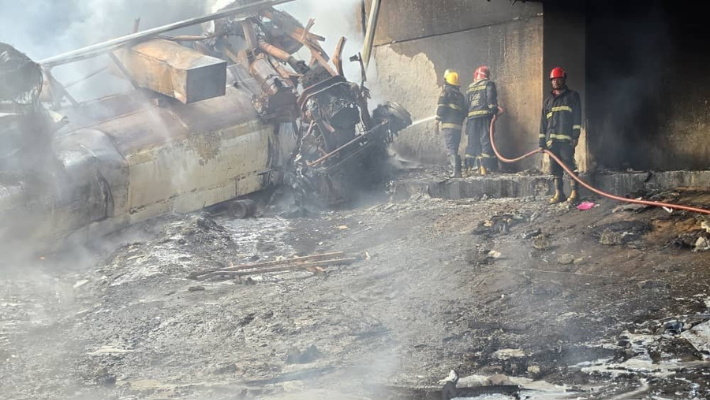
Firefighters extinguish fire from diesel-laden tanker at Otedola Bridge
Earlier in the day, a viral video showed firefighters under the bridge, trying to put out the blaze.

Heading 2
Tinubu describes Uduaghan’s death as loss to Delta, Nigeria
Mr Tinubu urged the people of Delta to draw strength from Mr Uduaghan’s years of service.

Diaspora
U.S. court sentences Chukwuemeka Amachukwu to eight years in prison over $15 million fraud
Mr Amachukwu was sentenced after pleading guilty.
States
Gov. Oyebanji inaugurates aviation fuel depot in Ado-Ekiti
The governor said the ground lighting project would cost more than N10 billion.

Anti-Corruption
FEC did not approve $6 billion Mambilla contract, former governor Imoke tells court
The former governor said he served as minister between August 2003 and November 2006.


